
June 22, 2026
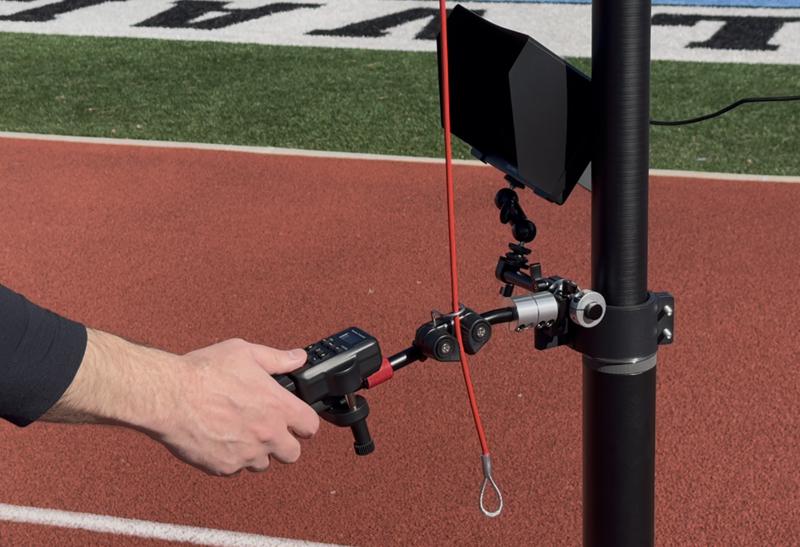
Friday night, the ball is on the 3-yard line, the headset traffic is loud, and nobody on your staff has time to troubleshoot a camera that suddenly will not respond. That is the real reason why manual camera systems fail less. In football, the best system is not the one with the longest feature list. It is the one that keeps working when the game speeds up, the weather changes, and a student assistant is helping run video.
For football programs, reliability is not a nice bonus. It affects coaching, replay, grading, and the ability to capture every rep that matters. Manual camera systems tend to hold up better because they remove common failure points. Fewer powered components, fewer communication dependencies, and fewer moving parts usually lead to fewer problems on the field.
A manual system asks less from the equipment and less from the operator. That matters more than many buyers realize.
Motorized and wireless camera setups can look attractive in a spec sheet. Remote pan and tilt, app controls, battery-powered movement, and added automation all sound efficient. But every added function creates another place where the system can stop cooperating. A dead battery, a lost pairing, a lagging control response, a failed motor, or a damaged control cable can turn a filming job into a sideline repair session.
A manual system keeps the core job simple. Get the camera in position. Lock it down on a stable support. Film the action. When the operator controls movement directly, there is less interpretation between command and result. You are not waiting for a motor to respond or hoping a wireless signal stays stable through four quarters.
That simplicity becomes a competitive advantage on game day because football is not filmed in a controlled studio. You are working around wind, cold, rain, rushed setup windows, crowded sidelines, and operators with varying levels of experience. In that environment, simpler systems usually win.
The most practical explanation for why manual camera systems fail less is mechanical. Every extra component adds risk.
A manual endzone or press box filming setup usually depends on a strong support structure, secure mounting hardware, quality optics, and direct human control. That is a short chain. If the tripod is engineered well and the camera is mounted correctly, there is not much in that chain that can fail unexpectedly.
Motorized systems add control modules, powered heads, drive mechanisms, firmware, extra wiring, charging routines, and sometimes wireless communication between devices. Any one of those pieces can become the reason you miss a series. It does not mean every motorized setup is bad. It means the odds change as complexity increases.
This is especially relevant for high school and academy programs, where the video operation often depends on coaches wearing multiple hats or students helping with setup. If a system requires specialized troubleshooting knowledge, it is more vulnerable in real use than it appears in a product demo.
Power is one of the biggest hidden issues in camera system reliability. Manual systems reduce dependence on powered accessories, and that matters over a long season.
When movement depends on batteries, every game introduces another checklist. Was it charged? Is there a backup? Will cold weather reduce runtime? Did the battery connection loosen during transport? These are common problems, not rare ones.
A manual control system avoids many of them. Your camera still needs power, of course, but your support structure and operator control do not rely on an additional battery-powered layer to function. That lowers the chance of a game-day surprise.
Wireless control sounds efficient until the environment gets messy. Football fields are full of variables that do not help signal stability - crowded stadiums, weather, metal structures, rushed positioning, and multiple devices operating at once.
When a camera system depends on a consistent wireless connection for core control, reliability depends on more than hardware quality. It also depends on signal conditions and setup discipline. A manual system removes that uncertainty. If the operator can physically control the camera, there is no pairing issue to solve and no signal lag to work around.
Reliability is not only about whether a part breaks. It is also about whether a system gets deployed correctly under pressure.
This is where manual systems earn trust with football staffs. They are usually faster to assemble, easier to level, and easier to teach. That means fewer user errors before kickoff.
A complicated system can be perfectly capable in theory and still fail in practice because a cable was missed, a motor setting was wrong, or a connection step was skipped. Most teams do not have the luxury of a dedicated engineer on the sideline. They need equipment that can be set up quickly and confidently by football staff.
That is one reason Game Day Endzone has stayed focused on manual control and stable support engineering. Coaches do not need extra technology just to say they have it. They need equipment that works every time and gets quality video into the workflows they already use.
There is also a performance reason behind why manual camera systems fail less. Operators can feel what the system is doing.
With a manual setup, the person filming gets immediate physical feedback. They can sense resistance, balance, movement, and positioning in real time. If wind picks up or the setup needs adjustment, the operator notices right away and can respond without waiting for electronics to catch up.
That direct feedback is useful for framing football. Endzone video has to stay centered and usable for coaching. Press box angles have to remain stable and clear. Manual operation, when paired with a sturdy platform, often gives operators more predictable control than remote movement systems that can overcorrect, lag, or drift.
This does not mean manual always means easier for every operator on day one. It still helps to have stable equipment and basic training. But once staff members learn the setup, the control method is straightforward and repeatable.
There are trade-offs, and it is worth being honest about them.
A motorized system can make sense in certain use cases, especially where remote operation is required or where a staff wants specialized movement control from a distance. For some filming environments, that added functionality may be worth the added risk and maintenance.
But for most football programs, the main goal is dependable capture of games and practices. Not flashy control. Not extra features that look impressive in a sales pitch. Just stable, clear video that makes it into replay and coaching platforms without drama.
That is where manual systems usually have the edge. They ask the operator to do more directly, but they ask the equipment to do less. For reliability, that is often the right trade.
If you are comparing systems, do not stop at feature count. Ask how many things have to go right for the system to work from setup through final whistle.
Look at the support structure first. A strong pole or tripod matters more than many buyers expect. Stability affects both footage quality and operator confidence. Then look at the mounting hardware, camera compatibility, and how quickly the setup can be deployed by your actual staff, not an experienced product rep.
You should also think about transport and storage. A system that gets moved every week needs to handle loading, unloading, setup, teardown, and weather exposure. Manual systems often do better here because there are fewer delicate powered parts to protect.
Finally, consider how the footage fits your existing workflow. A reliable filming system is only useful if it supports the sideline replay, upload, and review process your program already depends on. Simpler hardware tends to make that handoff easier because there are fewer technical interruptions before the video gets where it needs to go.
One clean setup in August does not prove much. Reliability shows up in October, when the weather is worse, the schedule is busy, and the staff is tired.
That is when simpler systems separate themselves. Fewer repairs. Fewer setup mistakes. Fewer moments where somebody is standing on a lift or in the press box trying to fix a problem instead of doing their job. Over a season, those small wins add up to more captured reps and less stress.
A football camera system should not be the most unpredictable part of your operation. If your priority is dependable video for games and practices, manual control is not a step backward. It is often the smarter engineering choice.
When a system is built around stability, direct control, and fast setup, your staff can focus on football instead of troubleshooting. That is usually the difference between equipment that looks advanced and equipment that actually earns its place on the field.