
April 8, 2026
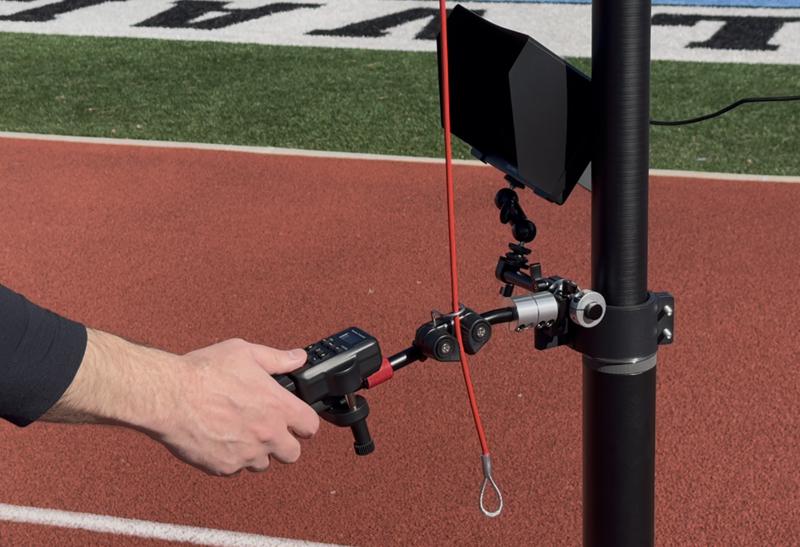
When the ball is kicked and your staff is trying to get clean endzone video on the first possession, nobody cares how advanced a camera system sounded in a sales pitch. They care whether it is stable, easy to operate, and ready to work every time. That is where a manual camera control system continues to make sense for football programs that need dependable footage for coaching, replay, and upload.
For many teams, the real question is not whether manual or motorized sounds more modern. It is which approach creates fewer problems on Friday night, on Saturday afternoon, and during a Tuesday practice when one coach, one manager, or one student assistant is handling the setup. In football operations, simple usually beats complicated when the simple option still delivers the video quality you need.
A manual camera control system is exactly what it sounds like. Instead of relying on powered pan-tilt motors, wireless controls, batteries, or app-based movement, the operator adjusts the camera position directly through the physical design of the pole, tripod, head, and mounting components.
That matters because every added layer of electronics creates another point of failure. A motor can stop responding. A wireless link can drop. A battery can die. Software can freeze. By contrast, a manual setup depends on solid engineering, stable hardware, and straightforward operator input. For football programs, that often means less troubleshooting and more filming.
This does not mean manual systems are primitive or limited. A well-built manual design can still provide the height, angle control, and image stability needed for clean endzone and sideline footage. The difference is that it gets there through durable mechanics instead of extra technology.
Football is not filmed in controlled studio conditions. Teams deal with wind, uneven ground, rushed pregame timelines, crowded sidelines, and operators with varying levels of experience. In that environment, reliability has real value.
A manual camera control system works well because it reduces variables. If your staff can extend the pole, secure the tripod, mount the camera, and frame the field, they can get the job done without waiting on a powered system to pair, calibrate, or respond. That is especially useful for high school programs and academies where the video role may change week to week.
There is also a staffing reality here. Not every program has a dedicated full-time video department. In many cases, filming is handled by an assistant coach, a student worker, or a volunteer. Manual controls are easier to teach, easier to repeat, and easier to trust when the operator is not a specialist.
Motorized systems can look appealing because they promise remote movement and added convenience. In some settings, that can be useful. But for football teams, the trade-off is often more complexity than benefit.
A motorized setup usually adds components that need power management, communication between devices, and more careful handling in transport. It may also introduce lag or control inconsistency at the exact moment the operator needs to make a quick adjustment. If something goes wrong, the issue is rarely obvious. The staff is left diagnosing electronics instead of capturing the next rep.
A manual camera control system avoids many of those headaches. It tends to set up faster, travel more cleanly, and stay more dependable over a long season. It is also easier to maintain. Mechanical systems still require care, but they are generally more predictable than electronic ones.
Cost is another factor. Programs should ask whether the added expense of motorized controls actually improves their workflow enough to justify the price. For many teams, the answer is no. They need stable footage, fast deployment, and compatibility with the replay platforms they already use. They do not need extra moving parts that increase the chance of failure.
The biggest advantage of manual control often shows up before kickoff. Fast setup matters. When your crew is unloading gear, finding position, checking camera framing, and coordinating with the sideline system, every minute counts.
A manual system supports that pace because it is direct. There is less to charge, fewer settings to manage, and fewer things to test before you start filming. Once the unit is in place, your operator can make visual adjustments quickly and keep the shot where it needs to be.
During the game, consistency matters just as much as speed. A stable endzone angle helps coaches review fronts, backfield action, blocking surfaces, and route development. If the camera platform is solid and the control method is simple, the operator can focus on the field instead of the equipment.
This becomes even more important when conditions are less than ideal. Wind and weather expose weak designs fast. A dependable manual system with strong tripod engineering and secure mounting gives teams a better chance to keep filming without interruptions.
Game day gets the attention, but practice is where a lot of programs feel the impact of equipment design. Practice filming has to be efficient. Staff members are moving quickly, periods change fast, and there is less patience for technical issues.
A manual camera control system fits that environment because it lets teams get elevated footage without building a complicated process around the equipment. A coach or assistant can deploy the setup, capture drills or team sessions, and break it down without turning video into a separate production.
That matters for player development. If the system is easy to use, it gets used more often. If it is frustrating, unreliable, or slow to assemble, practice video becomes inconsistent. Most programs are better served by a system that coaches trust every day than one with added features they avoid using.
Not every manual system is built the same. The quality comes from the engineering around the control method, not just from the absence of motors.
Start with stability. The tripod base and pole design should hold position well and resist movement in normal field conditions. Height is important, but usable height matters more than advertised height if the system becomes shaky or awkward when extended.
Portability is the next factor. Teams need equipment that can be transported, unloaded, and assembled without wasting time or requiring multiple specialized tools. A good system should feel professional without becoming a burden.
Camera compatibility also matters. Your setup should work cleanly with the camera and replay workflow you already use. For programs running platforms such as Hudl Sideline, EDGE Replay, Game Strat, or SkyCoach, the filming hardware should support that process instead of complicating it.
Finally, pay attention to how the system handles real operators. If the controls are intuitive and the structure is well balanced, almost anyone on staff can learn it quickly. That is not a minor benefit. It is part of what makes the system dependable over the course of a season.
Some buyers hear the word manual and assume it means giving something up. In football video operations, that is often the wrong way to look at it. Manual control is not about resisting new technology. It is about choosing the technology that best fits the job.
If a feature increases reliability, saves time, or improves footage, it is worth considering. If it mainly adds complexity while creating new failure points, teams should be skeptical. The best equipment decisions usually come from understanding the environment, not chasing the newest feature set.
That is why so many football staffs still prefer systems built around dependable mechanics, fast setup, and clear operation. A manual camera control system aligns with how teams actually work. It supports the staff on hand, the time they have, and the pressure of live football.
At Game Day Endzone, that practical view of filming equipment is the point. Coaches and athletic departments need gear that performs under pressure, integrates with their workflow, and does not create extra work on the sideline.
The best camera system is not the one with the longest feature list. It is the one your team can set up quickly, trust completely, and use without hesitation when the game starts.