
March 31, 2026
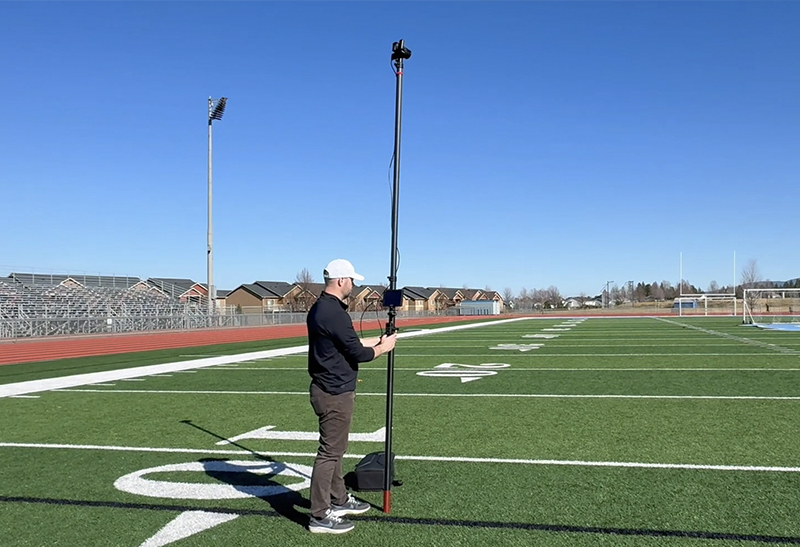
A football practice filming pole earns its keep long before Friday night. If your staff is tagging inside run, reviewing team periods, or pulling clips for position meetings, the camera angle and the reliability of the setup matter every single day. The wrong pole creates shaky footage, wasted practice time, and one more piece of equipment nobody wants to deal with.
For most football programs, the goal is simple: get a clear elevated view of practice, set it up fast, and trust that it will keep working without constant troubleshooting. That sounds basic, but plenty of teams end up with gear that is either too flimsy, too complicated, or too awkward to move from field to field. A good practice filming setup should solve problems, not create new ones.
A practice pole is not just a tall stand for a camera. In football operations, it has a job. It needs to give coaches a usable teaching angle, hold steady in outdoor conditions, and fit into the pace of practice. If it takes too long to deploy or requires a highly technical operator, it will eventually get skipped.
The best systems create a repeatable workflow. A manager, assistant coach, or video staffer can carry the unit out, set it in place, mount the camera, and start filming in minutes. That matters because practice filming is rarely the only task on the field. Staff members are handling scripts, substitutions, equipment, and communication. The filming pole has to work within that environment.
Height is part of that equation, but it is not the only factor. More height can improve the view, especially for spacing and route concepts, but too much height on a practice field can also introduce setup headaches, stability concerns, and transport issues. For many teams, a 10-foot practice pole hits the right balance between elevation and day-to-day usability.
Coaches do not need a long list of flashy features if the footage is shaky or the system fails when the wind picks up. Stability is what turns video into a coaching tool instead of a frustration.
A stable football practice filming pole gives you cleaner frames, more consistent tracking, and fewer moments where the camera shifts during a team period. That is especially important when the footage is feeding into platforms like Hudl Sideline, EDGE Replay, Game Strat, or SkyCoach. If your video angle is constantly bouncing or drifting, replay becomes less useful and clip quality drops.
This is one reason many programs prefer manual control systems over motorized or wireless-heavy alternatives. On paper, powered systems can sound appealing. In real football settings, more electronics often mean more failure points. Batteries die. Connections drop. Weather interferes. A manual system, when engineered well, tends to be easier to trust over a full season.
That does not mean every team needs the exact same setup. If your practice fields are exposed and windy, tripod design and base stability become even more important. If you move between varsity and sub-varsity fields, portability may matter just as much as raw steadiness. The right choice depends on how your staff actually operates.
The buying decision usually comes down to four questions: How fast can it be set up, how stable is it, how easy is it to transport, and will it fit your existing video workflow?
Setup time matters because practice starts whether the camera is ready or not. A system that can be deployed in less than 5 minutes has a real operational advantage. It increases the odds that your team will film consistently, which is where the coaching value compounds. Complicated equipment gets left in storage. Simple equipment gets used.
Durability is next. Practice gear takes abuse. It gets loaded in trucks, rolled across fields, carried by students, and used in heat, wind, and occasional bad weather. A football practice filming pole should be built for that kind of handling. That means strong materials, reliable hardware, and tripod engineering that does not feel loose after a short period of use.
Portability is another factor that gets overlooked until staff members are carrying the system across campus. The pole can be sturdy without being a burden, but that depends on thoughtful design. You want something that feels substantial in use and manageable in transport. Too light can mean unstable. Too heavy can mean inconvenient. There is a middle ground, and that is usually where the best football equipment lives.
Then there is compatibility. A camera support system is only one part of the video operation. If your team already uses a replay or upload platform, your filming pole should support that workflow rather than forcing a complete reset. For most schools, the best purchase is the one that improves the current process without making the staff learn a whole new system.
It is easy to assume taller always means better. In practice, it depends on what you are filming and how your field setup works.
A 25-foot endzone system makes sense for game-day footage where you want a higher tactical view and have time for a more dedicated setup. Practice is different. You need mobility, speed, and repeatability. A 10-foot pole often gives enough elevation to coach alignment, spacing, and execution while remaining easy to move and quick to operate.
That trade-off is worth understanding before you buy. If your staff films every practice period and wants a straightforward solution, a dedicated practice pole may be more useful than trying to force a game-day system into a daily role. If your budget allows for a complete package, separate solutions for games and practices usually create fewer compromises.
Most practice filming issues are not caused by the camera itself. They come from the support system underneath it.
One common problem is wobble. A pole may look acceptable at first, but once the wind moves or the operator adjusts position, the footage shows constant vibration. Another issue is setup complexity. If there are too many moving parts or too many steps, consistency drops. Teams also run into transport problems when the equipment is too awkward to fit into vehicles or storage areas.
There is also the problem of overbuying. Some programs spend on systems loaded with features they do not need, only to find that the daily user experience is worse. For football staffs, practical value matters more than novelty. Clear video, fast deployment, and dependable performance usually beat a long feature sheet.
A quality football practice filming pole should feel purpose-built for football, not adapted from a generic camera stand. The difference shows up in the details. It should set up quickly, stay stable on the field, and support repeatable filming from drill work through team periods.
It should also be easy for different staff members to operate. That point matters more than buyers sometimes realize. Equipment is stronger when it does not depend on one expert user. If your video assistant is absent, another coach or staff member should still be able to get the system running without guesswork.
Support after the purchase matters too. When a program invests in video infrastructure, it is not just buying metal and hardware. It is buying reliability across a season. Warranties, technical support, and real product knowledge add value because football schedules do not leave much room for downtime. That is one reason many teams look for specialized providers rather than generic equipment sellers. Companies like Game Day Endzone build around the realities of football operations, which tends to show up in both product design and support.
For some programs, the practice pole is the starting point. For others, it is one part of a broader filming package that includes endzone and press box angles for games. Either way, the smartest purchases usually come from thinking about the full workflow instead of buying isolated pieces.
If your staff needs to capture practice efficiently and also wants game-day filming from multiple angles, it often makes sense to standardize around equipment that shares the same operating philosophy. Similar setup logic, dependable tripod engineering, and consistent compatibility can reduce training time and make the whole system easier to manage.
That does not mean every school needs the biggest package available. It means the equipment should match the program's actual demands. A smaller staff may prioritize simplicity and portability. A larger program may value a more complete bundle that covers practice and game day with one coordinated solution.
The right football practice filming pole is the one your staff will use every day without dreading the process. If it goes up fast, holds steady, and delivers footage that works inside your coaching workflow, it is doing exactly what it should. That kind of reliability pays off quietly over time, one clean practice clip at a time.