
October 1, 2026
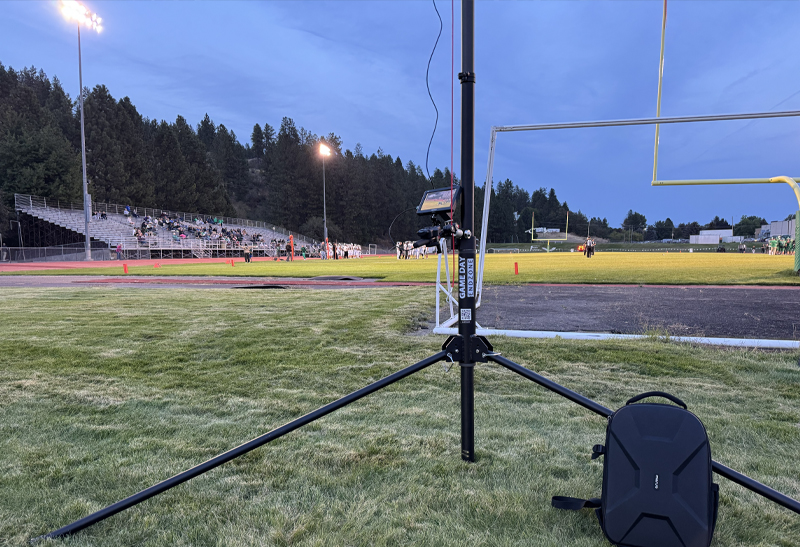
A shaky game film angle can turn a clean play into a coaching problem. If the formation drifts, the ball disappears during a pan, or the frame bounces every time an operator adjusts position, the video becomes harder to use for replay, scouting, and player correction. Understanding what makes tripod footage more stable helps football staffs get more usable film without adding complexity to game-day operations.
Stable footage is not the result of one oversized tripod or one expensive camera. It comes from a system that is properly matched, correctly set up, and operated with purpose. For endzone and press box filming, those details matter even more because cameras are often elevated, exposed to wind, and asked to follow fast action across a full field.
The short answer is a wide, secure base; a balanced camera load; rigid connections; and smooth operator input. Each part affects the others. A strong tripod cannot fully compensate for a loose mounting plate, and a high-quality camera head cannot correct legs that are uneven or partially sunk into soft ground.
For football programs, stability also means consistency. The system should deliver a steady frame on a windy Friday night, during a fast practice period, and when a different staff member is assigned to run the camera. That is why practical design matters as much as raw equipment specifications.
Tripod legs should be fully and evenly deployed whenever space allows. A wider footprint lowers the system's center of gravity and gives it more resistance against small bumps, wind gusts, and movement from the operator. On an elevated endzone system, that foundation becomes even more important because every inch of height increases leverage against the base.
Avoid placing the legs too close together simply to save room. A narrow stance may look tidy, but it makes the entire setup easier to rock or tip. Before filming begins, check that every leg section is locked and that the feet have firm contact with the surface.
Surface conditions change the setup. Grass can be soft, turf can be slick when wet, and track surfaces may allow feet to slide under pressure. If a foot begins to settle into grass, re-level the system before recording. A tripod that starts slightly off level can become noticeably worse after several series.
Football staffs need elevation to see blocking structure, route spacing, and player movement. But height magnifies vibration. A camera mounted 25 feet above the ground will show far more movement from a loose joint or sudden pan than one positioned at shoulder height.
That does not mean teams should avoid high-angle filming. It means the support system must be built for the height and camera load being used. The pole, tripod, clamps, mounting hardware, and camera head should work as one structure. Extending a lightweight consumer tripod to its maximum height and attaching a heavy camera setup is a poor trade-off. It may be portable, but it is unlikely to stay stable through a full game.
Use only the height needed for the angle. More elevation is not automatically better. For endzone film, the goal is a clear, useful view of the formation and play development, not the highest possible camera position. A purpose-built elevated system gives teams the angle they need without relying on unstable extensions.
An unbalanced camera load places constant stress on the tripod head. The operator may feel that stress as resistance when panning, then a sudden release that causes the frame to jump. Over time, an imbalanced setup can also make knobs, plates, and tilt mechanisms more likely to loosen.
Mount the camera so its center of gravity sits over the head rather than hanging heavily forward or backward. If the camera uses a long lens, external monitor, battery, or streaming accessory, account for that added weight. Secure cables so they have enough slack for movement but are not pulling on the camera during a pan.
A properly balanced system moves with controlled resistance. It should hold its position when the operator releases it, yet still pan and tilt without a fight. This is especially useful when filming a hurry-up offense, where the operator cannot spend time correcting equipment between snaps.
Every connection point is an opportunity for movement. Inspect the quick-release plate, camera screw, head-to-tripod connection, pole sections, leg locks, and any adapters before the game. A tiny amount of play at ground level can become obvious in the video once the camera is elevated.
Do not over-tighten components to the point of damaging threads or hardware. The goal is secure, not forced. Make this inspection part of the pregame routine, along with checking battery power, storage capacity, and replay-platform connections.
For programs that move equipment between practice fields, stadiums, and away games, this routine is worth protecting. Transport vibration can loosen hardware. A two-minute check before kickoff is easier than troubleshooting a shaking camera after the first drive.
A level tripod gives the operator a predictable pan path. When the head is level, a left-to-right pan keeps the horizon and field geometry consistent. When the tripod is tilted, panning can cause the frame to rise or fall across the field, making the footage feel unstable even when the tripod itself is not moving.
Use the built-in level on the tripod or head, then confirm it visually through the camera. Yard lines, hash marks, and stadium structures make leveling errors easy to spot. This is particularly helpful from an endzone angle, where a tilted camera can make the field look distorted and make postgame review more tiring.
If the surface is uneven, adjust leg length rather than trying to compensate with the camera head alone. The head should be used for framing and controlled movement, not as a substitute for a stable, level base.
Wind is one of the most common reasons elevated football footage shakes. The higher the camera system, the more wind it catches. A camera body, monitor, rain cover, cable loop, or wide accessory can all act like a small sail.
Start with equipment designed to remain rigid at working height. Then reduce unnecessary wind exposure. Keep cables managed, remove accessories that are not needed for the game, and make sure protective covers are fitted tightly. A loose cover can create more movement than many operators expect.
Adding weight can help in some situations, but it is not a universal fix. A properly placed stabilizing weight may improve a tripod's footing, while excessive or poorly attached weight can create a new safety issue or strain the equipment. Follow the system's intended setup and do not hang bags from parts that were not designed to carry them.
The best wind strategy is a strong base and rigid system from the beginning. Extra weight is a secondary measure, not a substitute for sound engineering.
Even the best tripod can produce rough footage when the operator makes abrupt inputs. Smooth filming starts with stance and hand placement. Stand in a balanced position, keep one hand on the pan handle, and guide the movement instead of pushing or pulling the camera body.
Anticipate the play. Rather than chasing the ball after it has already crossed the frame, begin the pan as the play develops and use steady, measured movement. On endzone film, it is often better to hold a slightly wider composition than to make aggressive corrections that cut off blockers or introduce shake.
Avoid touching the tripod legs during recording. If the operator needs to reposition, make that change between plays whenever possible. Also avoid leaning against a press box railing, platform, or tripod structure. Body contact transfers movement directly into the image.
Manual control is an advantage here. A well-designed manual system gives the operator immediate, predictable control without relying on wireless signals, motor response, or extra battery-powered components. For staffs that need gear built to work every time, fewer failure points can mean a more dependable game-day workflow.
A basic camera tripod may be fine for a short sideline clip, but football programs need to think beyond a single use case. The right system depends on whether the camera will be used from the press box, behind the endzone, at a practice field, or across all three.
For press box filming, stability comes from a secure footprint, a level surface, and a head that can pan smoothly across the field. For endzone work, the system needs enough height for a useful coaching angle while remaining rigid in wind. For practice filming, fast deployment and portability matter because staff may move the setup repeatedly between periods.
Game Day Endzone designs football video systems around those real operating conditions: stable support, practical elevation, straightforward manual control, and setup that does not slow down the staff. The best choice is not the most complicated system. It is the one that gives your program clear, steady video when the game starts and there is no time to troubleshoot.
Before the next practice or kickoff, take a close look at the base, the balance, the level, and the operator's movement. Those four checks often make the difference between footage that merely records the game and film your coaches can trust.