
March 24, 2026
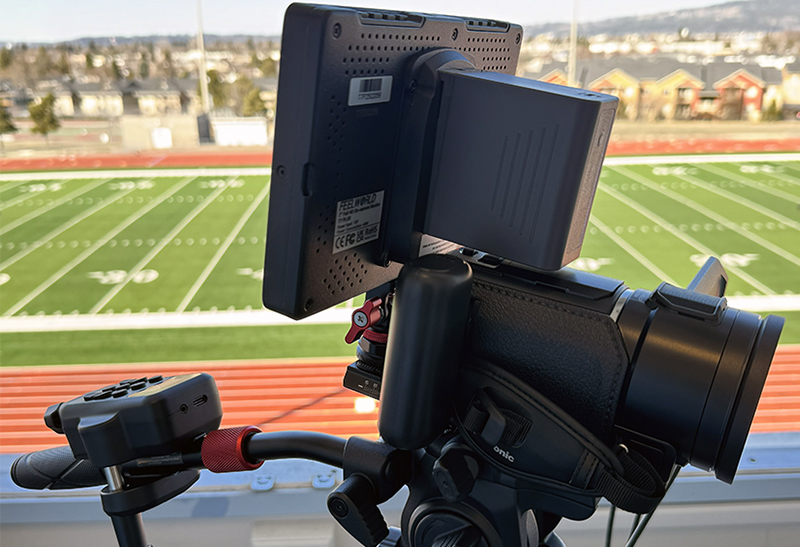
Friday night gets loud fast. By the time the chain crew is set and your headset check is done, nobody on staff wants to troubleshoot shaky film or a camera angle that misses the formation. A good press box tripod for football is not just a place to mount a camera. It is part of your weekly workflow, and if it fails, the rest of the video system gets harder to trust.
For most football programs, the press box camera has one job: deliver clean, usable wide film every game, with as little friction as possible. That sounds simple until you deal with cramped booths, uneven floors, tight setup windows, volunteer operators, and weather that changes by the quarter. The right tripod solves those problems before kickoff.
A football tripod has a different standard than a general-purpose video tripod. In football, the camera stays up for a full game, often in less-than-ideal conditions, while coaches depend on steady footage for sideline replay, grading, scouting, and uploads. That means stability matters more than flashy features.
The first requirement is a secure platform. If the image shifts every time someone walks across the booth, your operator will spend the night correcting the frame instead of filming the game. A tripod for football also needs enough height adjustment to clear railings, windows, and booth obstructions without forcing an awkward shooting angle.
Just as important, it needs to be fast to deploy. Most staffs do not have extra time for a complicated assembly process. If setup takes too long, it creates stress before kickoff and increases the chance that something gets skipped or mounted incorrectly.
The fastest way to ruin good optics is to put them on an unstable base. A lot of teams focus on the camera first, which makes sense, but the tripod determines whether that image stays usable once the game starts.
For football, a wider, more grounded tripod design usually performs better than lighter-duty options built for general photography. You want a setup that can handle the weight of the camera and any accessories without becoming top-heavy. You also want smooth panning without drift, because even small unwanted movements show up when you are trying to keep all 22 players in frame.
This is where simpler systems often win. Manual control setups tend to be more dependable than motorized or wireless-heavy alternatives, especially in game environments where reliability matters more than novelty. There is less to charge, less to pair, and less to fail when the booth is crowded and the clock is moving.
Coaches often ask how tall a press box tripod should be. The honest answer is that it depends on the facility. Some booths give you plenty of clearance and a clean central view. Others have narrow windows, low sills, or awkward placement that makes camera positioning a challenge.
A tripod with enough adjustment range helps, but raw height is not the only issue. The more important question is whether the camera can be positioned where the operator actually needs it without sacrificing stability. A very tall tripod that becomes shaky at extension is less useful than a properly engineered system that holds steady at working height.
In football, your press box angle should capture formation structure, spacing, and post-snap movement without constant correction. If the tripod forces the camera into a compromised position, your film loses value for coaching. Clean, repeatable framing matters more than squeezing out a few extra inches on paper.
Every piece of game-day equipment competes for time. Staff members are checking communication, uploading rosters, testing replay, handling special teams scripts, and managing pregame logistics. A press box tripod should reduce workload, not add to it.
That is why straightforward assembly matters so much. If a tripod can be set up quickly and consistently, it lowers the chance of operator error and makes it easier for different staff members to run the same process week after week. This is especially important for high school programs where the person filming may change during the season.
The best systems are easy to transport, easy to position, and easy to lock in. They do not require constant adjustment once the game begins. That kind of predictability saves time, but more than that, it protects your workflow when things get busy.
A tripod does not work in isolation. It is part of a larger football video system that includes the camera, control method, power plan, and software workflow. If you use platforms like Hudl Sideline, EDGE Replay, Game Strat, or SkyCoach, your filming hardware needs to support that process without adding unnecessary steps.
That means the press box setup should hold the camera securely, allow a consistent shooting angle, and support clean operation throughout the game. Footage quality is not just about resolution. It is also about whether the frame is steady, wide enough, and reliable enough to be useful for replay and review.
Programs that treat the tripod as an afterthought often end up fighting the same problems every week. They get vibration in the shot, awkward operator positioning, or a setup that is technically functional but frustrating in real use. Those issues add up over a season.
Even if your team plays most games at one stadium, portability matters more than many buyers expect. Gear gets moved between storage rooms, locker rooms, buses, field houses, and multiple camera locations. If the tripod is bulky in the wrong way or difficult to carry, it becomes one more thing your staff dreads handling.
A portable football tripod should still feel durable. That balance is important. Ultra-light gear may be easy to carry, but if it gives up stability to save weight, it is a poor trade for football use. On the other hand, overly cumbersome equipment can slow setup and make transport harder than it needs to be.
The best fit is usually a tripod engineered specifically for repeated use by football staffs, not one adapted from another industry and expected to survive weekly game demands.
The biggest mistake is buying based on generic video specs instead of football use. A tripod that looks fine in a studio or event setting may struggle in a press box during live play. Football demands a stable wide shot, simple operation, and durability over time.
Another mistake is overvaluing extra features that do not improve results. More components can mean more failure points. In many cases, a clean manual setup is the smarter long-term decision because it keeps operation simple and dependable.
Some programs also underestimate who will actually use the system. If the equipment only works well in the hands of one highly experienced operator, it is not truly serving the program. The better choice is a setup that coaches, staff, or trained student operators can use with confidence.
Start with your environment. Measure the press box area, note window height, and think about where the tripod will sit during a game. Then evaluate how quickly your staff can deploy it and whether it will stay stable through four quarters.
Ask practical questions. Does the tripod feel secure with your intended camera load? Can the operator pan smoothly without fighting the head? Is the system easy to store and transport? Will it support the quality standard your coaches expect when reviewing film on the sideline or after the game?
It also helps to think in systems rather than parts. A press box tripod works best when it is chosen as part of a complete filming approach, not as a disconnected accessory. That is one reason football-specific providers like Game Day Endzone focus on integrated solutions instead of pieced-together setups. When the tripod, camera position, and workflow are built to support each other, the result is more dependable every week.
A dependable press box tripod for football protects more than your budget. It protects film quality, staff time, and trust in your video process. Coaches should not have to wonder whether the angle will hold or whether the footage will be usable when they need it most.
The best equipment is often the gear your staff stops thinking about because it simply works. When your tripod is stable, fast to set up, and built for football, your team can focus on the game instead of managing equipment problems. That is usually the difference between a setup that looks acceptable on paper and one that earns its place every Friday night.