
April 22, 2026
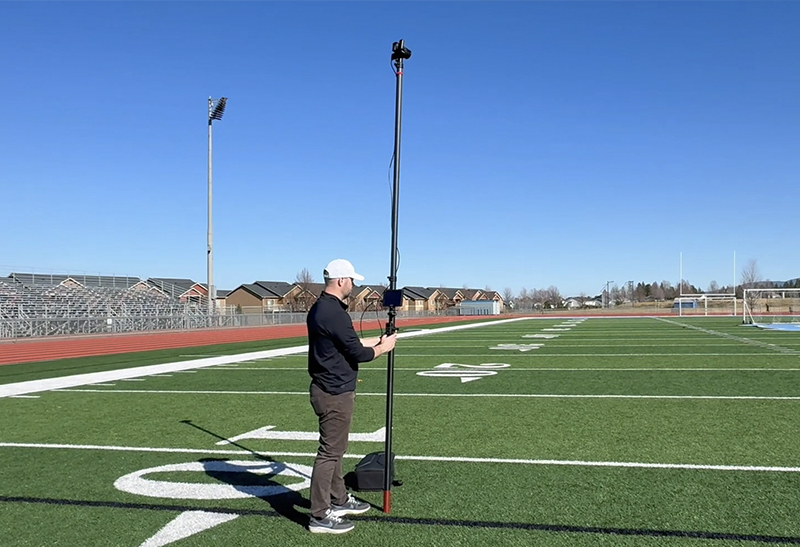
If your practice film is shaky, too low, or slow to upload, your staff feels it immediately. The best camera system for football practice is not the one with the longest feature list. It is the one that gives coaches a clean endzone view, sets up fast, works with your existing replay workflow, and keeps working when practice is moving fast.
For most football programs, that means thinking less like a consumer camera buyer and more like an operations staff. You are not shopping for a gadget. You are choosing a filming system that has to survive repeated setup, transport, weather, and daily use by busy coaches, managers, or student assistants.
Practice film has a different job than game film. During games, you may have more staff support, more controlled setup time, and a fixed filming plan. Practice is different. Equipment gets moved from field to field, drill periods change quickly, and the person running the camera may also be handling other responsibilities.
That changes what matters.
A good practice camera system needs enough height to show spacing, leverage, and formation structure from the endzone. It needs a stable platform so coaches can actually evaluate footwork, pursuit angles, line splits, and route timing without fighting a bouncing frame. It also needs to be easy to deploy. If a system takes too long to assemble or requires constant troubleshooting, it will get used less often no matter how good the image looks on paper.
The strongest systems also fit the workflow your program already uses. If your staff depends on platforms like Hudl Sideline, EDGE Replay, Game Strat, or SkyCoach, compatibility is not a bonus. It is part of the buying decision.
The biggest mistake programs make is assuming any elevated camera will do the job. It will not.
For football practice, the endzone angle has to be high enough to show the whole play develop. A low tripod can capture action, but it often misses the spacing details coaches actually need. You lose the clean teaching view that makes endzone film valuable in the first place.
That is why dedicated football systems often use tall endzone solutions for full-field and team periods, while also keeping a shorter setup available for more flexible practice use. A 25-foot endzone system gives staff the high coaching angle they want for team sessions. A 10-foot practice pole can make more sense when portability and quick relocation matter most during individual periods or smaller practice environments.
There is a trade-off here. More height usually improves the coaching view, but only if the structure stays stable and simple to operate. A tall system that sways, tips, or takes too much effort to control can create as many problems as it solves.
A lot of camera systems sound good until wind, uneven ground, or repeated use exposes weak engineering. In football practice, stability is not a luxury. It directly affects whether your video is usable.
A stable tripod and pole system keeps the image steady enough for actual teaching. That matters when coaches are grading reads, tracking first steps, or reviewing run fits. If the frame constantly shakes or drifts, small details get harder to trust.
This is one reason many football programs prefer purpose-built manual systems over more complicated motorized or wireless designs. Motorized setups can look attractive because they promise convenience, but they also introduce more failure points. Batteries die. Connections drop. Controls lag. Practice does not stop because a system needs to reconnect.
A well-built manual system is often the better football answer because it is straightforward. Coaches and staff can run it without extra technical overhead, and there is less to fail when time matters.
Buyers often get pulled toward headline specs. More zoom, more resolution, more features. Those things can matter, but practice video is only useful when the full system works together.
Good optics are important because coaches need a clear picture with enough detail to review alignment, pursuit, and technique. But premium optics on a poor support system do not solve the real problem. If the camera is mounted too low, bounces in the wind, or is hard to operate, image quality alone will not save the film.
The better question is whether the system delivers consistently usable football footage. That means a clear image, stable platform, proper height, and smooth integration with your upload or replay process. Programs should evaluate the whole setup, not just the camera body.
The best practice system is one your staff will actually deploy. That sounds obvious, but it gets missed all the time.
If equipment is too heavy, too awkward, or too complicated to move, it starts staying in storage. Coaches end up filming from a lower angle or skipping periods they meant to capture. Over time, that reduces the value of the investment.
For practice environments, portability usually means three things. The system should transport easily, set up quickly, and break down without creating a burden at the end of the day. A football staff does not need more steps. It needs gear that fits into the rhythm of practice.
That is why setup speed matters so much. When a system can be ready in less than 5 minutes, staff are more likely to use it consistently. Consistency is what improves coaching value over the course of a season.
There is no single perfect setup for every team. The best camera system for football practice depends on how your program uses video.
If your priority is a true overhead coaching angle for team periods, a tall endzone system should be the foundation. If your staff needs to move quickly between locations or wants a lower-friction option for daily practice use, a shorter practice pole may be the better fit for part of the workflow. Many programs benefit most from a bundled setup that covers both needs instead of forcing one piece of equipment to handle every situation.
That is usually the smarter long-term decision. A press box tripod setup supports game-day filming from the sideline or elevated structures. A tall endzone system handles the teaching angle coaches want. A practice pole adds flexibility during the week. When those pieces are designed to work together, the entire video operation becomes easier to manage.
This is where specialized football providers have an advantage over general camera vendors. They understand that the question is not just, “What camera should we buy?” It is, “What filming system will work for practice, game day, replay, and staff logistics?”
When evaluating systems, coaches should ask practical questions first.
How long does setup actually take in the field, not in a showroom demo? How stable is the structure at full height? Can a student assistant operate it reliably? Will it work with the replay and upload platforms your staff already uses? Is it built for repeated football use, or is it just a generic camera support being repurposed?
Those answers will tell you more than a spec sheet.
It also helps to think about who will be responsible for the system. If the buyer is a head coach, the gear still has to make sense for the coordinator, video staffer, or manager who uses it every day. Simplicity is part of performance.
Programs that want a dependable football-specific option often lean toward systems built around stable tripods, premium optics, and manual controls rather than extra layers of technology that can create avoidable problems. That is one reason companies like Game Day Endzone focus on equipment packages designed specifically for football filming instead of chasing gadget features that do not hold up under pressure.
The right camera system should make your practice operation cleaner, not more complicated. It should give coaches the angle they need, support the platforms they already trust, and hold up through repeated use without turning every filming session into a project.
That usually points to a purpose-built football setup with real height, real stability, fast deployment, and dependable manual operation. Not flashy. Not overengineered. Just built to work every time.
When you are comparing options, think past the camera itself and look at the full coaching workflow. The best system is the one that gets on the field quickly, captures a view your staff can coach from, and stays reliable long after the purchase order is approved.