
April 7, 2026
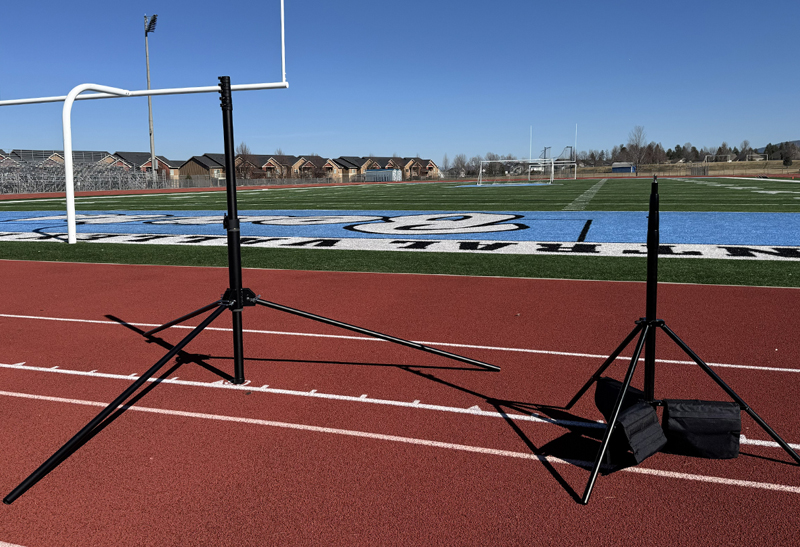
A camera feed can look sharp in warmups and still become a problem by the second quarter. That usually happens when the support system is wrong. If you need a stable tripod for sports filming, you are not really shopping for a convenience item. You are choosing whether your staff gets usable football video in wind, on uneven surfaces, and under game-day pressure.
For football programs, tripod stability affects more than image quality. It affects whether your coaches can trust the angle, whether your replay workflow stays clean, and whether the person running the camera can do the job without fighting the equipment. A shaky system wastes time after the game and creates frustration during it.
In football, stability is not just about keeping a camera upright. A tripod has to hold position through long filming sessions, resist movement when the operator adjusts the camera, and stay planted when weather or sideline traffic adds stress. If the setup flexes every time someone touches the handle, that movement shows up in the footage.
This is where a lot of generic tripods fall short. Many are built for light indoor use, occasional photography, or small consumer cameras. They may look fine in a product photo, but they do not always perform well on a track, in a press box, or on a sideline where the surface is less predictable.
For sports filming, especially football, the tripod has to support a complete working setup. That includes the camera, mounting hardware, and any accessories your staff uses on game day. It also needs to stay reliable over repeated setup and breakdown cycles. Teams do not need equipment that feels delicate after one season.
A common mistake is focusing on height first and stability second. Coaches understandably want better sightlines. The problem is that raising a camera without building in enough support makes the whole system more vulnerable to sway and vibration.
That trade-off matters in both endzone and press box filming. A taller setup can improve the coaching angle, but only if the support structure is engineered to handle that elevation. Thin legs, weak locks, and light-duty joints become obvious problems once the camera is extended and the wind picks up.
This is one reason purpose-built football systems tend to outperform general-use tripods. A well-designed sports filming support has to manage leverage. The taller the camera position, the more important the lower structure becomes. Good engineering starts at the base, not at the top.
When coaches say a tripod is unstable, they are usually seeing one of a few predictable issues. The first is flex. That happens when the material or leg design bends slightly under load. The second is poor footing, where the legs do not sit securely on the surface. The third is movement introduced by the operator through weak pan and tilt control points.
There is also a fourth issue that gets overlooked. Some systems are technically stable when left alone, but they become shaky the moment someone tries to operate them. For football, that is a real problem. Your filmer needs to track the play, make simple adjustments, and maintain framing without causing the entire setup to bounce.
A stable tripod for sports filming should reduce operator-induced shake, not amplify it. That usually comes down to stronger construction, better balance, and a control design that does not require awkward force.
More moving parts do not automatically mean better performance. In fact, sports video gear often becomes less dependable when complexity is added without a clear reason. Motorized and wireless features can sound appealing, but they also create more points of failure, more setup steps, and more troubleshooting when time is short.
For many football staffs, manual control is the better fit because it is direct and reliable. The filmer can make adjustments immediately, and the system does not depend on batteries, signal connections, or extra devices to function correctly. That matters on Friday nights, at Saturday showcases, and during practice when your staff is trying to set up quickly and get to work.
Simple does not mean basic. It means the equipment is designed to do its job consistently. A stable support system should feel predictable every time you use it.
There are plenty of tripod specs that sound impressive but do not tell you much about game-day performance. The features that matter most are the ones tied directly to steadiness, durability, and ease of operation.
Start with the leg structure. A wider, stronger base generally gives you a better foundation than a narrow footprint. Material quality also matters. Stronger components hold alignment better over time and are less likely to loosen after repeated transport.
Next, look at the locking mechanisms and connection points. If those parts feel weak, the whole system will feel weak once a camera is mounted. Stability depends on how the full structure works together, not just on one heavy part.
Finally, consider how the tripod behaves during real use. Can it stay planted on common football filming surfaces? Does it remain steady when the operator pans? Is the setup fast enough that your staff will use it properly every time instead of cutting corners? Those are practical questions, and they matter more than marketing language.
Football programs do not all film from the same location, so the right support system depends on where and how you capture video. Press box filming has different demands than endzone filming, and practice has different demands than varsity game night.
In a press box, a stable tripod needs to keep the camera steady in tighter spaces where vibration can carry through platforms and flooring. It should also be easy to position without taking up unnecessary room. For endzone work, stability becomes even more critical because height, exposure to wind, and field-level movement all create extra stress on the system.
Practice adds another layer. Coaches often want portability and quick deployment without giving up a professional angle. That means the support system needs to be easy to move, but still solid enough to produce consistent video. Lightweight is useful only if the equipment remains dependable once it is in place.
This is where specialized football systems stand apart. At Game Day Endzone, the design priority is not just getting a camera off the ground. It is giving programs a filming setup that works with the pace and pressure of actual football operations.
The best buying decision usually comes from asking a few direct questions. First, what camera payload will the tripod actually carry on your program's setup? Second, how often will it be transported and reassembled? Third, who will run it on game day?
Those answers matter because a tripod that works for a careful video coordinator in one setting may not be the right fit for a staff that rotates operators or needs fast setup every week. Equipment should match your workflow, not force your workflow to adapt around equipment limitations.
It also helps to think beyond the first use. A tripod should still feel solid after a full season of travel, weather exposure, and repeated setup cycles. Durability is part of stability. Once parts loosen, footage quality usually follows.
Price deserves a practical look too. The cheapest option often becomes expensive if it produces shaky film, needs replacement early, or costs coaches time trying to work around it. Better support equipment pays for itself when it gives you reliable footage every game and practice.
The best support systems do something almost invisible. They remove friction. Your filmer can set up quickly, your camera stays steady, and your staff gets the angle they need without fighting the equipment all night.
That is the standard football programs should use when evaluating a stable tripod for sports filming. Not whether it looks good in a catalog, but whether it delivers clean, dependable video when the weather changes, the pressure rises, and the game starts moving fast.
If your current setup creates shake, delays, or second-guessing, the problem may not be your camera. It may be the support under it. Choose the system that gives your staff confidence the moment it goes up, because on game day, steady video is not a bonus. It is part of doing the job right.