
March 23, 2026
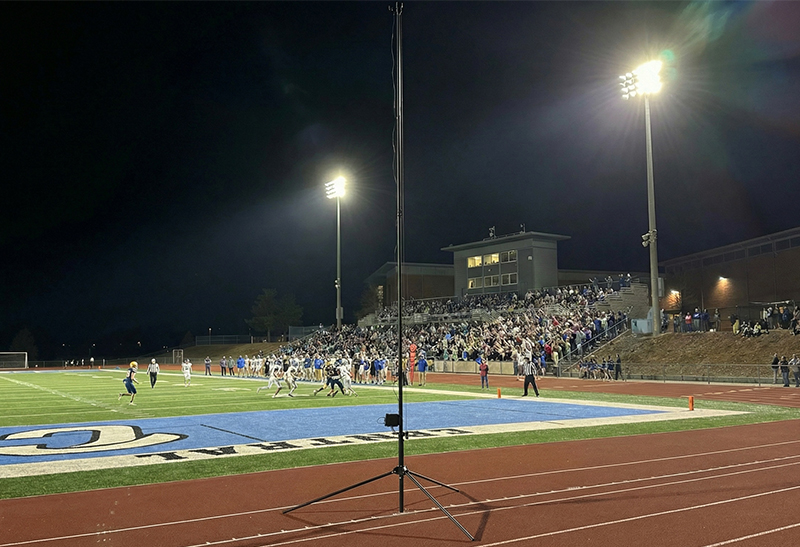
Friday night starts moving fast the moment teams hit the field. If your football endzone camera system takes too long to raise, shakes in the wind, or drops out when you need replay, it stops being a tool and becomes a problem. For programs that rely on video for in-game adjustments, postgame grading, and practice review, the right system has to work every time.
At a basic level, the job sounds simple - capture a clean view from behind the offense and defense. In reality, that angle has to do much more. Coaches use it to confirm run fits, track linebacker flow, evaluate secondary spacing, study protection, and teach leverage. If the shot is too low, too shaky, or too narrow, the value of the footage drops fast.
That is why a football endzone camera system should be judged less by marketing language and more by field performance. Can it get high enough to produce a true coaching angle? Can one person set it up quickly? Does it stay stable through weather, sideline traffic, and a full game of raising and lowering? And can your staff operate it without fighting software, batteries, or wireless issues?
Those questions matter more than flashy features. Most football staffs do not need a complicated filming setup. They need clear video, a dependable structure, and a system that fits into the workflow they already use.
One of the biggest differences between systems is working height. A low mast may be fine for a casual practice clip, but it usually does not give coaches the clean, elevated angle they want for game film. The reason is simple. The lower the camera sits, the more bodies block the view and the harder it becomes to see spacing develop across the formation.
A 25-foot endzone setup gives you a stronger top-down look without requiring a permanent install. That extra elevation helps separate players visually and makes it easier to study line play, pursuit paths, route concepts, and coverage structure. For many high school programs, that is the sweet spot between coaching value and practical deployment.
There is still an it depends factor here. Not every use case requires maximum height. If you are filming certain practices, individual periods, or short-field work, a lower practice pole can make more sense because it is faster to move and easier to position. The key is choosing equipment based on how your staff actually works, not just what sounds impressive on paper.
The most common complaint with cheaper systems is not image quality. It is movement. A tall camera setup that sways, bounces, or shifts under load can ruin otherwise usable video. That becomes even more frustrating when the camera itself is solid, but the support system is not.
A stable tripod and mast design does two things at once. First, it protects the footage. Coaches reviewing film need an image that stays centered and readable, especially when they are looking at line splits, backfield action, and defensive alignment. Second, it protects the operation. If the system feels unstable, staff members become hesitant to raise it fully or move it efficiently.
That is why engineering matters. A football endzone camera system should be designed around structural stability, not treated like a generic camera tripod stretched beyond its ideal use. Durable materials, a balanced base, and a manual raise-and-lower design often outperform more complicated systems that introduce extra failure points.
The best system is often the one your staff can deploy in less than five minutes without a troubleshooting session. That may not sound exciting, but it is exactly what most programs need. Game day already has enough moving parts. If video equipment requires a specialist just to get it functional, the setup is working against your staff.
This is where manual control has a real advantage. Motorized and wireless systems can sound appealing because they promise convenience. Sometimes they do save effort. But they also add batteries, charging routines, connection issues, and more components that can fail under pressure. When a coach or video assistant needs to get the camera up quickly and start filming, straightforward manual operation is often the more dependable choice.
Simple does not mean basic. It means the system is built around repeatable performance. Staff members know what to do, the setup process stays consistent, and the equipment behaves the same way from one game to the next.
Good footage only helps if it fits your workflow. Many programs already rely on platforms like Hudl Sideline, EDGE Replay, Game Strat, or SkyCoach for replay and upload. That means the camera system cannot be evaluated in isolation. It has to work as part of the full video process.
A strong endzone setup should give you clean, usable capture that integrates with the tools your staff already trusts. That reduces friction on game day and speeds up the path from live filming to sideline review or postgame breakdown. For most buyers, this is a practical question, not a technical one. Will this system help us get the footage where it needs to go, with less hassle?
If the answer is yes, the system is doing its job. If not, even a well-built tower becomes harder to justify.
An endzone unit gets most of the attention, but complete filming coverage usually requires more than one angle. Many football programs pair an endzone camera with a press box tripod setup so coaches can evaluate both structure and execution from complementary views. The sideline or box angle shows width, depth, and route distribution in a way the endzone angle cannot. Together, they give a fuller coaching picture.
Practice filming deserves the same kind of planning. A 10-foot practice pole may not replace the game setup, but it can make daily filming easier and more realistic for a staff that wants useful video without dragging out larger equipment. That matters over the course of a season. If the gear is too cumbersome, teams tend to use it less. If it is portable and quick to move, it becomes part of the routine.
For many programs, bundled equipment packages make sense because they solve the full filming need at once. Instead of piecing together mismatched components, buyers can standardize game and practice video around equipment that is built to work together.
Start with reliability, not features. Ask whether the system is built for repeated football use, not occasional filming. Look closely at mast height, tripod stability, portability, optics, and setup time. Those factors affect daily use far more than feature lists.
Then consider who will actually operate it. In some programs, that is a dedicated video staff member. In others, it may be an assistant coach, student manager, or volunteer. Equipment that depends on constant technical oversight can be a poor fit for programs that need straightforward operation.
It also helps to think about total value instead of sticker price alone. A cheaper unit that produces shaky footage, takes too long to deploy, or fails during the season is not really the lower-cost option. Durable equipment with practical support, warranty coverage, and clear compatibility with your workflow usually pays off faster than a bargain setup that creates extra work.
For programs evaluating options, this is where a specialized provider can make a difference. Companies focused on football filming understand the demands of game-day setup, replay integration, and transport in a way general camera suppliers often do not. Game Day Endzone is built around that reality, with systems designed specifically for football teams that need stable, portable, replay-ready video.
The goal is not to buy the most complicated setup on the market. The goal is to put a dependable tool in your staff’s hands. A football endzone camera system should help coaches teach faster, review cleaner, and operate with confidence on game night and during the week.
When the equipment is stable, easy to raise, easy to transport, and ready to work with your existing replay process, it stops demanding attention. That is exactly where good equipment belongs - in the background, doing its job while your staff focuses on football.
If you are replacing an outdated setup or building a new video package, choose the system your staff will trust when the game gets hectic. The best gear is not the gear with the most noise around it. It is the gear your program can count on every single time.