
June 9, 2026
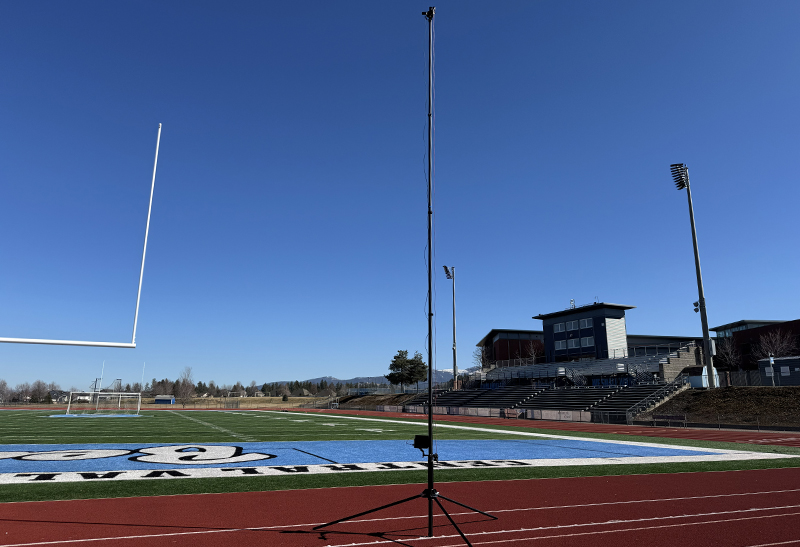
If your endzone angle is too low, the film looks crowded fast. Offensive line splits disappear, backfield action stacks on top of itself, and the exact detail your staff needs on run fits, pullers, and QB footwork gets harder to read. That is why coaches keep asking the same question: what camera height for endzone film gives you the cleanest, most useful football view?
For most game situations, 25 feet is the standard answer because it gives you the best balance of field depth, tactical visibility, and practical setup. It is high enough to see spacing develop, but still low enough to keep the picture connected to the line of scrimmage. That is the sweet spot most football staffs are after.
If you want one number to plan around, use 25 feet for endzone game film. That height consistently gives coaches a better read on blocking surfaces, box structure, route distribution, and pursuit angles than shorter setups.
The reason is simple. Endzone film is not about cinematic video. It is about clean coaching tape. You need to see the play unfold from behind the offense or defense with enough elevation to separate players visually. At ground level or near it, everything compresses. At the right height, the structure of the play opens up.
A 25-foot angle usually lets you see all 22 players in a more usable way while keeping enough detail to coach technique. You can identify leverage, track second-level fits, and evaluate whether a play failed because of assignment, alignment, or execution. That is much harder to do from a lower endzone angle.
There is a reason serious football programs have moved toward taller endzone systems. The higher camera position improves the coaching value of the video without creating unnecessary complexity on game day.
From 25 feet, inside run becomes easier to diagnose. You can see the center-to-safety structure more clearly. Combo blocks, scrape exchanges, insert paths, and backside pursuit all show up with better spacing. On pass plays, the view helps you read protection, pocket shape, release points, and route spacing from the inside out.
That extra elevation also helps with replay and sideline workflow. If your staff is sending film into Hudl Sideline, EDGE Replay, Game Strat, or SkyCoach, the value of that feed depends on clarity. A clean endzone angle gives coaches faster answers between series. If the film is too low and cluttered, the replay system may still work, but the coaching decision takes longer.
There is also a practical reason 25 feet has become popular. It is high enough to matter, but still manageable with a well-built manual system. You get pro-level viewing height without relying on more failure-prone motorized lifts or overly complicated wireless controls.
A lower camera can still record the game, but it often costs you detail where it matters most. Around 10 feet, which is useful in many practice settings, the angle is noticeably flatter. That can be fine for drills, individual periods, or controlled team sessions where the goal is quick review. It is less ideal when you need full-game diagnostic value.
The main issue is visual stacking. Linemen block your line of sight. Backfield mesh gets hidden. Defensive movement looks tighter than it really is. Plays near the goal line become especially difficult to evaluate because the depth of the formation compresses.
This is where many programs get frustrated. They assume the problem is the camera or the operator, when the real issue is simply camera height. Better optics help, and a stable tripod matters a lot, but neither one can fully solve a poor viewing angle.
Yes, and that is part of the conversation too. More height is not always better.
If you go excessively high, the image can start to flatten in a different way. Players may look smaller than needed, and depending on the lens and field conditions, you can lose some of the detail that makes technique evaluation useful. A very high angle can be good for broad spacing, but not as good for seeing hand placement, footwork, or tight interior action.
It also introduces more setup demands. Taller systems put more stress on stability, wind resistance, and operator control. If the structure is not engineered well, the extra height can work against you. That is why the target is not maximum height. It is usable height.
For most football teams, 25 feet lands in that usable range. It improves visibility without creating a system that is hard to transport, hard to deploy, or shaky when conditions turn.
Game film and practice film do not always need the same setup.
For games, especially when the film feeds replay or postgame breakdown, 25 feet is the strongest all-around choice. You need the widest coaching value from every snap, and game-day reps are too important to waste on a compromised angle.
For practice, it depends on what you are trying to capture. If you are filming inside run, team periods, or full-field work and want game-like coaching tape, more height still helps. But if your goal is a quick correction tool for a drill period, a 10-foot setup may be enough and can be faster to move.
That is why many programs use different tools for different jobs. A lower pole can make sense on the practice field where portability matters and the staff needs quick deployment. A full-height endzone system makes more sense on Friday night when every snap is part of your evaluation, opponent prep, and in-game adjustment process.
When coaches ask what camera height for endzone film is best, the honest answer is tied to stability. A 25-foot camera that sways, vibrates, or takes too long to set up is not helping your staff.
The filming height only works if the system stays steady and the operator can control it without fighting the equipment. That is one reason manual systems remain the right choice for many programs. Fewer failure points, less troubleshooting, and more dependable operation under game pressure.
This matters even more in football because you are often filming in wind, uneven field access areas, or tight endzone spaces. The system has to be stable enough to deliver consistent video from the first quarter to the final drive. If it is difficult to raise, difficult to level, or too fragile to trust week after week, the height advantage gets canceled out.
A well-built 25-foot endzone system solves the right problem. It gives you the angle you need and the reliability your staff can actually use.
Start with your use case, not just the spec sheet. If your staff depends on endzone video for in-game replay, coordinator communication, and postgame grading, invest in a true game-height setup. If your biggest need is portable practice footage, a lower option may be a smart addition rather than a replacement.
Also consider who will run the system. Many football programs do not have a full-time video department. The setup has to work for student assistants, part-time staff, or coaches handling multiple responsibilities. Simplicity is not a luxury. It is part of reliability.
Budget matters too, but so does replacement cost. A cheaper system that produces poor angles or breaks under regular use usually costs more over time. Better film changes coaching decisions. Better equipment protects that workflow.
That is why a lot of teams standardize around a 25-foot endzone system for games and use lower-height tools where they make operational sense. It is a practical setup that supports both performance and portability.
If you are filming football games and want the best all-around coaching angle, 25 feet is the number to beat. It consistently gives staffs a clearer read on spacing, leverage, pursuit, protection, and execution. Lower heights can work in practice or limited-use cases, but they usually do not deliver the same value on game night.
At Game Day Endzone, that is exactly why the 25-foot system remains the core setup for programs that want dependable, pro-level football film without adding unnecessary complexity. The right height is the one that helps your staff coach faster, see cleaner, and trust the video every time the ball is snapped.
Good endzone film should answer questions, not create new ones.