
April 21, 2026
If you are asking what camera works with Hudl Sideline, you are usually not just asking about the camera body. You are really asking what will give your staff a clean, reliable live feed on Friday night without scrambling through settings, adapters, or dead batteries five minutes before kickoff.
That is the right question to ask.
For most football programs, Hudl Sideline compatibility comes down to more than brand names. The camera has to deliver the right video output, hold a stable shot, perform well under stadium lights, and fit into a setup your staff can repeat every week. A great camera on the wrong tripod or with the wrong output path can still create a bad game-day result.
Hudl Sideline is built around receiving live video from your filming position and pushing that feed into your sideline workflow. That means the best camera is one that plays well with the rest of the system - your tripod or endzone mast, your capture hardware, your cabling, your power plan, and the person actually operating it.
In practical terms, the camera that works with Hudl Sideline is usually a camcorder or video camera with clean HDMI output or another supported live video output, dependable autofocus or manual control, strong optical zoom, and the ability to run for an entire game. Football staffs do not need a camera that looks impressive on a spec sheet if it creates more failure points in real conditions.
This is where a lot of teams get tripped up. They focus on resolution first and workflow second. But Hudl Sideline success is usually about consistency, not chasing the flashiest camera spec available.
The first requirement is live video output. If the camera cannot send a clean feed to your sideline system, it is not the right fit, even if it records beautiful video internally. Some cameras are excellent for highlight production but awkward for live coaching workflows.
The second requirement is reliable operation during a full game. Football programs need cameras that can stay powered, stay cool, and keep feeding video without interruptions. A camera that overheats, shuts down on time limits, or drops output when menus appear can create problems fast.
Optical zoom also matters. From an endzone or press box angle, your operator needs enough reach to frame the field correctly without destroying image quality. Digital zoom is not a real substitute here. Stable optical performance makes a difference when you are trying to track formations, motion, and post-snap action.
Low-light performance matters more than many buyers expect. Day games are easy. Stadium lighting is where camera quality gets tested. If the image gets noisy or soft under the lights, your coaches may still see the play, but the video becomes less useful for immediate corrections and later breakdown.
Then there is simple operation. A football camera setup should not require a video engineer to run it. If a manager, assistant coach, or parent volunteer is part of the workflow, the controls need to be straightforward and repeatable.
For most teams, a dedicated camcorder is the safest answer.
Camcorders are built for long recording sessions and steady live output. They usually have the practical features football programs need: usable zoom ranges, clean HDMI output, better ergonomics for game filming, and fewer surprises during long events. They are not as trendy as mirrorless cameras, but on game day, dependable beats trendy.
DSLR cameras are generally a weaker fit for Hudl Sideline workflows. Many older DSLRs have recording limits, weaker autofocus in live view, or less reliable output behavior. Some can be made to work, but they are usually not the simplest choice for a football program that wants a repeatable system.
Mirrorless cameras sit in the middle. Some newer mirrorless models can produce excellent image quality and clean live output, but they come with trade-offs. Battery life may be shorter. Overheating can be an issue on extended use. Lens selection adds cost. And the setup often gets more complicated than a coach wants on a busy sideline.
That does not mean mirrorless cameras never work with Hudl Sideline. It means they need to be chosen carefully. If your staff already understands those cameras and can support the workflow, they can be effective. If not, a camcorder is usually the more practical football choice.
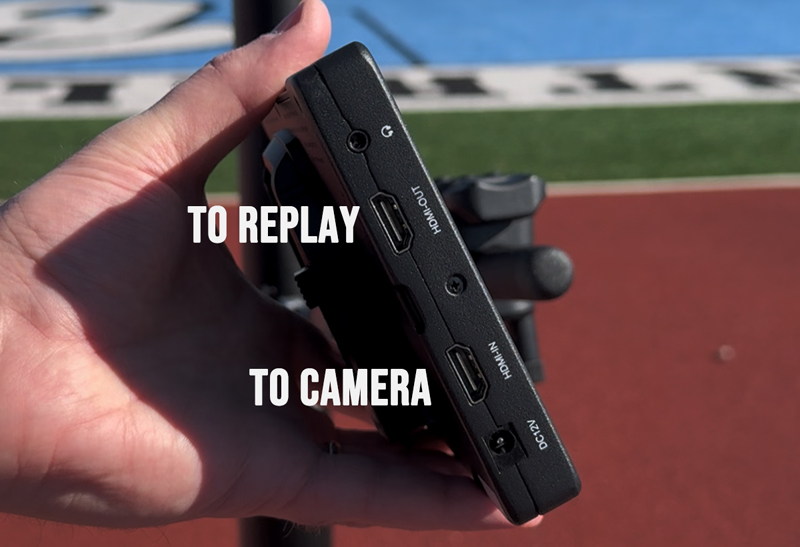
If you are evaluating what camera works with Hudl Sideline, start by confirming output compatibility. You want to know exactly what the camera sends out, what your capture or replay hardware accepts, and whether any converter is required. Every extra adapter is another possible issue on game day.
Next, verify that the camera provides a clean output feed. Some cameras place icons, focus boxes, or settings overlays on the video output. That may be acceptable for casual recording, but it is not what you want feeding a live replay system.
Check power options too. AC power, external battery support, or extended runtime battery solutions can all matter. A camera that technically works with Hudl Sideline but dies in the third quarter is not a working solution.
Also look closely at the mounting environment. A camera on a 25-foot endzone system has different demands than one mounted at ground level or used in a press box. Weight, balance, and operator control all become part of compatibility, even if the video output is correct.
This is the part many buyers underestimate.
The camera is only one piece of the video chain. If the tripod flexes, the mast wobbles, or the operator has to fight a shaky head all game, even a good camera will produce frustrating footage. That matters for both coaching value and sideline replay speed.
A stable manual system is often the best answer because it removes unnecessary complexity. Motorized systems can sound appealing, but they add more parts, more charging, more controls, and more failure points. For many football programs, manual control with a properly engineered support system is the more reliable path.
That is why compatibility should be evaluated as a field-ready package, not just a camera purchase. The right question is not only whether the camera can connect to Hudl Sideline. The right question is whether the full setup works every time under actual football conditions.
The most common mistake is buying for resolution alone. 4K sounds great, but if the workflow becomes less stable, less portable, or harder to operate, the upgrade may not help your staff. Many teams get better real-world results from a dependable HD or properly integrated higher-resolution setup than from a more advanced camera used poorly.
Another mistake is assuming any HDMI camera will work well. HDMI output is only part of the story. You still need clean output, reliable runtime, proper capture support, and a stable mounting system.
Some programs also underestimate staffing. If your game-day video depends on a part-time operator, choose equipment that is forgiving and simple. A technically powerful camera with a steep learning curve can cost you more in missed plays than it gives back in image quality.
The last big mistake is ignoring practice use. Your camera should not only fit Friday nights. It should also make sense for weekday installs, practice filming, and offseason work. The best value usually comes from equipment that serves the whole program, not just one setting.
For most high school and academy programs, the best camera for Hudl Sideline is a dedicated video camera or camcorder with clean live output, strong optical zoom, solid low-light performance, and easy long-duration operation. Pair that with a stable endzone or press box support system, dependable cabling, and a simple power plan, and you have a setup that actually helps your staff.
If your program wants a more advanced camera style, that can work too, but only if the rest of the workflow is equally dialed in. In football, complexity rarely gets easier under pressure.
At Game Day Endzone, that is exactly why we focus on complete filming systems built around stability, fast setup, and proven compatibility with platforms coaches already use. The goal is not to make the setup look more technical. The goal is to make sure it performs when your staff needs it.
The best camera for Hudl Sideline is the one that gives your coaches a clear picture, your operator an easy job, and your program one less thing to worry about when the game starts.