
July 10, 2026
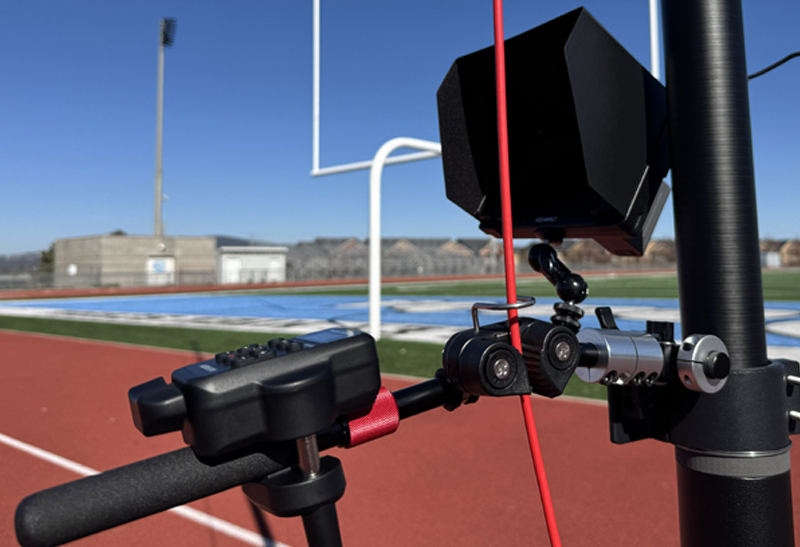
A game can get off schedule, your usual video person can call out, and suddenly a coach, manager, or volunteer is behind the camera with one quarter to figure it out. That is exactly where staff friendly football camera controls matter. If a system only works when one trained specialist is running it, it is not really built for football operations.
For most programs, the best camera control setup is not the one with the longest feature list. It is the one that a football staff can learn quickly, trust under pressure, and repeat every Friday night and Saturday morning without fighting the equipment. Coaches do not need camera controls that look impressive on a spec sheet. They need controls that produce usable endzone and sideline footage every time.
In football, staff friendly controls are simple, predictable, and easy to teach. A new operator should be able to understand how to raise the system, secure the camera, frame the field, and make small adjustments without guessing. The fewer moving parts in the process, the fewer chances there are for mistakes during live action.
That usually points to manual control systems over motorized or wireless-heavy designs. Manual does not mean low quality. In many cases, it means the opposite. It means the operator has direct control, the setup is easier to troubleshoot, and there are fewer electronic failure points standing between your staff and the footage you need.
A football program is not a broadcast truck with a full-time engineering crew. Most teams are asking position coaches, student workers, or support staff to handle filming as one task among many. Controls should reflect that reality.
Game day is not the time to explain pairing issues, battery management across multiple accessories, or why a remote pan system is not responding. Football staffs work on tight timelines. Warmups, special teams periods, booth communication, replay workflow, and halftime adjustments all compete for attention.
When controls are straightforward, setup gets faster and handoffs get cleaner. One person can train another in a few minutes. If the operator changes from week to week, the system still performs. That consistency matters more than flashy automation for most high school and academy programs.
There is also a quality argument here. A stable manual system often gives you cleaner, more dependable footage than a complicated system that promises convenience but introduces shake, lag, drift, or alignment issues. The best control setup is the one that keeps the camera where it needs to be and lets the operator make quick, confident adjustments.
Every extra step in a control system becomes a training problem. If an operator has to learn app menus, wireless syncing, charging sequences, and emergency resets before they can film a game, the system is already asking too much from a typical football staff.
Staff friendly football camera controls shorten that learning curve. A coach or video coordinator should be able to teach the basics quickly: how to mount the camera, how to aim it, how to maintain a consistent view, and how to make simple corrections when play shifts. That is what most teams actually need.
This matters even more for schools with limited staffing. Some programs have a dedicated video role. Many do not. In those settings, ease of operation is not a nice extra. It is part of whether the equipment is useful at all.
Start with predictability. Controls should respond the same way every time, without lag or signal dependence. If a staff member makes an adjustment, they should see that result immediately.
Next is physical simplicity. Systems with clear locking points, stable support, and direct manual handling are easier to operate than systems that rely on multiple powered components. A strong tripod and a well-balanced camera position do more for footage quality than many programs realize.
Then look at setup speed. If the camera system can be deployed in a few minutes and the controls are obvious, the odds of using it correctly go way up. When setup is slow or confusing, corners get cut. That leads to poor angles, missed clips, or equipment damage.
Finally, think about repeatability. Can different staff members run the same system and produce similar footage? If the answer is yes, the controls are doing their job.
There is a reason many experienced football programs still prefer manual systems. They are dependable, easier to maintain, and generally better suited to the reality of school athletics.
Motorized controls can sound attractive because they suggest less effort from the operator. But they also introduce batteries, wiring, remotes, pairing, and more points of failure. If one part of that chain stops working, your whole filming process can stall. That trade-off may make sense in certain advanced environments, but for most football teams, it creates more risk than value.
Manual controls ask a little more from the operator in the moment, but much less from the staff overall. They are easier to train, easier to troubleshoot, and easier to trust. That is often the smarter choice for programs that need to film every game and practice without drama.
Footage is not useful if it does not make it into your review process on time. Most programs today are filming for replay, coaching corrections, opponent breakdown, and player development. That means camera operation has to support the larger workflow, not slow it down.
A control system that is easy to run helps your staff stay focused on getting clean, stable video into platforms they already use. If the camera operator is constantly fighting the equipment, everything downstream suffers. Replay is delayed. Uploads take longer. Coaches get frustrated with the angle quality.
That is why the smartest programs evaluate controls as part of the whole system. It is not just about whether the camera moves. It is about whether your staff can capture dependable footage under real football conditions and keep the rest of the operation moving.
You can usually spot a bad fit pretty quickly. If only one person on campus knows how to operate the system, that is a warning sign. If setup requires a checklist just to power and connect the controls, that is another one.
You should also pay attention to what happens when conditions are not perfect. Wind, rushed setup windows, uneven surfaces, and operator changes are normal in football. A staff-friendly system holds up in those moments. If your footage quality drops off sharply whenever the usual operator is unavailable, the controls may be too complicated.
Cost can be misleading here too. A more expensive control system is not automatically better for your team. If it demands more training, more maintenance, and more troubleshooting, it may actually cost you more in lost time and missed video than a simpler setup.
The right control system depends on your staffing, your filming locations, and how often different people need to run the equipment. A larger program with dedicated video personnel may be able to manage more complexity. A smaller school may need a system that any coach or student assistant can operate with minimal instruction.
That is why the best buying decision usually starts with this question: who will actually run the camera on a busy week? Not who should run it. Who will really be doing it when the schedule gets tight.
For many teams, the answer points toward stable, manual systems with straightforward adjustment and fast deployment. That is one reason companies like Game Day Endzone have stayed focused on practical football filming equipment instead of chasing control features that look modern but create more headaches on the field.
The best camera controls are not the ones that impress people in a demo. They are the ones your staff can use correctly, consistently, and confidently when the game is moving fast. If your system makes filming easier for the people you already have, you are much more likely to get the footage your program depends on.
Choose controls that respect how football staffs actually work. Your video operation will be better for it on game day, at practice, and every time you need to turn film into coaching value.