
May 12, 2026
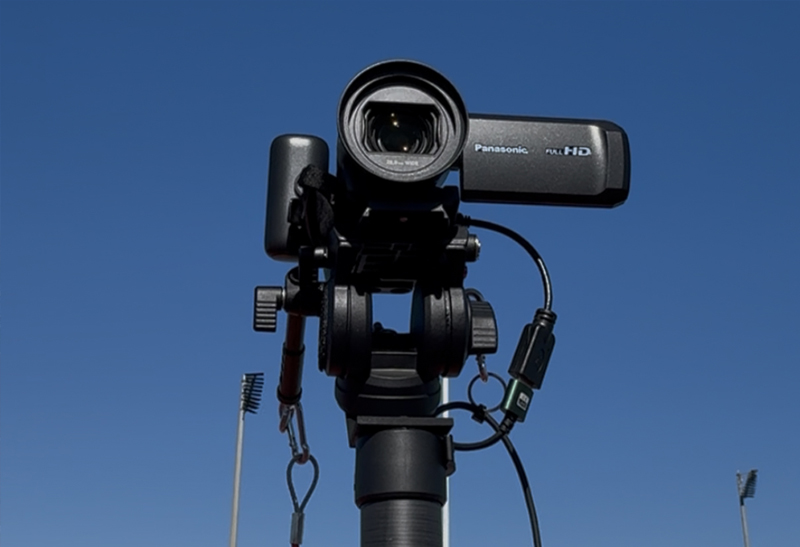
Friday night gets loud fast. If your hudl endzone camera setup takes 20 minutes, wobbles in the wind, or forces your staff to troubleshoot during warmups, it is already working against you. For football programs that rely on Hudl for replay, coaching, and postgame breakdown, the camera system is not a side purchase. It is part of your operation.
That is why the real question is not just whether a camera can capture endzone video. It is whether the full system can deliver clean, usable footage every week without adding stress to game day. Coaches and video staff do not need more technology to manage. They need equipment that goes up quickly, stays stable, and fits the workflow they already use.
At a basic level, a hudl endzone camera has one job: give your staff a clear, elevated look at every snap from behind the offense and defense. But in real football settings, that job expands fast. The system needs to handle travel, uneven surfaces, changing weather, and operators who may be volunteers, assistants, or students.
That is why a good setup is about more than the camera itself. Height matters because the angle affects how well you can see spacing, line play, and route development. Stability matters because shaky footage loses detail and makes replay less useful. Setup time matters because most staffs are short on help and long on responsibilities.
If you are filming for Hudl Sideline or uploading after the game, the footage has to be consistent. Clean framing and dependable operation save time later. Bad video creates extra work for everyone.
A lot of buyers start by comparing camera specs. Resolution matters, and optical quality matters, but the support system is often what determines whether the video is usable. A strong camera mounted on a weak pole or unstable tripod still gives you a poor result.
For football, the best endzone systems are built around stability first. A 25-foot endzone pole needs to stay planted and controlled, not sway every time the wind picks up or someone brushes the base. Manual control is often the smarter choice here. Motorized and wireless systems can sound attractive, but they introduce more points of failure. Batteries die. Remote connections lag. Electronics do not always cooperate when you are trying to get through pregame.
A manual system, when engineered well, is simple for a reason. Less to fail means fewer interruptions on game day. That trade-off matters for high school and academy programs that need reliable performance more than extra complexity.
Not every elevated shot gives you useful coaching video. The angle has to be high enough to show the field structure without turning players into small moving dots. In most cases, a true endzone pole gives you a better tactical view than trying to improvise with a low platform, ladder, or temporary stand.
From the right height, coaches can evaluate line splits, leverage, pursuit, blocking surfaces, and route spacing more clearly. Defensively, it becomes easier to see fit, pursuit lanes, and secondary rotation. Offensively, the endzone view helps staff evaluate details that are harder to catch from a sideline angle alone.
There is some room for preference. A varsity program with a full staff may want maximum elevation for game film, while a smaller program may prioritize speed and simplicity if one person is handling setup. But the principle stays the same: the system should give you a repeatable angle that supports coaching decisions, not just general video coverage.
Coaches sometimes treat setup time like a convenience issue. It is not. It affects whether the system gets used correctly every week.
If a hudl endzone camera takes too long to assemble or requires too many adjustments, people start cutting corners. They lower the height, skip parts of the process, or avoid using it at lower-level games and practices. That usually leads to inconsistent video from one session to the next.
A strong system should be straightforward enough that staff can get it in position in just a few minutes. That means a tripod that opens fast, locks securely, and does not need constant correction. It means a pole design that is portable without feeling flimsy. And it means controls that are easy to understand for operators who are not full-time video professionals.
This is one of the biggest differences between equipment that looks good in a brochure and equipment that actually works for football programs. Simplicity is not a downgrade. In many cases, it is what keeps the operation moving.
When coaches talk about compatibility, they usually mean one thing: can this system fit into what we already do on Friday night and during the week? That is the standard that matters.
A camera system does not need flashy features to work well with Hudl. It needs to provide dependable, high-quality footage and support a workflow that your staff can repeat. If you use Hudl Sideline, the connection between filming and replay has to feel operationally smooth. If you are uploading after games or practices, the footage has to be captured in a way that does not create extra cleanup or technical headaches.
That is why equipment design matters so much. Stable support, quality optics, and straightforward controls all contribute to cleaner video and fewer avoidable issues. A system can be compatible on paper and still be frustrating in real use. Football staffs should buy based on field performance, not just a feature list.
Endzone camera systems do not live in ideal conditions. They get packed into vehicles, carried across fields, set up on rough ground, and used in heat, wind, and cold. If the equipment is not built for that reality, replacement costs start showing up sooner than expected.
Durability shows up in a few ways. The tripod should feel planted, not light and nervous. The pole sections should lock confidently. The hardware should hold alignment over time. These details are easy to overlook until something starts slipping midseason.
This is also where cheap alternatives usually reveal their true cost. A lower upfront price can look attractive, but if the system is unstable, slow to deploy, or prone to failure, it costs more in frustration and lost footage. For most programs, value comes from equipment that performs consistently across multiple seasons.
The best buying decision usually comes from asking operational questions, not marketing questions. How fast can one or two people set it up? How stable is it at full height? How easy is it to transport between games and practices? Can a student manager operate it without constant instruction? Does it support the way your staff already captures and reviews film?
Those answers matter more than buzzwords. A football program needs a complete filming solution, not an impressive spec sheet.
That is why many staffs prefer systems built specifically around football workflows, including a full endzone setup, a press box tripod option, and a practice pole for daily use. When the equipment across all three settings is consistent, your staff spends less time learning different tools and more time coaching. Game Day Endzone focuses on that kind of practical consistency because it is what football programs actually use.
The best hudl endzone camera is the one your staff trusts without thinking about it. It goes up fast, captures the angle you need, and stays out of the way while coaches coach. That may sound simple, but simple is exactly what most programs need.
There is always a balance between features and reliability. Some staffs want added technology. Others would rather have a manual system that works every time. For most high school football programs, reliability wins that argument more often than not.
If you are evaluating options, keep the focus on the field. Choose the setup that gives you stable footage, easy deployment, and a clean fit with your existing workflow. When your video system does its job quietly and consistently, the rest of your operation gets better with it.
The right equipment should make Friday night feel more under control, not more complicated.