
June 19, 2026
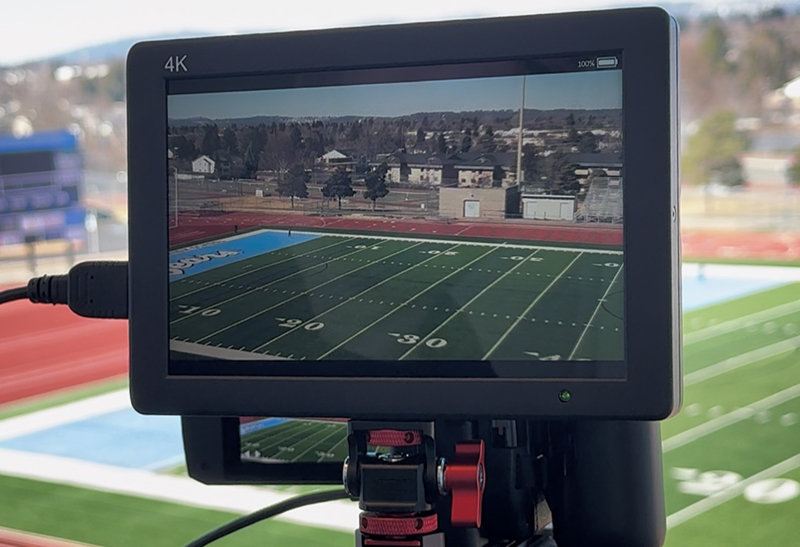
Friday night starts fast, and bad press box video puts your staff behind before the first series is over. If you're figuring out how to film from press box for football, the goal is simple: get clean, stable, wide-enough footage that coaches can trust for replay, grading, and postgame breakdown.
That sounds straightforward until the real-world problems show up. Tight spaces, shaky tripods, poor angles, zoom mistakes, blocked sightlines, and rushed setup can all turn usable film into a weekly headache. The good news is that most of those issues are preventable if your setup is built for football and your operator follows a repeatable process.
The best press box video starts before kickoff. Camera work matters, but equipment placement and stability matter just as much. A good operator cannot fully compensate for a flimsy tripod, a poor vantage point, or a camera that is constantly being adjusted because the setup was rushed.
Start with your location. The ideal press box position is centered on the 50-yard line or as close to it as possible. That gives you the most balanced angle for tracking formations, route concepts, leverage, and run fits. If the camera is too far toward one end, the field can look compressed on one side and stretched on the other, which makes evaluation harder for coaches.
Height helps, but only to a point. A higher press box angle gives better visibility across the full width of the field, especially when bodies pile up near the line of scrimmage. But if the angle gets too steep, some staffs feel it loses the feel of down-and-distance and can make depth harder to read. For most high school programs, a centered press box view at a moderate elevation is the most useful all-around game angle.
Just as important is the support system. A press box tripod should feel planted, not delicate. Football filming is not studio work. Operators pan constantly, stop suddenly, and react in real time. If the tripod flexes or shifts under pressure, the video shows it immediately. Stable engineering matters more than fancy features.
A common mistake in learning how to film from press box is zooming too tight because the operator wants to follow the ball. Coaches usually need more than the ball. They need spacing, personnel structure, pre-snap alignment, and what happens away from the tackle.
Your default framing should show all 22 players whenever possible, especially before the snap. That means keeping enough width to capture both wide receivers, the offensive backfield, and defensive shell. If you cut off the outside receiver or lose the corner to the boundary, the value of the clip drops fast.
Once the ball is snapped, stay wide enough to keep the play structure visible for as long as possible. On inside run, that may mean only a slight follow. On perimeter run or screens, you will need to pan earlier and more smoothly. On deep passes, resist the urge to zoom while the play is live unless your operator is highly experienced and your system is stable enough to handle it. Most of the time, steady and slightly wider beats aggressive and shaky.
The easiest rule is this: frame for coaching, not for highlight clips. Highlight footage can be tighter and more dramatic. Coaching footage needs context.
Press box filming is mostly about disciplined panning. The operator should not chase every fake, overcorrect on every cut, or snap the camera back and forth after the handoff. Small, controlled movement makes the footage easier to watch and more useful in replay systems.
Before the snap, settle the camera and hold the formation still for a beat. That moment matters for postgame grading and in-game review. At the snap, move with the developing play instead of reacting late. If the movement starts smoothly, the rest of the clip usually follows.
This is where manual systems often outperform more complicated solutions in real football environments. Simple, direct control tends to be more dependable under pressure. When weather changes, batteries drain, or wireless systems act up, straightforward equipment often keeps working. For many programs, reliability is a bigger advantage than automation.
The press box environment changes from stadium to stadium. Some booths are bright. Some are dark. Some have tinted glass, limited openings, or mixed lighting that can confuse a camera's automatic settings.
If you're filming through glass, understand the trade-off. It may protect equipment from weather, but glare, reflections, and contrast issues can hurt image quality. If possible, film through an open window or designated camera opening. If you must shoot through glass, position the camera tight to the pane and control interior reflections as much as possible.
Auto settings are convenient, but they can drift during games with changing light. Late-afternoon kickoffs are especially tricky because the field may shift from full sun to stadium lights over the course of the game. If your operator knows the camera well, locking in exposure and focus settings can create more consistent results. If not, a quality camera with dependable auto performance may still be the safer choice. It depends on operator experience.
Either way, test before the game starts. Don't wait until the first kickoff return to realize the image is soft or the exposure is hunting.
A lot of staffs focus on the shot and overlook the bigger objective: getting usable video to coaches fast. Press box filming is part of an operational workflow, not a standalone task.
That means the best setup is one that pairs good video with fast deployment, clean cable management, and compatibility with your sideline replay or upload platform. If your equipment takes too long to assemble, requires constant troubleshooting, or creates uncertainty for volunteer operators, it costs you during the game.
This is why many football programs prefer systems designed specifically for coaching use rather than general-purpose video gear. A football filming setup should be quick to deploy, easy to train on, and stable enough to produce repeatable results every week. At Game Day Endzone, that practical approach is the whole point: equipment built to work every time, without adding unnecessary complexity to game night.
Most press box video problems come from a handful of repeated issues. The first is poor setup location. If your camera is off-center or blocked by rails, support beams, or people moving in and out of the booth, the operator is fighting the environment all game.
The second is unstable support. Cheap or undersized tripods often look fine until live action starts. Then the pan sticks, the head jumps, or the image shakes every time the operator touches the handle.
The third is inconsistent framing. Some operators start wide, then zoom too far once the ball is snapped and lose the full picture. Others stay so wide that details become hard to evaluate. There is no single perfect zoom level for every field, but there is a consistent standard: keep the structure of the play visible.
The fourth is assigning the job to someone with no process. The operator does not need to be a film expert, but they do need clear expectations. Show formation before the snap. Hold steady. Pan early. Avoid unnecessary zoom. Track the finish of the play. That level of structure goes a long way.
For most football staffs, the most effective routine is also the simplest. Get set early. Confirm your angle and line of sight. Make sure the tripod is fully stable and level. Check focus, exposure, and recording. Then repeat the same filming rhythm every play.
Hold pre-snap. Capture the full formation. Follow the play with smooth movement. Let the action finish before resetting. Between plays, return to your standard framing and get ready to do it again.
This kind of consistency is what makes press box film more useful over the course of a season. Coaches can compare clips more easily. Replay staff can work faster. Your operator gets more comfortable each week. And when weather, crowd movement, or a chaotic game script tries to create problems, your process keeps the film steady.
There is always some give-and-take in football video. A wider shot gives more context but less player detail. A tighter shot shows more detail but can lose formation structure. A high angle helps see spacing but may flatten depth. The right answer depends on what your staff values most, but the non-negotiables stay the same: stability, visibility, and repeatability.
If your program is serious about using film to coach, scout, and communicate on game night, treat the press box angle like an operational tool, not an afterthought. The best footage usually comes from the setup that is easiest to trust when the game gets busy.