
June 9, 2026
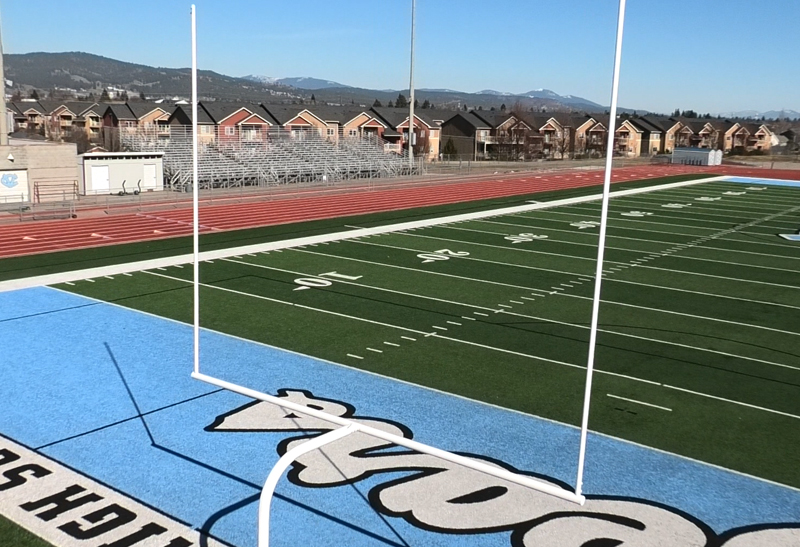
Friday night is not the time to find out your camera pole sways in the wind, your operator needs a manual to set it up, or your video won’t play nicely with the replay system your staff already uses. A good football endzone camera guide starts with that reality. Coaches and video staff do not need flashy features that look good in a catalog and create problems on game day. They need clean film, fast setup, and gear that works every time.
For most football programs, the endzone angle is not optional anymore. It is one of the most useful views for evaluating line play, spacing, fits, coverage structure, and player technique. That makes the camera system a football tool, not just a media accessory. If the footage is shaky, inconsistent, or difficult to capture, the whole workflow suffers - from halftime adjustments to Sunday grading.
Most buyers are not trying to become camera experts. They are trying to answer a few practical questions. Will this system give us dependable footage? Can our staff set it up quickly? Will it hold up over a full season? Will it work with the video platforms we already use?
Those are the right questions, because endzone camera systems are often sold with a lot of noise around them. Some emphasize automation. Others lean on lightweight construction or generic tripod parts. On paper, that can sound appealing. On the field, reliability usually matters more than novelty.
The best choice depends on how your program operates. A varsity program filming every game, using sideline replay, and sharing clips across multiple coaches has different needs than a lower-volume team filming practice a few times a week. But the core requirements stay the same: stability, speed, image quality, portability, and compatibility.
If you have ever watched endzone film with constant vibration or side-to-side movement, you already know this. Height alone does not create useful footage. A tall system without a stable base can become a problem fast, especially in wind or on uneven surfaces near the field.
A serious football endzone camera guide has to put tripod engineering near the top of the list. This is where many systems separate themselves. A durable base, well-designed leg structure, and dependable locking points do more for real-world results than gimmicks ever will. Coaches need a system that stays steady through a full game, not one that looks impressive until weather or field conditions get involved.
There is also a trade-off here. Ultra-light setups can be easier to carry, but they often give up the planted feel that helps produce cleaner video. That does not mean every heavy system is better. It means buyers should be cautious about anything that prioritizes convenience over stability to the point that the footage suffers.
Many programs are drawn to a 25-foot endzone setup because it gives a strong coaching angle without becoming overly complicated to deploy. That height works well for seeing formation structure, box count, run fits, and route development from the back end. It is high enough to provide useful perspective, but still practical for crews that need to move efficiently.
For practice, a shorter setup can make more sense. A 10-foot pole is often easier to position, quicker to move between periods, and perfectly useful for practice evaluation when the goal is getting repeatable teaching film rather than full game capture. This is one of those areas where it depends on your workflow. If one system is expected to do everything, flexibility matters. If your staff films games and practice differently, having separate tools can be smarter than forcing one setup into every situation.
Game day crews are not always made up of dedicated full-time video personnel. In many football programs, setup falls to assistants, student managers, tech staff, or whoever is available at the moment. If the system is hard to assemble, requires too many adjustments, or depends on finicky electronics, mistakes become more likely.
That is why manual systems still have a strong place in football operations. A well-built manual control setup is often more dependable than a motorized or wireless design with more failure points. That may sound less exciting in a product comparison, but it usually feels a lot more exciting when your equipment works in bad weather, under time pressure, and with different operators throughout the season.
A straightforward setup process also saves time before kickoff and during practice transitions. If a system can be deployed in minutes and packed down without a long checklist, it reduces friction for the entire staff. That matters more than people think. The easier a system is to use, the more consistently the team will actually use it.
Buyers often start with image specs, and that is reasonable. You need clear footage. But for football use, premium optics and stable capture usually matter just as much as the headline resolution number. If the image is shaky, poorly framed, or unreliable in changing light, the extra spec on paper does not help much.
Good football film should let coaches see leverage, footwork, spacing, and assignment detail without fighting the image. A strong endzone setup supports that by combining clear optics with a consistent platform. In other words, the camera system has to help the camera do its job.
This is another place where cheaper systems can disappoint. They may promise acceptable quality, but poor support hardware or lower-grade components can create a drop in real field performance. The issue is not always obvious in marketing materials. It becomes obvious when coaches are trying to review critical snaps.
A camera system should fit your workflow, not force you to rebuild it. For many programs, that means making sure the equipment works smoothly with platforms already used for replay, upload, and film exchange. If your staff relies on tools like Hudl Sideline, EDGE Replay, Game Strat, or SkyCoach, compatibility is not a side concern. It is central to operational value.
This is where football-specific systems have a clear advantage over generic video gear. A system designed around football filming is more likely to support the practical realities of game-day capture and postgame handling. That includes mounting, stability, camera positioning, and the overall speed of getting useful video into the hands of coaches.
The best buying decision usually comes from looking at the full chain. Capturing the footage is step one. Getting it where it needs to go, without wasted motion or technical drama, is what turns equipment into a useful part of your program.
A lot of programs have been burned by gear that is portable in the short term and fragile in the long term. Football equipment gets loaded, unloaded, moved across stadiums, packed on buses, and handled by multiple people. If the system is not built for that, the cracks show quickly.
At the same time, nobody wants a setup that is so bulky and awkward that staff avoid using it. Good design balances portability with field-ready construction. That usually means components that travel well, lock down securely, and hold up over repeated use.
This is where value should be judged carefully. A lower upfront price is not always lower cost if the system creates missed film, extra setup time, repairs, or replacement needs. Buyers should think in seasons, not just purchase day.
If you are comparing options, start with the non-negotiables. Ask whether the system is stable at working height, easy for normal staff to set up, durable enough for repeated football use, and compatible with your current video process. Then evaluate image quality, portability, and package value.
For many high school and academy programs, a complete bundled setup often makes the most sense because it removes guesswork. When the endzone pole, press box tripod solution, and practice filming option are designed to work together, the program gets consistency across games and practices. That can be more useful than assembling a mixed system from unrelated parts.
Game Day Endzone has built its approach around that reality: dependable football video systems that prioritize stability, simple deployment, and compatibility over unnecessary complexity. That is a practical direction for programs that need equipment to perform under pressure.
The best system is the one your staff trusts before kickoff, during the game, and after the final whistle. Buy for clean film, fast operation, and fewer headaches, and your camera setup will start helping your program the first time you put it on the field.