
September 16, 2026
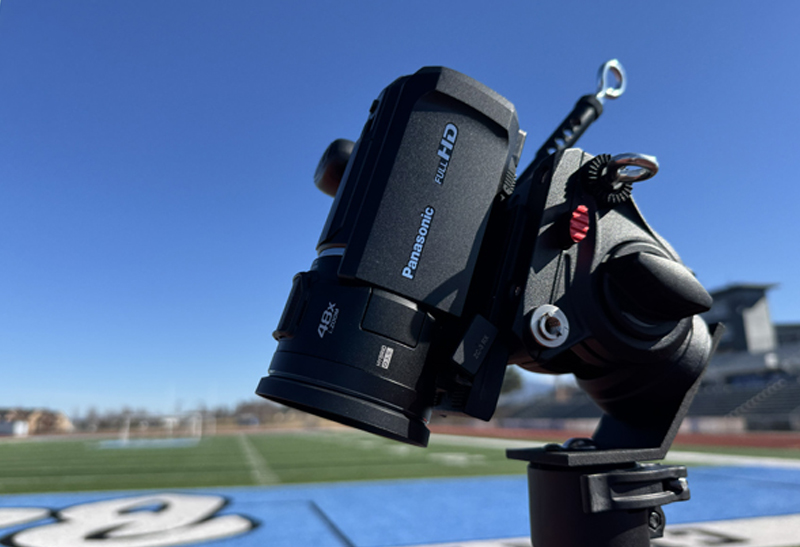
A coordinator does not need another camera angle just to fill storage. They need to see whether the guard reached the second level, whether the safety fit the run correctly, and whether the quarterback had a clean throwing lane. That is where endzone footage benefits become clear. A stable, elevated view turns game and practice video into coaching evidence instead of a collection of highlights.
For football programs, the endzone angle is often the fastest way to diagnose what actually happened between the numbers. Sideline video shows speed, leverage, and the outside picture well. Endzone video shows structure: fronts, gaps, blocking surfaces, route spacing, coverage shells, and pursuit lanes. Used together, the two views give a staff a far more complete teaching tool.
Football is played in a tight space, with 22 players making decisions at once. From the sideline, bodies overlap and key assignments disappear behind the line of scrimmage. An elevated endzone view opens the formation and keeps the full play in frame from snap to finish.
For offense, that means coaches can identify whether a play failed because of the call, the defensive look, a missed assignment, or poor execution. On inside zone, the endzone angle shows the front, the double teams, the linebacker fit, and the running back's read in one view. On pass concepts, it reveals protection integrity, receiver distribution, and how the defense matched the routes.
Defensive staffs gain the same advantage. They can check alignment before the snap, see whether the front set correctly, and track every fit once the ball moves. A missed tackle is easy to spot from either angle. A player who aligned one gap too wide or lost contain on the backside is often much easier to identify from behind the defense.
Special teams also benefit. The full width of kickoff and punt coverage is visible, so coaches can evaluate lane discipline, return-wall spacing, hang-time placement, and pursuit effort. These are details that can decide field position but get missed when the camera is too low, too tight, or unstable.
The value of video is not simply that it records the play. Its value is how quickly a coach can use it to make the next rep better.
When the angle is high enough and the image remains steady, a staff can stop a clip, draw attention to the right landmark, and give a player a specific correction. Instead of telling a tackle to "stay on your block longer," the line coach can show the moment the defender crosses the tackle's face. Instead of telling a linebacker to "fit faster," the defensive coach can show the open gap and the late read.
That specificity matters in short practice windows. Players respond better when they can see the issue, understand the expected technique, and carry one clear coaching point back to the field. Endzone video shortens the conversation between a mistake and a corrected rep.
It also improves staff communication. Offensive, defensive, and special teams coaches can review the same play without relying on memory or conflicting perspectives. The film creates a shared record. That is especially useful when a program has multiple position coaches, volunteer assistants, or a video operator who is not part of every meeting.
Game film is essential for scouting and evaluation, but practice video is where most correction happens. A 10-foot practice pole can provide the elevated look needed to review team periods, inside run, seven-on-seven, and special teams work without creating a complicated setup.
The goal is not to turn every practice into a production. It is to capture usable teaching film consistently. If a system takes too long to deploy, needs a specialist to operate, or requires constant troubleshooting, it often stays in the equipment room. A simple manual setup that can be placed and operated in minutes is more likely to be used every day.
Opponents rarely give away their tendencies in a single clip. They show them over a series of formations, motions, personnel groupings, and down-and-distance situations. Endzone footage makes those patterns easier to study because it preserves the full pre-snap picture.
Before a snap, coaches can verify the offensive formation, defensive shell, box count, and alignment. After the snap, they can see the concept develop without losing the backside of the play. That helps a staff answer practical scouting questions: How does an opponent adjust to motion? Which side do they run behind in short yardage? Do they spin the safety late? Where does pressure come from against empty formations?
Self-scout is just as valuable. A team may believe it is balanced, only to find that its formation tells run direction. A defense may think it is disguising coverage, while its safeties give the call away before the snap. Endzone film gives coaches the perspective to catch those tells before an opponent does.
The trade-off is that elevation alone does not guarantee good scouting film. If the camera is poorly positioned, the lens is too wide, or the operator loses the play, coaches still have gaps in the record. Height, stable support, appropriate framing, and repeatable operator habits all matter.
Many programs use platforms such as Hudl Sideline, EDGE Replay, GameStrat, or SkyCoach to get clips to coaches during a game. Those tools are only as useful as the footage entering the workflow. A blurry, shaking, or incomplete clip cannot become actionable just because it uploads quickly.
A dependable endzone setup supports the full game-day operation. The camera needs a clear view over players on the sideline and behind the end zone. The tripod or mast needs to remain stable in changing weather and through normal sideline movement. The operator needs controls that are easy to understand when the next series is about to start.
This is one reason manual control remains a practical choice for many football staffs. Motorized and wireless systems can be useful in the right situation, but they also introduce batteries, connections, pairing issues, and more points of failure. A manual system asks the operator to frame the play and keep it centered. In return, it delivers straightforward operation when reliability matters most.
For a press box location, a stable tripod setup can provide a strong wide-angle view with fewer field-level obstacles. For endzone capture, a 25-foot system creates the elevation needed to see the entire formation and developing play. The best configuration depends on the venue, the available camera crew, local rules, and the platform a program uses for replay.
Programs shopping for a video system should focus less on flashy features and more on whether the footage will be clear, stable, and available when coaches need it. Four practical factors determine that result:
Premium optics matter, but the camera is only one part of the result. A strong camera on an unstable or poorly designed support system will not produce dependable teaching film. Likewise, a durable pole or tripod loses value if it is difficult for staff members to transport and operate.
Game Day Endzone systems are built around that operational reality: professional-quality capture, stable support, and straightforward manual operation for football staffs that need equipment to work every time.
The best programs do not treat endzone video as something to review only after a loss. They build it into the weekly routine. Practice clips support individual correction. Game footage supports opponent scouting and next-week planning. Self-scout film checks whether coaching points are appearing on the field.
Consistency is the real advantage. Use the same framing when possible, record every team period that matters, and assign clear responsibility for setup and operation. When the video process is repeatable, coaches spend less time hunting for information and more time using it.
A good endzone angle will not replace coaching judgment, player effort, or a sound game plan. It will give each of them better evidence. Put the camera where it can see the whole play, keep the system stable, and make the film available while the correction can still change the next rep.