
May 18, 2026
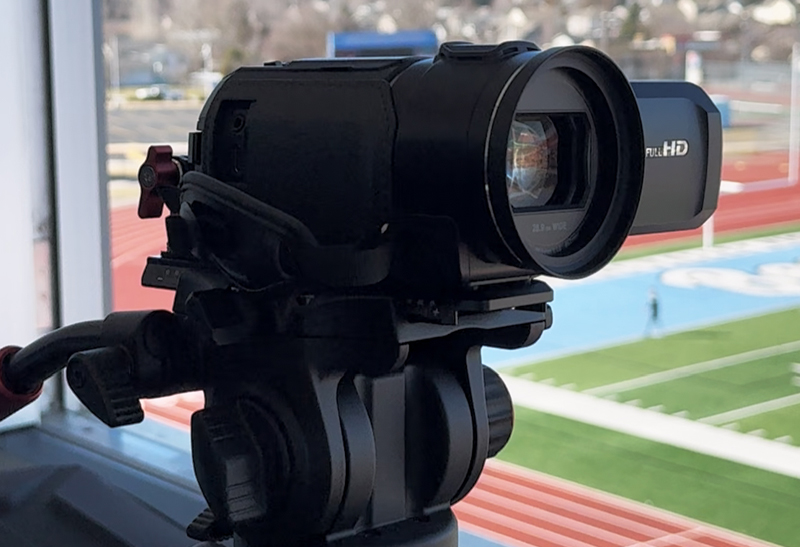
If your staff has ever tried to grade inside run, track secondary leverage, and clip game film from one angle, you already know the answer to the endzone camera vs sideline camera question is not as simple as picking the cheaper setup. The right view changes what your coaches can actually see, how fast they can coach it, and whether your video system helps on Friday night or creates more work.
For football programs, camera position is not just a filming choice. It is an operations decision. It affects game-day setup, replay speed, practice efficiency, and the quality of feedback your players get on Monday.
A sideline camera gives you width. You can see formations clearly, motion across the formation, route spacing, and how the play develops from left to right. It is the standard coaching angle for broad structure. If you want to study offensive spacing, defensive shell, substitutions, and perimeter play, the sideline view is doing a lot of the heavy lifting.
An endzone camera gives you depth. You see blocking surfaces, run fits, pulling paths, linebacker flow, safety insertion, and quarterback footwork in a way the sideline angle cannot match. It lets coaches evaluate what is happening through the core of the play instead of only across it.
That difference matters most in the box. On inside zone, power, counter, trap, and most protection looks, the endzone angle usually tells the truth faster. The sideline view may show where the play ended. The endzone view shows why it ended there.
If your program uses film for coaching, scouting, and sideline replay, one angle rarely covers everything well. This is where some buying decisions go sideways. A team assumes one camera can do it all, then realizes later that the footage is good enough for one job but weak for another.
For example, a sideline camera can be enough for basic game exchange or broad scouting cutups. But if your offensive line coach needs to evaluate hat placement, combo timing, or second-level fits, the missing endzone view becomes a real limitation. The same goes for defensive staffs trying to diagnose gap integrity or alley support.
On the other hand, an endzone-only setup also leaves holes. You lose some context on receiver splits, coverage width, and perimeter space. It becomes harder to quickly assess total field structure. That is why most organized football workflows treat the two angles as complementary, not interchangeable.
The endzone view becomes especially valuable when your staff coaches the details that decide games in the middle of the formation. Offensive line play is the clearest example. A sideline angle can suggest whether a block was won or lost, but the endzone angle shows pad level, aiming points, double-team movement, and where the fit broke down.
Defensively, the same logic applies. Endzone film helps coaches see whether a linebacker overran a fit, whether the front got displaced, and how the secondary fit into the run. It also gives a much cleaner look at pursuit lanes and tackling leverage.
Quarterback development is another area where the endzone angle earns its spot. It gives a direct look at drop depth, base, pocket movement, and throwing platform. In practice, that means better teaching with fewer guesses.
This is also why elevated endzone systems are popular with football programs that rely on replay platforms. The height creates a more usable coaching angle, and a stable elevated platform helps produce cleaner footage for immediate review.
The sideline view remains essential because football is still a width game as much as a depth game. Offensive coordinators want to study formation presentation, spacing, motions, and the full distribution of defenders. Defensive coaches want to see shell rotation, coverage structure, and how the offense stresses the field horizontally.
The sideline angle is also familiar. Most staffs are used to watching it, most exchange workflows expect it, and it often serves as the baseline clip everyone can read quickly. For wide run game, screens, RPO structure, and route combinations, the sideline camera often gives the cleanest first look.
In practical terms, sideline video is often the easiest angle to understand fast. That makes it useful not only for postgame review, but for in-game communication when coaches need a clear view without much interpretation.
A football program does not buy a camera position. It buys a system that has to set up quickly, stay stable, and deliver clean video under pressure. That is where the endzone camera vs sideline camera discussion needs more honesty.
The best angle on paper does not help if the equipment is hard to deploy, shaky in wind, or unreliable when a non-technical staff member has to run it. Coaches do not need more complexity on game day. They need equipment that works every time and fits into the routine they already have.
That is one reason many programs prefer a manual endzone system with durable tripod engineering and straightforward controls over more complicated motorized or wireless designs. The goal is not to make the filming process flashy. The goal is to keep it dependable. If your operator can get the system up fast, keep the shot stable, and feed video into your replay workflow without drama, the system is doing its job.
Game film gets the attention, but practice is where a lot of buying value shows up. If your endzone camera can also be used on a 10-foot practice setup, it becomes a daily coaching tool instead of a Friday-night-only purchase.
That changes the math. A sideline camera can still capture team periods and broad structure during practice, but the endzone angle often gives better teaching footage for inside run, pass pro, group periods, and individual work. Coaches can correct technique faster when the visual matches the coaching point.
For many high school programs, that matters as much as game-day replay. A system that supports both game and practice use usually delivers more value than one that only solves a single need.
The right answer depends on what your program is missing today. If you already have a dependable sideline angle and your staff keeps asking for better trench, fit, and quarterback evaluation, an endzone system is probably the next smart move. It fills the biggest visibility gap.
If you have no filming infrastructure in place, then the better question is whether you need one angle to start or a complete two-angle workflow. Programs focused on exchange, broad scouting, and basic game film may start with sideline. Programs that prioritize replay, technique correction, and detailed breakdown often feel the value of endzone video sooner.
Budget matters, but so does labor. Ask who is setting the system up, how long setup takes, how portable the equipment is, and whether it integrates with the platforms your staff already uses. A lower-priced option that wastes time or fails under game conditions is not actually the cheaper option.
You should also think about field realities. Some venues make sideline placement easy but limit elevated endzone space. Others make an endzone setup ideal. Your staff should choose equipment that works across the places you actually play, not just in a perfect demo environment.
Most teams that rely heavily on film end up seeing the same thing. The sideline angle is necessary, but the endzone angle is where many coaching answers live. Once staffs have clear elevated endzone footage integrated into their normal workflow, they use it constantly.
That does not mean every team needs the same package on day one. It means the camera decision should be tied to coaching outcomes, not just to what looks familiar. If your film is supposed to support replay, grading, player development, and practice correction, then the question is not simply which camera is better. It is which view gives your staff the information it cannot afford to miss.
For a lot of football programs, the best answer is not choosing one side in the endzone camera vs sideline camera debate. It is building a setup where each angle does its job, and your staff is never coaching blind when the details matter most.
The smartest video purchase is usually the one that makes Friday night simpler and Monday film better.