
July 31, 2026
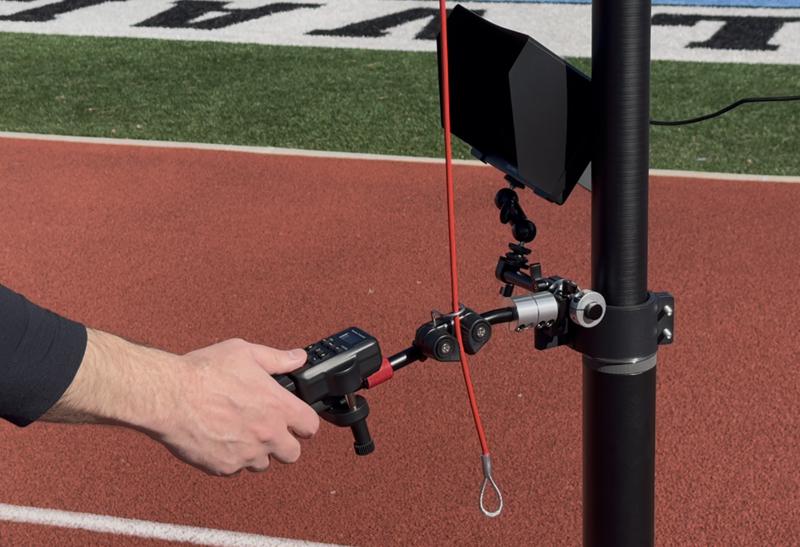
A missed snap because the camera operator lost the ball is more than a bad clip. It can mean a missed correction in Monday film, an incomplete scouting report, or no usable replay when a game changes late. A coach operated camera system gives football staffs direct control of the shot without adding wireless connections, motors, or complicated controls that can fail when the pressure is highest.
For most high school and academy programs, the right camera system is not the one with the most automation. It is the one that produces stable, wide, usable football video every time, can be set up quickly, and allows a coach or trained manager to make adjustments with confidence.
A coach operated camera system is a manual filming setup that lets an operator control camera position, framing, and movement from the filming location. For endzone video, that usually means a tall pole or tripod system, a stable camera mount, and controls that allow the operator to follow the play without relying on motorized pan-and-tilt hardware.
The term “manual” should not be confused with basic or low quality. A well-built manual system uses purpose-built tripod engineering, secure locking points, premium optics, and an operator-friendly control layout. The operator remains in charge of the picture, which is often the most dependable approach on a football field.
This matters because football is not filmed like a static event. Personnel shifts, motion, hurry-up offense, special teams, and broken plays all demand quick judgment. A person who understands the game can make better framing decisions than a preset system that is simply following a programmed path.
Game-day filming has a predictable problem: conditions are rarely predictable. Wind picks up. The field surface is uneven. The press box is crowded. A cable gets moved. The operator needs to adjust the angle before a kickoff or reset quickly after halftime.
A manually operated system gives the staff a direct response to those realities. Instead of waiting for a motorized unit to connect, calibrate, or recover from an error, the operator can make a physical adjustment and keep filming. Fewer electronic components generally mean fewer potential failure points.
That does not mean motorized systems never have a place. Programs with dedicated video personnel, controlled filming positions, and a budget for regular maintenance may benefit from certain automated features. But for many football staffs, those benefits do not outweigh the added cost, setup time, battery management, and risk of a wireless or mechanical issue.
A coach operated system is especially practical when the same equipment must cover varsity games, sub-varsity games, practice, and offseason work. The operator can learn one straightforward process and repeat it across every session.
Manual control only works as well as the person using it. The best operators are not necessarily video experts, but they understand what coaches need to see. They keep the offense, defense, formation width, and developing action in frame rather than chasing the ball too tightly.
For endzone film, start wider than you think you need. The goal is not cinematic footage. Coaches need to see alignments, blocking surfaces, linebacker fits, secondary rotation, and the full structure of the play. If the frame is too tight, the video may look dramatic but lose the information that makes film valuable.
For sideline or press box film, keep the play centered with enough width to capture formation, motion, and route concepts. A consistent angle from one play to the next also makes review faster for players and coaches.
A coach operated camera system should make the operator's job easier, not require a technical specialist. When evaluating a setup, focus on the parts that affect stability, speed, and image quality during actual football use.
First, height matters. Endzone footage benefits from elevation because it reveals the spacing and leverage that ground-level video can hide. A 25-foot endzone camera system gives coaches a clear view of run fits, line movement, perimeter blocking, and coverage structure without requiring a permanent tower.
Second, the tripod and base must be stable. Height is useful only when the structure remains secure in wind and during normal operator movement. Look for a system designed to support the full camera load, with dependable leg locks, solid mounting hardware, and a stable footprint. A tall pole on an undersized or lightly built tripod can create shaky video and unnecessary safety concerns.
Third, the camera controls should be simple and reachable. Operators should be able to make normal adjustments without fighting a complicated interface. The more steps it takes to begin recording, change framing, or secure the camera, the greater the chance that something is missed before the next series.
Finally, portability should be treated as a performance feature. Football staffs often carry equipment from storage to a practice field, bus, stadium, or visitor sideline. Equipment that breaks down into manageable pieces and fits a repeatable setup process is more likely to be used correctly week after week.
The strongest video programs are built on consistency. If the camera is positioned differently every week, or if staff members have different setup methods, the film becomes less useful and the process becomes harder to manage.
Establish one standard setup routine. Place the tripod on stable, level ground whenever possible. Fully extend and lock the legs before raising the pole. Attach and secure the camera, check battery capacity and available storage, confirm the recording format, then record a short test clip. Review that clip before warmups end, not after the opening kickoff.
The operator should also check the expected frame. From the end zone, make sure the shot captures both tackle boxes and enough depth beyond the line of scrimmage to follow the play. From the press box, confirm that the field angle does not cut off the boundary or make player identification difficult.
The setup itself can often be completed in less than five minutes once the crew knows the process. That speed is valuable because it leaves time for the details that actually protect the quality of the footage: testing the shot, clearing the filming area, and confirming who is responsible for starting and stopping recordings.
Football equipment must work beyond ideal weather. Wind is the most obvious challenge for a tall endzone system, which is why tripod design, leg placement, and secure mounting are not minor details. Do not rush the setup on a windy day. Give the base room, make sure every lock is secure, and keep people from bumping the system between series.
Weather protection is also part of the plan. Have a simple method to keep the camera and controls dry during rain, and avoid exposing equipment to moisture longer than necessary. Cold-weather games can shorten battery life, so carry charged backups and keep spare batteries protected until needed.
On crowded sidelines, assign an operator and protect that position. A camera system cannot produce dependable video if several people are changing settings or moving the tripod during the game. Clear ownership prevents confusion.
The value of a coach operated camera system is measured after the game, when the footage enters the staff's review process. Video should be easy to transfer, organize, and upload to the platform your program already uses, whether that is Hudl Sideline, EDGE Replay, GameStrat, SkyCoach, or another established workflow.
Compatibility is not just about file transfer. It is about recording footage that is stable enough to review, wide enough to coach from, and consistent enough to compare across games. A sharp image is useful, but a clear football angle is what allows a coordinator to identify why a concept worked or failed.
This is also where reliable manual systems earn their value. When the hardware works consistently, the staff spends less time troubleshooting and more time coaching. Players receive better feedback because every rep is available, and video staff are not forced to rebuild the process every Friday night.
A coach-operated setup is a strong fit for programs that need professional-quality video without building a complicated production operation. It works particularly well when multiple staff members may operate the camera, when filming locations change, or when the athletic department needs one system to serve game and practice needs.
The trade-off is that someone must operate it attentively. There is no substitute for an engaged person who understands framing and follows the play. But that responsibility is often easier to manage than maintaining a more complex automated system.
For programs replacing unstable tripods, outdated cameras, or inconsistent phone footage, the practical question is simple: will this equipment help your staff get usable video every time? Game Day Endzone systems are built around that standard - stable capture, straightforward operation, and equipment that holds up through the season.
Choose a system your staff can deploy with confidence before the first whistle. The best camera setup is the one that is ready when the play begins, keeps the full picture in frame, and gives your coaches film they can use on Monday morning.