
August 18, 2026
A missed wide angle can make a full Friday night game nearly worthless by Saturday morning. If the formation, secondary rotation, or receiver spacing is out of frame, coaches cannot grade it accurately, and players cannot learn from it. The right football camera for schools is not simply a camera mounted high above the field. It is a dependable video system that gives a staff a clear, stable coaching view without creating another game-day problem to manage.
For most high school and academy programs, the best choice comes down to a few practical factors: filming height, stability, image quality, setup time, portability, and compatibility with the team’s existing video workflow. Get those fundamentals right, and the system can serve game film, sideline replay, scouting, and daily practice work for years.
Football video has a specific job. A staff needs to see all 22 players, identify alignments before the snap, follow blocking surfaces through the play, and capture enough detail for teaching afterward. That requires a higher and wider view than a parent recording from the first row of bleachers can provide.
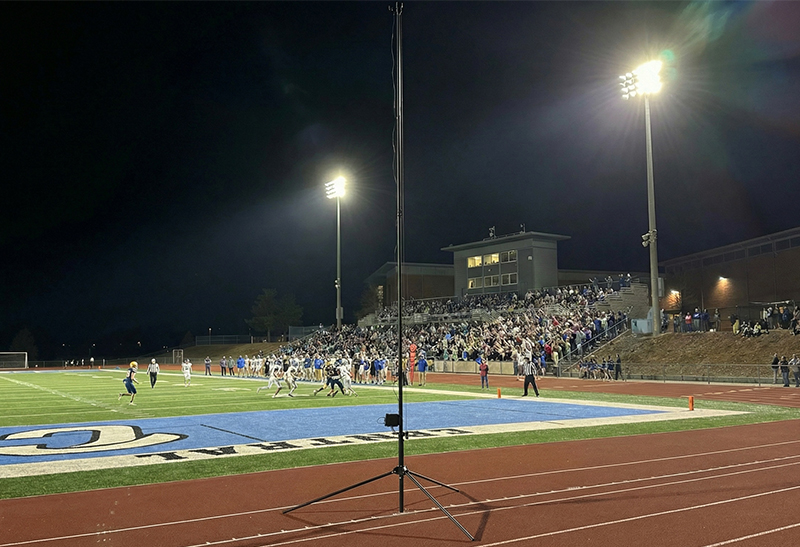
An endzone system around 25 feet gives coaches the elevated angle needed to evaluate run fits, coverage structure, routes, and special teams lanes. A press box tripod setup serves a different but equally important role, providing the traditional sideline view used for down-and-distance context, personnel evaluation, and cut-ups. Schools that film both angles have more complete information, but each program should first solve the view that is most critical to its weekly workflow.
The system also has to work when the field is wet, the wind picks up, the operator is a student manager, and kickoff is 15 minutes away. That is why purpose-built football equipment matters more than a collection of consumer tripods and adapters that looked acceptable in a product photo.
Before comparing systems, identify how your coaches consume video. A program using Hudl Sideline, EDGE Replay, GameStrat, or SkyCoach needs footage that can move reliably from the camera to its replay or upload process. The best filming setup supports that process without forcing a coach to troubleshoot connections, rebalance a tripod, or search for missing accessories between series.
Ask your staff where the biggest breakdown occurs now. It may be poor height from the endzone, shaky footage in wind, a setup that takes too long, or a camera position that blocks spectator traffic. The answer should shape the purchase more than a long feature list.
A smaller roster or a program with limited game-day staff may prioritize a system one person can carry and deploy in minutes. A larger program may need a complete package with endzone, press box, and practice filming options. There is no benefit to paying for complexity that the staff will not use, but cutting corners on stability or mounting hardware usually shows up in the film immediately.
The endzone angle is often where schools see the biggest improvement. From sufficient height, coaches can watch the entire offensive structure develop: splits, box count, front movement, pullers, linebackers, and pursuit paths. The same angle helps defensive coaches see leverage and gaps without relying on guesswork.
A 25-foot endzone camera system is designed for this perspective. It places the lens above players, benches, and many common visual obstructions while keeping the operator on the ground. Lower poles can work for practice, youth levels, or restricted facilities, but they may not provide the complete game view a varsity staff expects.
For daily installation periods, inside run, or team periods, a 10-foot practice pole can be the more efficient tool. It is quicker to move from drill to drill and gives staff useful elevated video without setting up the full game-day system. The trade-off is simple: lower height means less complete field visibility. Use each tool where it makes sense.
Height without stability creates a different problem. A tall pole amplifies movement, so the base, tripod legs, head, and mounting hardware must work together. A system that sways in normal wind or shifts as an operator pans can turn clear footage into distracting, difficult-to-grade film.
Look for a tripod engineered for the height and weight of the camera assembly, not a lightweight photography tripod pressed into football service. A solid base, secure leg locks, durable materials, and a controlled camera mount all matter. The footage should stay level and predictable as the play moves downfield.
Schools should also consider the environment around the filming position. Endzones can be crowded with cheer teams, band equipment, spectators, and players warming up. A stable, clearly positioned system helps reduce interruptions and protects the equipment from accidental bumps.
Motorized and wireless systems can sound appealing, especially when a buyer imagines remote camera movement from the press box or sideline. In practice, every added electronic component introduces another possible failure point: batteries, signal interference, pairing issues, software updates, or a motor that does not respond when the game is live.
For many school programs, manual control is the better operational decision. A trained operator can pan and frame the action with immediate response, while the system remains mechanically straightforward. There is less to charge, fewer connections to test, and less that can go wrong at kickoff.
This does not mean every advanced feature lacks value. A well-staffed program with a dedicated video team may benefit from specialized controls. But if the goal is consistent football film that managers, assistants, and volunteers can produce confidently, simplicity has real value. Equipment built to work every time beats equipment that requires a pregame technology meeting.
Schools do not need to chase specifications that make little difference in a coaching room. The goal is a clean image where coaches can identify players, formations, and technique at the distances involved. Premium optics, dependable zoom capability, and proper exposure control matter more than marketing claims about extreme resolution.
A camera should produce a usable image under common football conditions: bright afternoon sun, stadium lights, changing cloud cover, and dark uniforms against a bright field. It should also mount securely and remain balanced on the system. An awkward camera-and-adapter combination can make smooth operation harder than it needs to be.
Consider the full capture chain as well. The camera, memory media, battery plan, mounts, cables, and transfer method all need to support the same workflow. A high-quality camera does not help if a dead battery, full card, or incompatible file format delays replay access.
The best equipment is equipment your staff will use correctly every week. A football camera system should set up in less than five minutes once the operator knows the routine. That requires labeled components, logical assembly, secure fittings, and a carrying solution that protects the gear in transit.
Assign ownership before the season starts. One coach, manager, or video coordinator should know where the equipment is stored, how it is inspected, and what needs to be packed for away games. A simple pregame check of batteries, cards, mounts, tripod locks, and cables prevents most avoidable problems.
Training should be practical, not technical. Show operators how to frame the field before the snap, keep the play centered, avoid over-zooming, and hold the shot through the whistle. Then have them run the system during a scrimmage or practice. The first meaningful use should not be under the lights with the opening kickoff approaching.
A complete package can make this easier because the components are designed to work together. Game Day Endzone builds endzone, press box, and practice solutions around that reality: stable equipment, straightforward deployment, and video quality designed for football teams rather than general-purpose filming.
When comparing prices, look beyond the main pole or tripod. A lower initial price may leave a school purchasing a compatible mount, transport case, upgraded tripod, extra hardware, or replacement parts later. The real cost is the amount required to produce dependable film every week.
A complete solution should account for the field position your team needs, the camera setup it will use, the way gear travels to road games, and the staff members responsible for operating it. Warranties and responsive technical support also matter. Football seasons move quickly, and a program cannot afford to wait weeks for answers when its filming system has an issue.
The right value is not always the least expensive option, nor is it automatically the most elaborate one. It is the system that gives your coaches a clear view, holds steady in real field conditions, fits your workflow, and remains simple enough to operate on a busy game night.
When your staff can set up quickly and trust the angle before the first snap, video stops being a source of frustration. It becomes what it should be: a dependable coaching tool that helps your players see the game more clearly on Monday than they did on Friday.