
October 15, 2026
A Friday-night game can come down to one missed substitution, one formation tendency, or one red-zone rep the staff needs to review on Monday. That is why the question is not simply, “can volunteers film football?” It is whether a volunteer can consistently capture usable football video when the pace picks up, the weather turns, and coaches need the footage right away.
The answer is yes. Parents, student managers, booster-club members, and other trusted volunteers can run game film effectively. But the program has to give them a system that is simple enough to operate under pressure. Good football video is less about finding a professional camera operator and more about assigning a clear role, using stable equipment, and building a repeatable routine.
For most high school and academy programs, a trained volunteer can produce film that meets the needs of coaches, players, and scouting staffs. The standard is not cinematic footage. The standard is a stable, properly framed view that shows all 22 players before the snap and follows the play through the whistle.
That distinction matters. A volunteer does not need to understand every coverage check or blocking scheme to film a game. They do need to know where to stand, what must stay in the frame, when to start recording, and how to avoid losing a critical rep while adjusting equipment.
The quality ceiling depends on the equipment and workflow around that person. A capable volunteer using a shaky handheld setup from the stands may miss the coaching value of a play. The same volunteer on a stable endzone or press box system, with a short pregame walkthrough, can deliver clean, usable footage all night.
There are situations where experience helps. Playoff games, recruiting showcases, games with live sideline replay, and multi-angle film operations may require a dedicated video staff member or a highly trained volunteer. Even then, the underlying principles remain the same: keep the camera stable, preserve the full play, and make the system easy to operate.
Before assigning a volunteer, decide which angle they are responsible for. Trying to have one person improvise between sideline, endzone, and highlight footage creates gaps in the film library.
The sideline or press box angle is the primary coaching view for most programs. It should be high enough to show formations, motion, alignments, and the development of the play. The operator should frame the offensive formation before the snap, leave enough room for the ball to travel, and avoid excessive zooming. Small adjustments are fine. Constant zooming makes the footage harder to review and can cause the operator to lose the ball or a key player.
The endzone angle serves a different purpose. It gives coaches a clean view of fronts, run fits, box numbers, linebacker movement, and protection structure. A 25-foot endzone system creates the elevated perspective that makes this angle useful. From ground level, bodies overlap and the line of scrimmage becomes difficult to evaluate.
For practice, a 10-foot pole may be the better fit. It is quick to deploy, portable, and high enough to capture group work and team periods without turning setup into another job for an already busy staff.
Give one volunteer one job whenever possible. If the game plan calls for both press box and endzone film, use two operators. The cost of adding a trained helper is usually far lower than the cost of missing an entire angle from a rivalry game or playoff matchup.
Volunteers perform best when the process is clear and short. A long technical manual will not help on a wet night with kickoff approaching. A five-minute routine will.
Start with position. The operator should be in the approved filming location before warmups end, with a clear sightline and no risk of interfering with players, officials, spectators, or emergency access. Programs should confirm venue rules in advance, especially for endzone placement and press box access. Some schools restrict who can occupy elevated areas or where tripods may be placed.
Next, set the camera and frame a test play. The volunteer should verify that the camera is level, secure, recording at the selected resolution, and wide enough to show the full offensive formation. For an endzone angle, center the field and make sure the view includes enough depth behind the line of scrimmage. For a sideline view, frame the near and far sidelines without making the players too small to evaluate.
Then establish the recording rhythm: start before the offense breaks the huddle or gets set, keep recording through the whistle, and stop between plays. The operator should not chase the scoreboard, crowd reactions, or sideline conversations. Football film is for football.
Finally, have a backup plan. Confirm battery status, available recording space, and who to call if a cable, mount, or camera setting becomes a problem. A spare battery and storage card can save a game. So can equipment that does not depend on a wireless connection, software update, or motorized control to do its basic job.
Volunteer-run filming exposes weak equipment quickly. A system that requires constant adjustment, balancing, reconnecting, or troubleshooting will frustrate even willing helpers. It also pulls attention away from the actual play.
The best setup is one that physically supports the job. A sturdy tripod, a secure camera mount, quality optics, and a manual control system give the operator predictable control. Manual systems are not outdated when they are built for football. They eliminate several common points of failure found in motorized or wireless alternatives and make it easier for a new operator to understand what the camera is doing.
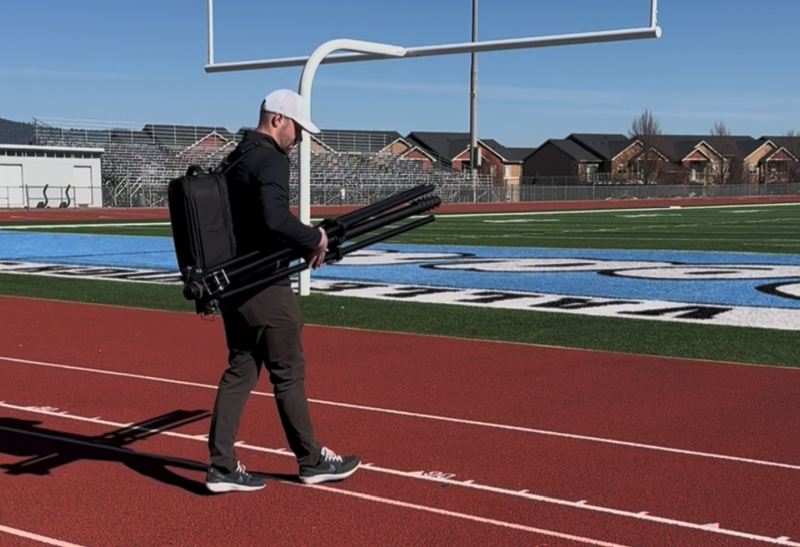
Portability matters as much as stability. A volunteer may be carrying equipment from a parking lot, climbing stairs to a press box, or working around a crowded endzone. Gear should be durable enough for repeated travel but straightforward enough to set up in minutes. If a system takes too long to deploy, it will eventually be left behind or rushed into service.
This is where purpose-built football equipment earns its place. Game Day Endzone systems are designed around elevated, stable views and practical setup, helping teams give a volunteer a repeatable tool instead of a complicated technical assignment.
The most common filming mistakes are predictable. Volunteers begin recording after the snap, zoom too tightly, stop the clip before the play ends, lose focus while following a long pass, or accidentally bump a light tripod. These are not signs that a volunteer cannot do the job. They are signs that the person needs a few reps before game night.
Run a short filming session during practice. Have the volunteer record ten to fifteen plays from their assigned location. Review the clips with them immediately. Point out whether the formation is visible, whether the camera moves too much, and whether the play remains in frame.
Keep feedback specific. “Stay wider before the snap” is useful. “Make it look better” is not. The goal is not to turn volunteers into videographers. The goal is to create dependable footage that a coordinator can open the next morning and use without excuses.
It also helps to name a primary and backup operator. People get sick, travel, arrive late, or have family obligations. When two people know the setup, the program is not dependent on one parent or student manager for its entire film operation.
Filming football has safety and policy considerations. Operators should never stand in a team box, on a restricted sideline, in a path where players may run out of bounds, or in an unsecured elevated position. Tripod legs and cables need to stay out of walkways. Endzone equipment should be placed where it does not create a collision hazard or interfere with field operations.
Programs should also follow school, district, league, and venue rules concerning filming. That can include credentialing, spectator access, opponent exchange procedures, and restrictions on where equipment may be set up. If the video feeds a sideline replay platform, test the connection and workflow before the first meaningful game. Game night is the wrong time to discover that a device is not charged or a file format is incompatible.
Be clear about responsibility as well. A volunteer should know who owns the equipment, where it is stored after the game, and whether they are expected to upload footage or simply hand off the camera. Clear handoffs prevent lost files and reduce the chance that valuable game film stays on a memory card over the weekend.
A good volunteer filming program respects people’s time. Give them equipment that works, a role they can understand, and a routine they can repeat. When the final whistle blows, the best outcome is simple: the operator knows they did their job, and the coaching staff has every snap ready to teach from.