
August 27, 2026
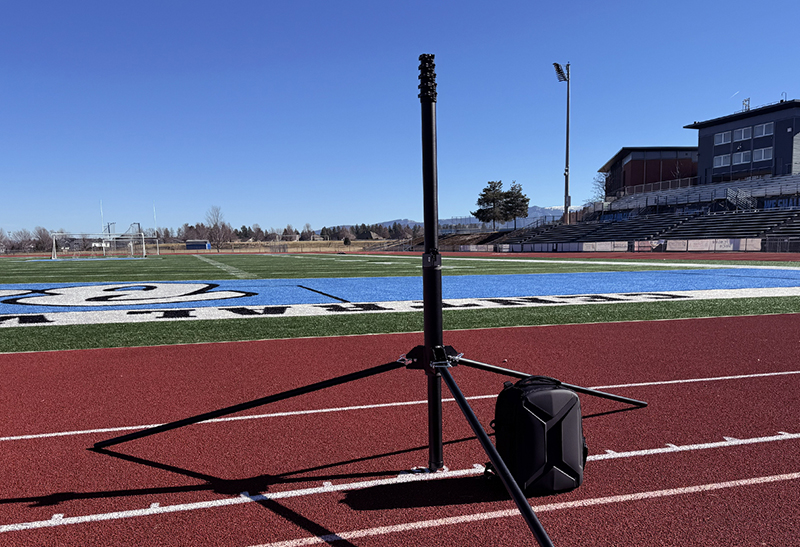
A missed snap on video is not a minor inconvenience. It can mean losing a teaching rep, a tendency cutup, or the angle needed to confirm what happened before a replay decision. The best football video tripods are not simply the tallest stands available. They are purpose-built systems that keep a camera stable, put it at a useful coaching angle, and get your staff filming without turning setup into another game-day problem.
For most football programs, the right choice comes down to where you film, who sets up the equipment, and how the footage moves into your existing workflow. A lightweight tripod that works for a practice field may not be the right answer for endzone game film. Likewise, a tall system is only valuable when its base, controls, and camera mounting are designed to keep the image usable in wind and under normal sideline pressure.
A standard photography tripod is designed for a photographer standing close to the camera. Football video is different. Your operator may need to film from the end zone, above a fence line, from a press box, or along the practice field while keeping the entire formation in frame. That changes the requirements.
Height matters because angle matters. Endzone film needs enough elevation to show formations, run fits, blocking surfaces, routes, and coverage structure. When the camera is too low, players block one another and the film becomes harder to coach from. A higher position gives coordinators a cleaner view of the full play without relying on an extreme zoom setting that makes framing difficult.
But height without stability creates its own problem. A tall, narrow stand that sways in a breeze or shifts while the operator pans produces footage that is frustrating to watch and difficult to use for replay. Look for a tripod engineered with a wide, secure base, strong locking points, and components built to hold position throughout a game.
The best systems also respect the reality of a football schedule. Video staff often arrive with limited time, gates may not be open early, and the same people handling cameras may be managing tablets, headsets, or pregame tasks. Equipment that sets up in less than five minutes has real value because it reduces the number of things that can go wrong before kickoff.
There is no single best height for every football program. Most teams benefit from using different camera positions for different purposes rather than asking one tripod to handle every assignment.
For game film, a 25-foot endzone camera system is often the most useful option for programs that want a true coaching angle from behind the offense and defense. At that height, the operator can capture the full width of the formation while still seeing the box clearly. The angle is high enough to improve visibility through traffic but not so high that players become too small to evaluate.
A 25-foot system should be selected as a complete system, not just as a tall pole. Pay close attention to the tripod base, the way sections lock together, the camera mount, and the control method. A stable manual control setup gives an operator direct response while avoiding the batteries, pairing issues, signal dropouts, and mechanical failures that can come with motorized systems.
If your home field has a usable press box, a press box tripod can be the practical choice for sideline or wide game angles. The key benefit is speed. You can set the camera on a stable platform, frame the field, and protect the equipment from much of the sideline traffic below.
Press box filming does have trade-offs. Sightlines can be limited by window frames, railings, or spectators, and some visiting press boxes are not built with video work in mind. Before buying, measure the available space and confirm that the tripod can operate safely without blocking the walkway or forcing the operator into an awkward position.
A 10-foot practice pole is a strong fit for daily installation periods, team sessions, and individual work. It is easier to move around the field than a full game-day endzone system, yet it provides a better perspective than filming from shoulder height. For programs that want consistent practice film without dedicating multiple staff members to setup, this is often the most efficient option.
Shorter systems are also useful where overhead clearance is limited. Indoor facilities, turf fields near trees, and practice areas with netting may not accommodate a 25-foot setup. The right height is the one that produces a clear teaching angle without creating a safety or access issue.
Coaches often describe shaky video as a tripod problem, but the cause can be several things. The base may be too narrow, the ground may be uneven, a locking mechanism may not be fully engaged, or the camera may be mounted too high for the system's design. Good equipment addresses all of those points.
Start with the ground contact. A football tripod should sit securely on grass, turf, or the hard surface around an end zone. Adjustable legs and reliable foot placement help the system stay level. If conditions are windy, do not assume extra height is worth the risk. A stable 20- or 25-foot position is more useful than a taller setup that moves throughout the play.
Next, consider the pan-and-tilt controls. Football operators need to follow the ball, keep the play centered, and make small adjustments without jerking the frame. Controls should feel predictable and hold their position when released. Manual operation remains a practical advantage here: it is immediate, easy to train, and built to work every time without another device to charge.
Finally, match the tripod to the camera weight. A system rated for a light action camera is not automatically suitable for a camcorder, tablet-based camera rig, or a camera with added accessories. An overloaded mount can sag gradually during a game, changing the frame without the operator noticing.
The tripod is only one part of the result. Before purchasing, map the path from filming to coaching use. Will the camera connect to your current replay platform? Can the operator access controls easily? Does the mounting setup keep cables organized and protected? Can another staff member run it after a brief explanation?
Programs using Hudl Sideline, EDGE Replay, GameStrat, or SkyCoach should focus on a camera and mounting configuration that supports their established process. The goal is not to add technology for its own sake. The goal is to capture stable, properly framed video that gets where coaches need it quickly.
Portability deserves the same attention. A system may look excellent in a product photo but become a burden if it requires multiple people, a complicated assembly sequence, or an oversized case that is difficult to load on the bus. Quality football video equipment should travel well, deploy quickly, and pack down in an organized way after the final whistle.
A few direct questions can prevent a costly mismatch. Ask whether the system is designed specifically for football filming or adapted from another use. Ask how it performs in wind, what camera weights it supports, and how long a trained staff member needs to set it up. Confirm what happens if a part is damaged during the season and whether technical support is available when your staff needs help.
Also consider who will operate the system. If the answer is a student manager, assistant coach, or parent volunteer, simplicity is a feature, not a compromise. A straightforward manual system with clear adjustments is easier to teach and more likely to be used correctly every week.
Price should be evaluated against the full package, not the stand alone. A lower-cost tripod that needs extra adapters, replacement parts, or frequent repairs can become more expensive than a purpose-built system. Bundled equipment can make sense when a program needs game, press box, and practice coverage because the components are selected to work together.
For football staffs, dependable film is part of preparation. Choose a tripod system that fits your field, your camera, and your weekly routine, then give your operators time to practice before the first game. Game Day Endzone builds its systems around that standard: stable video, simple operation, and equipment your staff can trust when the next rep matters.