
July 9, 2026
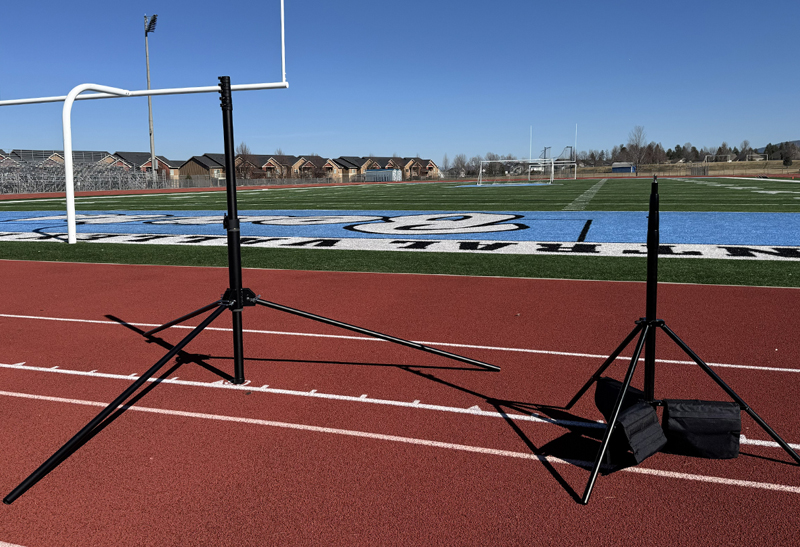
A replay system usually does not fail because one big part breaks. It fails because a few small choices stack up on Friday night - the wrong camera position, a shaky support, a bad cable path, or a rushed operator handoff. Most football replay setup mistakes are avoidable, but they show up at the worst possible time: when coaches need the next clip now, not after a reset.
For high school and academy programs, that matters more than people admit. A replay setup is not just a filming station. It is part of your coaching operation. If the image is unstable, the angle is wrong, or the feed drops during a critical series, the problem is no longer technical. It is operational.
One of the most common mistakes is assuming any tall tripod, camera mount, or portable mast can handle football replay. Football is not a casual filming environment. Wind, sideline traffic, fast setup windows, and repeated transport all expose weak points quickly.
A generic support system may look fine in a catalog or in a gym. On a field, it can flex, sway, or become difficult to level. That movement carries straight into your replay feed. Coaches do not need cinematic footage. They need stable, readable video that arrives consistently.
This is where purpose-built equipment earns its value. A system designed specifically for endzone and press box football filming usually solves problems before kickoff - stability, portability, repeatable setup, and compatibility with common replay workflows. A cheaper or improvised option can still work, but it often asks staff to compensate for hardware limits every week.
If your endzone angle is shaking, replay value drops fast. Coaches need to see spacing, leverage, pullers, fit, and back-end structure. A little vibration may not seem like a big deal until you try to review line play between series.
This is one of the most expensive football replay setup mistakes because programs often chase image quality first and stability second. In practice, a stable camera with a solid mounting system usually produces more usable coaching video than a higher-end camera sitting on a poor platform.
Height matters, but stability matters just as much. A 25-foot system gives teams a strong teaching angle, but only if the pole, tripod, and support design are built to hold that position under real field conditions. If the setup is hard to anchor, hard to level, or too flexible in wind, you are building avoidable problems into every game.
A replay setup should not depend on one expert who knows all the tricks. On many staffs, the person handling video might be a coach, student assistant, technology coordinator, or volunteer. If your process requires too many steps or too much troubleshooting, reliability drops.
This is where overbuilt systems can become a liability. Extra motors, wireless dependencies, or unnecessary moving parts may sound advanced, but they create more failure points. Manual control systems often win on game day because they are simpler to deploy and easier to trust when time is tight.
The right question is not whether a setup has more features. The right question is whether your staff can get it working the same way every time, in a few minutes, without guessing. If the answer is no, your system is too complicated for the job.
A camera system is only one part of the chain. The footage still has to move into the platform your staff uses, whether that is Hudl Sideline, EDGE Replay, Game Strat, or SkyCoach. Too many buyers focus on hardware in isolation and only later discover that cabling, output, mounting position, or workflow assumptions do not match their existing process.
That mismatch creates friction fast. The camera may capture good video, but if handoff to your replay or upload platform is awkward, delayed, or inconsistent, coaches still lose confidence in the setup. The best systems are built with the full workflow in mind - capture, transfer, replay access, and repeatability.
It depends on how your staff operates. Some teams prioritize instant sideline review above everything else. Others care just as much about practice portability and post-session upload speed. The right setup should support your actual routine, not force your coaches to work around it.
A lot of replay issues blamed on the camera are really cable and power issues. Loose runs, exposed connectors, rushed extensions, and unprotected paths create preventable failures. If a cable gets tugged by sideline movement or a connection point loosens during the game, the whole replay chain can go down.
Power planning is similar. If your staff is improvising with batteries, adapters, and extension options every week, you are inviting inconsistency. A dependable system starts with a repeatable power plan and clean cable routing that protects both the equipment and the people moving around it.
This is not glamorous, but it is where reliable operations live. The cleanest setups are usually the ones that were planned for real sideline traffic and real staff behavior, not ideal conditions.
More height is not automatically better. Less height is not automatically safer. The right answer depends on whether you are filming games, practices, or both.
For game endzone replay, programs usually need enough elevation to clearly show formation structure, run tracks, and coverage spacing. For practice, a 10-foot setup may be more practical because it moves quickly and gives coaches an efficient teaching angle without the footprint of a full game rig.
Problems start when teams use one solution for everything without thinking through trade-offs. A very tall setup may be ideal for Friday night but excessive for a weekday practice field with limited space. A lower setup may be convenient, but it may not give coordinators the clean look they need for game review. Good football video operations are built around use case, not guesswork.
This may be the most common mistake of all. Teams assemble new equipment, assume it is straightforward, and plan to figure it out at kickoff. That approach works until one setting is wrong, one mount is loose, or one operator is unsure what comes next.
A replay system should be tested in the same order it will be used live. Set the support. Mount the camera. Connect the feed. Confirm the angle. Verify platform handoff. Check operator responsibilities. Then do it again so the process becomes routine.
The goal is not perfection. The goal is removing surprises. A simple system that has been rehearsed once or twice is usually more dependable than a more advanced setup that nobody has fully run under normal conditions.
Most problems start at the purchasing stage, not on the sideline. Buyers tend to compare headline specs and miss operational questions that matter more over a full season.
Ask how long the system takes to deploy with normal staff. Ask whether it is stable in wind. Ask how easily it transports between fields. Ask what happens if the original operator is absent. Ask how well it fits your replay platform and whether the setup supports both game and practice use. Those answers tell you more than a flashy feature sheet.
This is also where specialized football systems separate themselves from repurposed video gear. A company like Game Day Endzone builds around the realities coaches deal with every week: fast setup, dependable support, practical portability, and compatibility with the replay tools programs already use. That football-first design approach usually prevents the kind of small failures that become big headaches by halftime.
A good replay setup should feel boring in the best way. It should go up fast, stay stable, produce a clear angle, and work with your existing process without pulling coaches into technical cleanup. If your staff stops talking about the equipment during the game, that is usually a sign you chose well.
The best systems are not the ones with the most moving parts. They are the ones built to work every time, even when game night is rushed, windy, and loud. That is the standard worth buying for.