
May 18, 2026
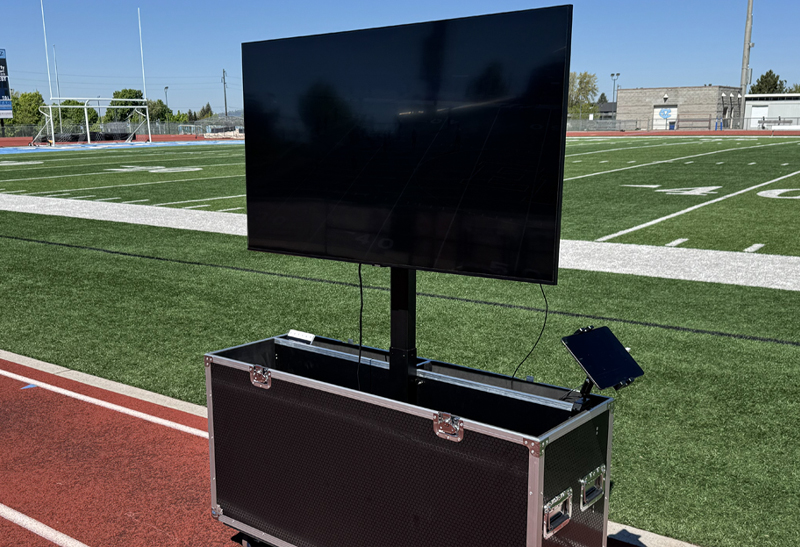
A sideline tv box only matters if it helps your staff make faster, better decisions during a game. Coaches do not buy one because the term sounds technical. They buy it because they need a clean video feed, a dependable connection to replay software, and a setup that works when the scoreboard is running and nobody has time to troubleshoot.
That is where many football programs get tripped up. They focus on the box itself instead of the full chain around it - camera position, signal path, field setup, operator workflow, and compatibility with the replay platform already used on game day. If one part of that chain is weak, the whole system feels unreliable.
In practical football terms, a sideline tv box is part of the system that helps get live video from your camera setup to the sideline display or replay environment. Depending on the platform and hardware in use, it can handle video conversion, transmission, display management, or feed routing between your camera and the device your coaches use to review plays.
That matters because most staffs are not building a video system from scratch for fun. They are trying to get from filmed action to usable coaching information with as little delay and friction as possible. If your endzone and press box angles are solid but the sideline feed is unstable, your staff still loses the value of the video.
This is also why the phrase can mean slightly different things from one program to another. For some teams, the sideline tv box is the physical unit connected to a monitor or replay cart. For others, it is shorthand for the hardware package that makes sideline viewing possible. The exact label matters less than the job: get dependable footage where coaches need it, fast.
When coaches ask about a sideline tv box, they are usually asking a bigger question. Will this work with our current filming setup, our replay platform, and our staff on a Friday night?
That is the right question.
A box can have the right inputs and still create problems if the camera support is shaky, the pole setup is slow, or the operator has to fight the equipment. Football video is not a lab environment. You are dealing with weather, limited setup time, changing personnel, and pressure from the first kickoff.
A reliable system needs to support the sideline box, not just connect to it. That starts with stable camera placement from the endzone and press box, clear image quality, and a straightforward manual setup that does not depend on finicky motorized parts or wireless features that introduce another failure point.
The first thing to evaluate is compatibility. If your team already uses Hudl Sideline, EDGE Replay, GameStrat, SkyCoach, or another established workflow, the sideline tv box setup has to play well with that environment. Compatibility should not be treated as a bonus feature. It is the baseline.
The second is signal reliability. A sideline system is only useful if coaches can trust what appears on screen without random dropouts, lag spikes, or connection issues. That often comes down to more than the box itself. It includes cable quality, camera output consistency, tripod stability, and how much strain the system puts on the operator.
The third is setup speed. Football staffs do not need another piece of equipment that requires a manual, a specialist, and 30 minutes of fiddling before warmups. The best setups are simple enough that a coach, student assistant, or video staffer can get them in position quickly and repeat the process every week.
Durability matters too. Sideline gear gets handled, transported, and exposed to the elements. A box that works great in a controlled demo but struggles through a full season is not helping your program. Buyers should think in terms of repeatable game-day performance, not one-time functionality.
A sideline tv box can only work with the video it receives. If the source footage is shaky, poorly framed, or inconsistent, the replay experience suffers no matter how advanced the display hardware is.
That is why experienced football programs usually evaluate the entire filming package together. A strong endzone camera system with a stable 25-foot setup gives you the angle coaches depend on for structure, spacing, and assignment review. A press box tripod setup adds the wider tactical view. A 10-foot practice pole gives you continuity during the week so players and coaches are looking at useful film every day, not just on game night.
When those pieces are engineered to work together, the sideline box becomes more valuable. It is no longer compensating for poor capture. It is delivering quality footage into a workflow built for actual coaching use.
One common mistake is buying around the cheapest component instead of the most important outcome. A lower-cost sideline tv box might look appealing until it creates compatibility headaches or fails to hold up under repeated use. The labor cost of troubleshooting on game day adds up fast, even if nobody writes it on the invoice.
Another mistake is overcomplicating the system. Some programs get sold on features that sound advanced but create more failure points in real conditions. In football operations, simple often wins. Manual controls, solid mounts, dependable optics, and repeatable setup procedures usually serve a team better than extra layers of technology that are difficult to maintain.
A third mistake is separating the purchase decision across too many vendors without checking how everything fits together. One provider supplies the camera, another handles the tripod, another recommends a box, and suddenly your staff is responsible for making five products behave like one system. That can work, but it often leads to finger-pointing when something breaks.
Not every team is at the same stage.
If your current setup already delivers stable replay with minimal delay, your next priority may be upgrading camera support or improving video quality rather than changing the sideline unit itself. But if your coaches are waiting on feeds, losing connection, or dealing with awkward workarounds every week, the sideline box setup deserves immediate attention.
High school programs often feel this most. Staff sizes are lean, budgets matter, and the person operating the system may wear three other hats before kickoff. In that environment, the best equipment is not the most complicated. It is the gear that works every time, sets up fast, and fits into the staff you actually have.
That is why many teams are moving toward integrated football-specific filming systems rather than piecing together general video equipment. A product built around football operations tends to respect the realities of game flow better than a generic AV solution.
Start by mapping your current workflow from camera to coach. Where does the video originate? How does it travel? What software receives it? What screen or tablet displays it? Who is responsible for each step?
Once that is clear, ask where the breakdowns happen. If the issue is weak footage, a sideline tv box will not fix it. If the issue is transmission or display reliability, then the box and its supporting hardware deserve a closer look. If the problem is that your setup is too hard for staff to run consistently, simplicity should be a major buying factor.
It also helps to think in terms of a season, not a sales pitch. Can this setup handle travel, weather, student operators, and quick turnarounds? Can it be deployed without special training? Does it fit the replay ecosystem your team already trusts?
Game Day Endzone approaches this the right way by focusing on dependable football filming systems that support established sideline replay platforms instead of forcing teams into unnecessary complexity. That is the standard worth applying no matter which components you are evaluating.
Trust is the real measure. If coaches stop asking whether the feed is coming through and start using the video naturally during the game, the system is doing its job. If your operator can set it up quickly, your footage is clean, and your platform receives it without drama, that is a win.
Football staffs need equipment that performs under pressure, not equipment that looks impressive in a spec sheet. A sideline tv box should be part of a dependable process, not a weekly problem to solve.
If you are reviewing your current setup, do not get distracted by labels alone. Look at the full workflow, the pressure points, and the staff who actually have to run it. The right solution is the one that gives your coaches one less thing to worry about when the game starts.