
April 20, 2026
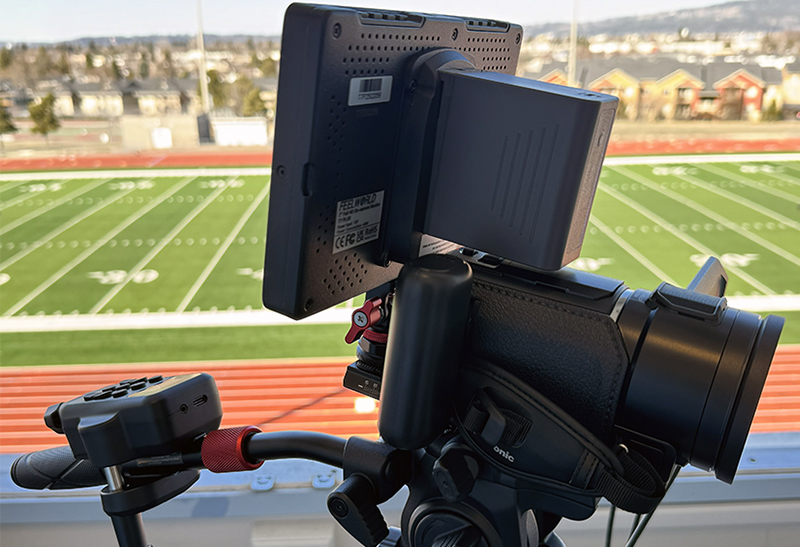
Friday night gets hectic fast. If your video angle is off, your tripod wobbles, or your operator is fighting the setup instead of filming, the problem shows up in every coaching decision that follows. Knowing how to set up press box camera equipment the right way is less about gadgets and more about getting a clean, dependable view that works every game.
For football staffs, the press box camera has one job: deliver a stable, wide tactical angle with enough detail to evaluate alignment, spacing, motion, and execution. That means the setup has to be simple, repeatable, and built around the reality of game-day operations. If it takes too long, needs constant adjustment, or depends on fragile add-ons, it usually becomes one more thing your staff has to manage under pressure.
A strong press box setup starts with the angle, but it does not end there. You need height that gives coaches a true all-22 style look from above, a tripod system that stays planted, and a camera position that can track the full width of the field without constant correction. The goal is not fancy movement. The goal is usable football film.
That matters because the trade-off in the press box is always between visibility and stability. A higher perch can improve your view of formations and route spacing, but only if the support system is solid. A lightweight consumer tripod might feel portable in the parking lot and then become a problem once it is fully extended in the box. Football video is too important to trust to a shaky base.
The fastest game-day setups are the ones that were planned before the bus arrived. Start by identifying where the camera will live in the press box. In most cases, you want a centered position at midfield or as close to it as the facility allows. If exact center is not available, prioritize an unobstructed field view over perfect symmetry.
Look at the window opening, railing, and walking path around the camera position. A common mistake is placing the tripod where operators and coaches are constantly brushing past it. Even a well-built tripod can get bumped, and those small impacts matter once the camera is zoomed in.
Before you extend anything, confirm your power plan and your video workflow. If you are feeding a replay platform or recording for upload after the game, your cable routing needs to be clean and protected. Loose cables across a crowded press box floor create delay, frustration, and avoidable risk. Keep the path short and out of traffic.
Once the location is set, deploy the tripod on the flattest, most stable surface available. Fully seat the legs before raising the center section. Stability always starts low. If the surface is slick or uneven, make your adjustments at the feet first instead of trying to fix the problem after the camera is already mounted.
This is where many crews lose time. They chase height immediately, then spend the next ten minutes correcting sway and tilt. Extend the lower leg sections with care and keep the base as wide as the space allows. If your setup includes a press box tripod designed for football filming, you should be able to get the elevation you need without sacrificing the footprint that keeps the rig steady.
After the legs are locked, mount the camera and check the head movement. Pan and tilt should feel controlled, not loose. If the head drifts after you frame the field, you will fight that drift all game. Tight enough to hold position, smooth enough to track the play - that is the balance you want.
For most football programs, the press box camera should show the full width of the field with enough depth to capture pre-snap structure and post-snap development. If you frame too tight, you lose spacing and substitutions near the sideline. If you frame too wide, the details that matter on the line of scrimmage can get too small.
A good test is simple. With the camera locked on a standard midfield shot, you should be able to identify offensive formation, defensive shell, and run-fit movement without guessing. If numbers are difficult to read at all times, that may be an optics issue, a camera setting issue, or simply a sign that your zoom and height combination needs adjustment.
You do not need an overcomplicated menu setup for football. In fact, simpler usually performs better on game day. Your operator needs consistent exposure, a dependable focus strategy, and minimal in-game fiddling.
If your camera allows manual control, use it where it makes sense. Auto settings can drift when stadium lights, shadows, and weather change during the game. Exposure shifts may not ruin the clip, but they can reduce detail when coaches need to see the play clearly. The best setup is one your staff can repeat without guessing every week.
Focus is another place where reliability beats novelty. If autofocus hunts every time players cross the frame or a referee steps into view, it becomes a problem quickly. Depending on your camera and lens, a controlled manual focus point or a proven continuous autofocus mode may be the better choice. It depends on your equipment, but the rule stays the same: test it before kickoff, not during the first drive.
The biggest mistake is treating the press box camera like general event video instead of football film. Football requires a functional angle, steady movement, and dependable operation over style. Fancy accessories do not help if the platform itself is unstable.
Another issue is overbuilding the workflow. Wireless add-ons, motorized features, and extra connection points can sound attractive, but every added layer is another possible failure point. On a game night, simple systems often win because they are easier to troubleshoot and easier for staff to operate consistently.
Poor operator position also causes trouble. If the person running the camera has to stand at an awkward angle, reach around obstacles, or constantly shift to avoid foot traffic, the footage usually suffers. Set the station so the operator can stay comfortable and maintain the same movement pattern all game.
Then there is the problem of waiting too long to deploy. A press box camera setup should not be rushed in the final minutes before teams take the field. You want enough time to level the tripod, frame the shot, test recording, and verify your replay or capture feed. Fast setup matters, but so does a short buffer for fixing the unexpected.
If your staff films every week, your equipment should be built around repeatability. That means a tripod engineered for elevated football filming, optics that hold a useful wide tactical shot, and a control approach that works every time. This is where specialized football systems separate from generic camera support gear.
A purpose-built press box setup should travel well, deploy quickly, and stay stable once it is up. It should also fit into the way your staff already works, whether that means live sideline replay, post-game upload, or both. Compatibility with platforms like Hudl Sideline, EDGE Replay, Game Strat, or SkyCoach matters because setup is not just about the hardware. It is about whether the footage gets where coaches need it without extra steps.
That is why many programs prefer a manual system over motorized or app-dependent options. Manual controls are straightforward, less fragile, and easier to trust in real football conditions. At Game Day Endzone, that practical approach is central to how reliable filming systems are built for teams that need performance, not unnecessary complexity.
The best answer to how to set up press box camera systems is to make the process look the same every week. Assign who carries the tripod, who mounts the camera, who confirms the feed, and who gives the final framing check. When the steps stay consistent, setup gets faster and mistakes drop.
Aim to arrive with enough time to build the station, test the shot, and make one or two small corrections before warmups. Once the frame is right, resist the urge to keep tinkering. Football video quality often comes from disciplined setup more than constant adjustment.
If you are evaluating your current setup, ask one honest question: does it help your staff get dependable film with minimal hassle? If the answer is no, the issue is usually not your people. It is the system. The right press box camera setup should feel boring in the best possible way - stable, quick, and ready every time.
Good football video gives coaches something they can trust on Friday night and teach from on Saturday morning. That starts long before the first snap, with a setup your staff can count on when the pressure is on.