
September 11, 2026
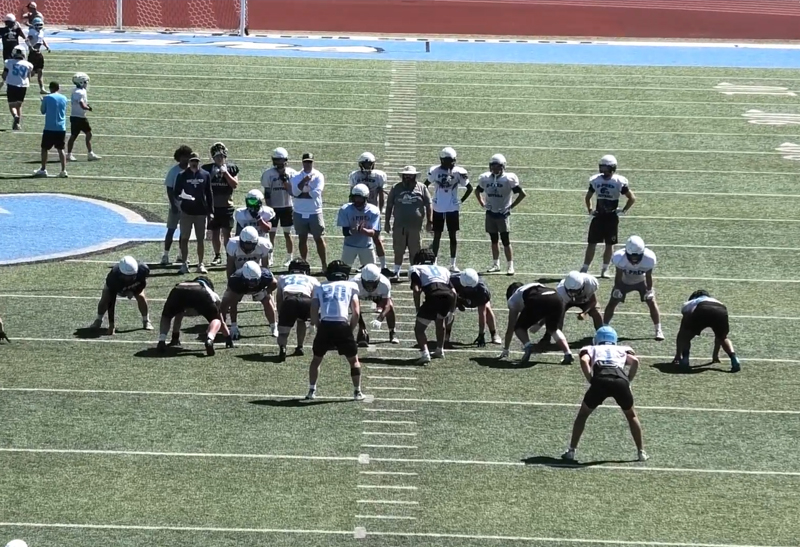
A missed snap can ruin more than one play. It can remove the angle a coordinator needs to confirm a coverage check, evaluate a pulling guard, or teach a young player why leverage was lost. Learning how to improve coaching film quality is not mainly about buying the most expensive camera. It is about building a dependable filming process that gives your staff a clear, usable view of every rep.
For football programs, quality film must do three jobs at once: capture the full play, stay steady enough to evaluate details, and reach your replay or upload workflow without creating another game-day problem. The best setup is the one your staff can deploy quickly and operate correctly under pressure.
The most common film issue is not resolution. It is poor perspective. A high-definition clip from the wrong position still leaves coaches guessing about formations, spacing, route distribution, and defensive structure.
For an end zone view, elevation matters because it creates the depth needed to see the entire field develop. A properly positioned elevated camera lets coaches evaluate box counts, run fits, line movement, safety rotation, and pursuit angles without players blocking the view. For game film, a 25-foot end zone system gives many programs the height needed to capture the full width and depth of the play from a workable coaching angle.
The sideline or press box angle serves a different purpose. It should show formation, personnel alignment, motion, and the full path of the play. If you have access to a press box, set the tripod as high and as centered as practical. Avoid positions where a railing, support beam, or crowd movement interferes with the frame.
Height alone does not solve everything. Place the end zone camera on the centerline whenever possible. Being too far toward one hash can distort the picture and make it harder to judge run lanes on the opposite side. When field access or stadium layout forces an offset position, widen the frame slightly rather than trying to zoom tightly on the action.
Shaky film is tiring to watch and difficult to coach from. It also gets worse when an operator pans quickly to follow a long run or adjusts the camera after the snap. Stability begins with the physical system, not the person behind the handle.
Use a tripod or pole designed to support the camera at its working height. A tall system places more stress on every connection point, so the base, legs, locks, and mounting hardware all matter. Before kickoff, confirm that the tripod is level, leg locks are fully engaged, and the camera mount is secure. On grass, press each foot firmly into the surface. On artificial turf or hard ground, make sure the legs are spread wide enough to prevent shifting.
Wind is the trade-off that exposes weak setups. A narrow base may be easy to carry, but it can create visible vibration at elevation. The goal is not to make the system heavier than necessary. It is to use equipment engineered for a stable footprint while remaining portable enough for a manager or assistant to set up in minutes.
Once filming begins, use controlled movements. Pan early and smoothly rather than chasing the ball after it breaks outside. Avoid touching the tripod unless a framing adjustment is necessary. A stable wide frame is usually more valuable than a tight frame that bounces, misses the finish, or makes players disappear from view.
A common mistake is zooming in too much. The ball is important, but the ball alone does not explain the play. Coaches need to see the receivers, secondary, perimeter defenders, and the spaces that create or close throughout the rep.
Start each snap with enough width to include the full offensive formation and defensive alignment. From the end zone angle, keep both tackle boxes and the deeper defensive structure in view. From the sideline angle, make sure the frame includes the near and far wide receivers when possible. You may need to widen out for empty formations, compressed red-zone spacing, or teams that use wide splits.
The correct zoom level depends on the level of play and the camera position. Younger teams may benefit from a slightly wider view because assignments and spacing are the first teaching priorities. Varsity staffs breaking down detailed technique may want a closer image, provided the full concept remains visible. If choosing between detail and complete context, choose context. A clean view of all 22 players provides more coaching value than a close-up that cuts off the safety rotation.
Keep the horizon level and leave room in front of the offense. Do not center the ball carrier at the expense of the developing play. Film should show what happened before, during, and after the ball arrives.
Modern cameras can produce excellent football film, but automatic settings can make bad decisions in changing light. A camera may brighten a dark uniform and wash out the field, or it may hunt for focus as players move across the frame.
Set your camera to record at a resolution and frame rate that works with your team’s replay and upload platform. Higher settings can provide more detail, but they also create larger files, increase upload time, and can strain older computers or storage cards. For many programs, a consistent, compatible setting is more useful than the largest possible file.
Focus deserves attention. If your camera allows manual focus, set it for the field area where action will occur and test it before the game. Auto-focus can work well in daylight, but it may shift to a nearby fence, a referee, or players entering the foreground. Under lights, test for focus hunting during warmups instead of finding out on the opening drive.
Exposure changes fastest around sunset. Check the image before kickoff, after the sun drops, and again when stadium lights take over. If white jerseys look blown out or dark uniforms lose all detail, make a small adjustment during a stoppage. Do not wait until halftime to review the first half of unusable clips.
Even good equipment can produce poor film when the workflow is unclear. The camera operator should know exactly where to stand, when to start recording, how wide to frame the play, and who to contact if something goes wrong.
Assign one person to own each camera whenever possible. Rotating operators without clear instructions often leads to inconsistent angles, clipped starts, and missed plays. A student manager can run a quality system well when the setup is straightforward and the expectations are specific.
Before each game, use a short operating routine:
That last check matters for staffs using Hudl Sideline, EDGE Replay, Game Strat, SkyCoach, or another video workflow. Compatibility is valuable only when the connection is verified before the first snap. Build enough time into arrival and setup so a cable issue or setting change does not become a sideline emergency.
Practice film is where players build habits, so it should not be treated as an afterthought. A 10-foot practice pole can provide an elevated view without the time and space demands of a full game-day setup. The goal is to capture enough of the drill or team period for coaches to teach alignment, technique, and assignment execution.
For individual drills, frame the specific coaching point without cutting off the setup. For inside run, team periods, and seven-on-seven, widen the view so coaches can see both the focal matchup and the surrounding structure. Start recording a few seconds before the rep and keep rolling a few seconds after the whistle. Those extra seconds often show effort, finish, communication, and recovery.
Organize practice clips by period or drill as soon as possible. Clear labels reduce the time assistants spend searching for a rep and make player meetings more productive. Film quality is not just visual. It also depends on whether the right clip is available when a coach needs it.
Motorized systems, wireless controls, and automated tracking features can look attractive, especially when staffing is limited. They may be useful in certain facilities or specialized workflows. But every added component introduces another battery, signal, software setting, or mechanical point of failure.
For many football programs, manual controls and stable hardware are the better game-day choice. A camera system that sets up in less than five minutes, stays where it is placed, and operates without a complicated control chain gives the staff one less thing to manage. Game Day Endzone systems are built around that practical standard: reliable elevation, stable tripod engineering, premium optics, and controls that work when the game is moving fast.
The best film operation does not call attention to itself. It simply delivers a steady, complete view of every snap, so your coaches can spend Monday teaching football instead of explaining what the camera missed.