
June 30, 2026
A replay angle is only useful if your staff can trust it when the next series starts. That is why the top football replay camera features are not about flashy add-ons. They are about getting stable, clear, coach-ready video every time, with a setup your staff can handle under real game-day pressure.
For football programs, replay equipment has one job: capture the field clearly, feed the coaching workflow quickly, and stay dependable from kickoff through the final whistle. If a system is hard to raise, shaky in the wind, slow to deploy, or prone to connection issues, it becomes one more problem on a busy sideline. The right features reduce friction instead of creating it.
The best systems are built around football operations, not generic video use. That distinction matters. A football replay setup has to work on game day, on practice fields, and in the hands of staff members who may be managing multiple responsibilities at once.
If the camera platform is unstable, everything else falls apart. A replay clip that shakes on every zoom or sways in the wind makes it harder for coaches to diagnose spacing, leverage, and fit. Stability is the foundation of usable end zone and press box video.
Look closely at the tripod engineering, base footprint, pole rigidity, and how the system handles height. A tall camera setup is valuable because it gives a clean coaching angle, but height only helps if the image stays steady. Some systems look good on paper and become a problem as soon as the weather changes or the operator adjusts position.
This is one of those areas where simple mechanical design often beats more complicated alternatives. A solid manual system with strong structural support is usually more reliable than a setup that depends on extra powered components to stay controlled.
On paper, a few extra minutes may not sound like much. In real football operations, it matters a lot. Crews arrive, weather shifts, gates are locked, and the staff member handling video may also be working through headset checks, bench organization, or pregame logistics.
A replay camera system should go up quickly and predictably. That means fewer unnecessary parts, clear adjustment points, and a design that does not require technical troubleshooting before the first snap. If your equipment can be set up in less than five minutes, that is not just convenience. It is operational value.
The trade-off is straightforward. Some systems pack in extra moving parts or motorized functions that sound appealing, but they can add complexity, create more failure points, and slow your team down when time matters most.
Not every football program needs cinema-grade video. They do need footage that lets coaches see numbers, spacing, and technique without fighting the image. Good optics matter because replay is only useful when staff can evaluate the play quickly and confidently.
A strong football camera setup should deliver clear field coverage with enough detail to support sideline review and postgame breakdown. Zoom performance matters, but so does image consistency. If the picture softens too much at distance or struggles in mixed lighting, coaches lose valuable information.
This is especially important for end zone filming. That angle is often where coaches confirm box counts, run fits, blocking surfaces, and secondary structure. If the image lacks clarity, the angle loses much of its coaching value.
A camera system can look impressive and still slow your staff down. The better question is whether it fits the workflow your program already uses.
Many teams are not starting from scratch. They already use sideline replay and video exchange platforms, and the camera system needs to work within that ecosystem. Compatibility with tools such as Hudl Sideline, EDGE Replay, Game Strat, and SkyCoach is not a bonus feature. For many programs, it is essential.
When a system integrates cleanly with your replay platform, the result is faster transfer, fewer workarounds, and less stress for coaches and support staff. When it does not, the whole process becomes slower. That can affect in-game decision-making, not just film storage.
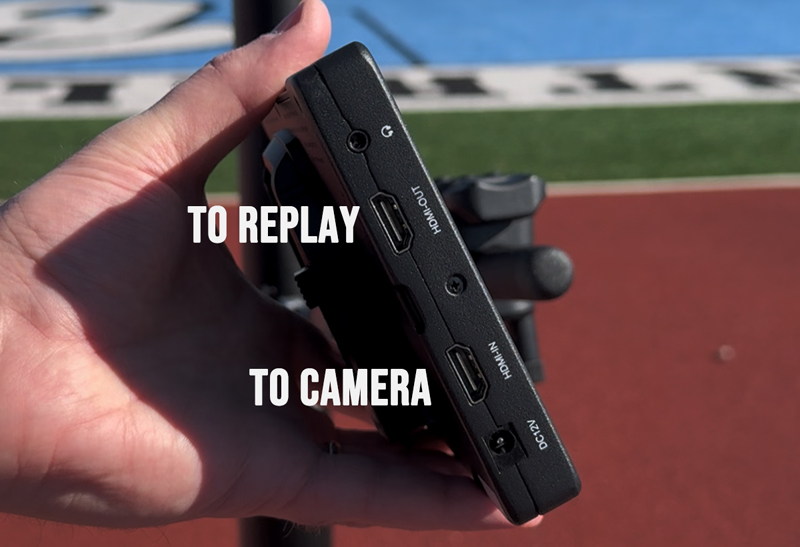
Before buying, programs should think beyond the camera itself. Ask how the footage gets from the tower or tripod to the sideline, who operates it, and how quickly the coaching staff can use it. The best answer is usually the one with the fewest weak links.
There is a reason many experienced football staffs prefer manual operation. Manual camera control tends to be more dependable, easier to troubleshoot, and less vulnerable to dead batteries, connection failures, or software problems.
That does not mean every advanced feature is bad. It means football programs should be careful about paying for complexity that does not improve game-day execution. If a motorized or wireless function adds another thing that can fail, the staff has to decide whether the convenience is worth the risk.
For many high school and academy programs, a well-built manual system is the better fit. It gives the operator direct control, keeps setup straightforward, and reduces the number of variables on Friday night.
Football video equipment gets moved a lot. It goes from storage to practice field, from bus to stadium, from one sideline to another. A system that is too bulky, awkward, or fragile creates work every time it is used.
Portability is not just about total weight. It is also about how the system breaks down, how easily it fits in a vehicle, and whether one or two staff members can handle it without hassle. Programs that practice on multiple fields or travel regularly feel this more than anyone.
Portable gear also tends to get used more consistently. If staff dread hauling it out, it will not become part of the weekly workflow the way it should.
Replay equipment lives a hard life. It gets exposed to wind, heat, cold, moisture, transport wear, and rushed handling. A camera system built for occasional event use is different from one built for football season.
Strong materials, dependable locking points, rigid poles, and quality hardware all matter. The goal is not just long-term ownership. It is confidence on the sideline. Coaches and video staff should not be worrying about whether the system will hold its position through four quarters.
This is where value should be judged carefully. A lower-priced system that needs frequent replacement parts or creates reliability issues is not really the better deal. On the other hand, the most expensive option is not automatically the best one either. The right choice is the one that performs consistently and holds up over time.
A higher camera angle usually improves football film because it gives better spacing and cleaner structure. That is why elevated end zone systems are so useful. But extra height has to be supported by stable engineering and practical setup.
If a tall system becomes difficult to transport or too cumbersome for your staff to raise safely, the benefit gets reduced. The best designs balance elevation, stability, and ease of use. For many programs, that balance is exactly what separates coach-friendly equipment from gear that ends up staying in storage.
The smartest football buyers usually ask simple questions. Can our staff set it up fast? Will the image stay steady in real weather? Does it work with our current replay platform? Can we move it easily between games and practices? Will it keep working without constant troubleshooting?
Those questions get closer to the truth than a long feature sheet. The top football replay camera features are the ones that improve film quality while making game-day operations easier. If a feature does not help the staff move faster, see better, or trust the equipment more, it may not be worth paying for.
For most programs, the best replay camera system is not the one with the most technology. It is the one built to work every time, with clear video, fast deployment, and reliable support behind it. That is why experienced programs often choose practical engineering over flashy extras.
If you are evaluating equipment for the next season, think like a coach first and a shopper second. The right system should make your workflow simpler from the first setup, not teach your staff a new set of problems.