
October 15, 2026
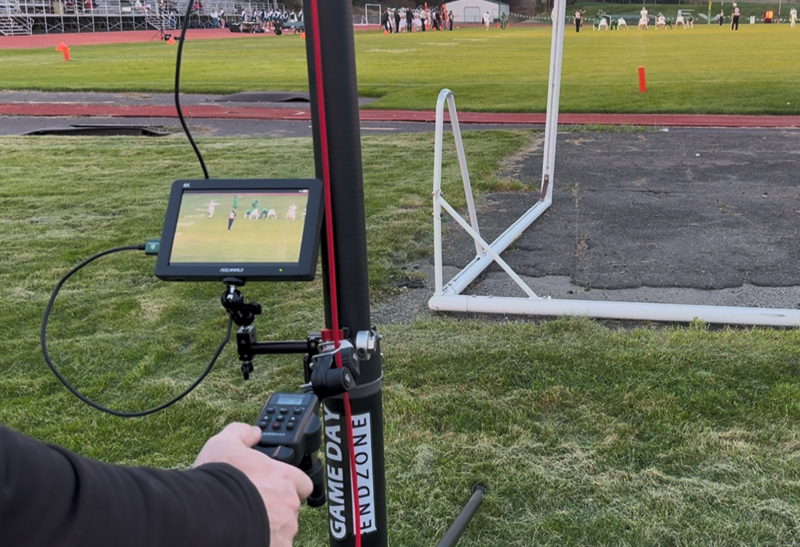
A missed angle can cost a coaching staff more than a missed play. If the end zone film is shaky, too low, or cut off at the snap, it cannot support halftime adjustments, Monday corrections, or reliable scouting. The best coaching cameras are not simply cameras with a good zoom. They are complete filming systems built to give football programs a clear, consistent view of the field when the game is moving fast.
For most high school and academy programs, the right system comes down to a practical question: Can one staff member set it up quickly and get stable, usable video every time? That standard should guide the purchase more than flashy features or a long spec sheet.
A standard consumer camera may record sharp video, but it does not solve the operational problem of filming football. Coaches need the right elevation, a stable platform, a wide enough field of view, and controls that work in wind, cold, rain, and crowded game-day environments.
The camera is only one part of the setup. A football-ready system combines quality optics with an elevated pole or press box tripod, secure mounting hardware, a dependable power plan, and a simple way to get video into the program's existing replay or upload workflow. If any one of those pieces fails, the footage may be unusable regardless of how good the camera looked on paper.
This is why the best option is rarely the lowest-priced camera body by itself. A program should evaluate the full system and the staff time required to operate it.
The end zone angle is valuable because it shows spacing, fronts, fits, route distribution, and blocking structure in ways sideline video cannot. To capture that angle correctly, the camera needs enough height to see over players, coaches, and sideline traffic.
A 25-foot end zone camera system provides the elevated perspective many programs need for game film. It helps keep the full formation in frame and gives coordinators a clearer look at how a play develops from snap to finish. Shorter poles can work for certain practice situations, but they may not provide the clean, top-down view needed for varsity game analysis.
Height alone is not enough. The system must remain steady at full extension. A tall camera pole paired with a light-duty tripod can create movement in the image, especially on windy nights. Look for a tripod engineered to support the pole, camera, and accessories as one unit.
Football staffs do not have time to fight a wobbling system between series. Stability comes from the tripod design, leg construction, center support, locking hardware, and the way the pole attaches to the base.
A stable setup keeps the picture level and reduces shake during pans and zooms. It also gives the operator confidence to track a play without making constant corrections. That matters at every level, but particularly for smaller staffs where a coach, manager, or parent volunteer may be responsible for filming.
When comparing systems, ask whether the tripod is purpose-built for elevated football filming or simply adapted from a general photography application. The difference often shows up under real field conditions, not in a product photo.
For coaching film, the goal is not cinematic footage. The goal is clear, useful film that lets coaches identify alignments, player movement, and play outcomes. A camera needs enough resolution to preserve detail, but the lens and zoom range are just as important.
A useful football camera should hold the full offensive and defensive structure in frame without forcing the operator to zoom so far out that the players become difficult to see. It should also allow controlled zoom adjustments when the ball moves downfield. Premium optics help maintain clarity across the field, especially under stadium lights or changing weather.
More resolution is helpful when video will be cropped or reviewed on large screens. Still, 4K by itself is not a reason to buy. If a system is unstable, poorly positioned, or difficult to operate, extra pixels will not fix the film.
Motorized and wireless camera systems can sound attractive, especially when a program wants to reduce the workload on the person filming. But more automation introduces more components that can lose connection, run out of power, require calibration, or fail at the wrong moment.
A manual control system gives the operator direct control over framing, panning, and zoom. It is straightforward to teach, quick to troubleshoot, and less dependent on wireless conditions around a crowded stadium. For programs that value repeatable game-day operation, simple controls are often an advantage rather than a compromise.
The right choice depends on staffing and goals. A well-supported program with trained video personnel may benefit from specific automated tools. Most football programs, however, need equipment that a staff member can deploy in minutes and trust for all four quarters.
The best equipment is the equipment your staff will actually bring to every game and practice. A camera system should break down into manageable components, travel safely, and set up without a complicated sequence of tools or adjustments.
This matters for road games, shared stadiums, and programs that film multiple teams. A portable package with organized cases and intuitive hardware reduces setup mistakes and protects the equipment between uses. If a system can be set up in less than five minutes, it is far more likely to become a dependable part of the weekly routine.
For varsity game-day filming, an elevated end zone system is the standard choice. It gives the staff a clean view of formations and play development while staying behind the action. A 25-foot setup is especially useful for programs that need a true coaching angle from grass fields, tracks, or stadium end zones with uneven access.
The system should include a durable pole, a stable tripod, secure camera mounting, and an operating method that does not require constant technical support. This is the setup to prioritize when game film is used for opponent scouting, staff grading, player development, and in-game review.
A press box tripod setup serves a different purpose. It captures the broad sideline view that coaches use to evaluate play design, defensive structure, route concepts, and special teams lanes. In many cases, the strongest film package includes both end zone and press box angles.
The press box environment changes from venue to venue. Space can be tight, window openings vary, and platforms are not always level. A tripod needs a secure footprint and enough adjustment range to maintain a level shot. Compactness matters here, but not at the expense of stability.
Practice film needs to be fast and repeatable. A 10-foot practice pole can be a practical fit for inside run, team periods, skill work, and installation sessions. It is easier to move around the field than a full game-day system while still providing useful elevation.
The trade-off is perspective. A 10-foot pole will not replace a 25-foot end zone system for full-field varsity game film. It can, however, make daily practice video much more useful than handheld sideline footage.
Before buying, confirm how the camera system will fit into the tools your staff already uses. Programs commonly need footage that works with platforms such as Hudl Sideline, EDGE Replay, Game Strat, or SkyCoach. The camera and recording format should support a reliable path from the field to replay, upload, and film exchange.
Compatibility is not only about the final video file. Consider how the camera connects, where recordings are stored, how quickly the footage can be transferred, and whether the setup supports your in-game process. A camera system that produces good film but slows down halftime review can create more work than it removes.
Ask who will run the system on Friday night, who will transfer the footage, and what happens if that person is unavailable. The best setup is one that more than one person can operate confidently.
Start with the angle you are missing. If your sideline video is good but your end zone film is low or inconsistent, invest first in an elevated end zone system. If end zone footage is covered but your press box setup is unstable, improve the sideline angle. If practice film is the weak point, add a portable practice pole before buying features your staff will rarely use.
Bundle pricing can make sense when a program is refreshing its entire video operation. A coordinated end zone, press box, and practice package reduces compatibility questions and gives the staff consistent equipment across game and practice settings. Buying each piece separately may be better when a program has dependable equipment in one area and a clear gap in another.
Do not overlook support and warranty coverage. A football camera system is used outdoors, transported regularly, and often handled by several people. Access to knowledgeable help and replacement options has real value when the season is underway.
The right camera system should make your video operation calmer, not more complicated. Choose the setup that gives your staff a clear angle, stable footage, and a process they can repeat on every field, every week.