
April 10, 2026
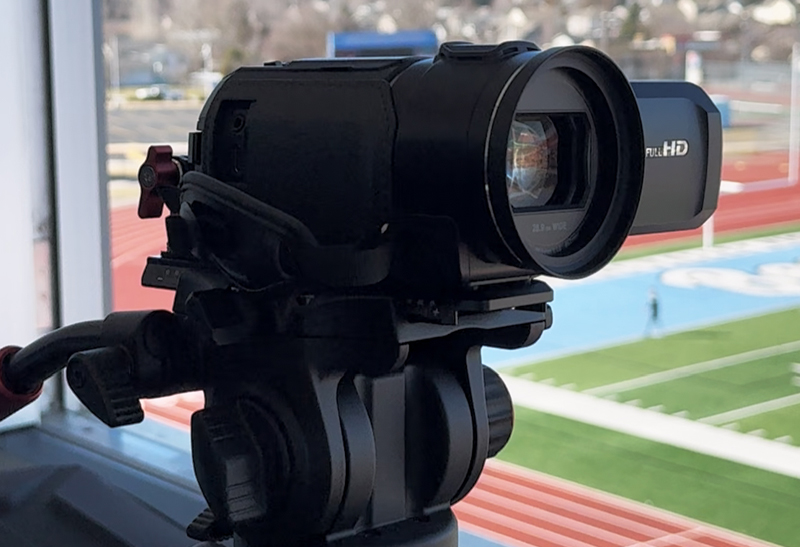
If your endzone shot turns a clean red-zone rep into a blur of helmets and numbers, the problem usually is not your platform or upload workflow. It is the glass in front of the camera. Premium optics for sports video matter because football staff need footage that holds detail at distance, stays usable in changing light, and gives coaches a dependable view they can trust on Friday night and Monday morning.
Football video has a job to do. It is not there to look cinematic. It needs to show splits, leverage, pad level, depth, pursuit angle, and whether the free safety actually fit the alley the way he was coached to. When the image breaks down, coaching value drops fast.
That is why optics deserve more attention during equipment buying. Many programs focus first on camera resolution, but resolution on paper does not fix soft detail, weak zoom performance, or poor low-light behavior. A camera can claim high specs and still produce footage that is hard to coach from if the lens quality is not there.
Premium optics help preserve detail across the full frame, especially when you are filming from elevation and trying to keep all 22 players readable. That matters from the endzone and from the press box. It also matters during practice, when you need clean teaching tape without spending time fighting focus issues or exposure swings.
The biggest gain is usable detail. Coaches do not need artistic depth of field. They need to see formation structure before the snap and assignment execution after it. Better optics keep edges cleaner, reduce softness at longer focal lengths, and hold player separation better when the field gets crowded.
Zoom performance is another major factor. A budget lens may look acceptable when wide, then fall apart when you tighten the shot. In football, that trade-off shows up quickly. If you are trying to capture line play in one sequence and still maintain enough field context for route distribution or secondary rotation, the optical system has to stay sharp through the zoom range.
Light handling is the next piece. Stadium lighting is not consistent from venue to venue. Some high school fields are bright and even. Others are patchy, dim, or harsh in certain corners. Premium optics help the camera gather and manage light more effectively, which supports cleaner footage under real game conditions. That can mean less noise, better contrast, and a more stable image once the sun drops.
Color and contrast also matter more than many buyers expect. When footage is muddy, staff spend more time second-guessing what they are seeing. Better optics usually produce stronger separation between uniforms, field markings, and background elements. That makes review faster, especially for assistants and video staff clipping plays under time pressure.
Programs sometimes try to save money by buying around the lens. On paper, that can look smart. In practice, it often leads to replacing gear sooner or accepting lower-quality footage every week.
The real question is not whether basic optics can record a game. They can. The question is whether the video helps your staff work efficiently. If coaches have to replay clips multiple times just to confirm alignment, or if the image loses detail every time lighting changes, the system is costing time even if it saved money upfront.
This is also where football differs from general video buying. A content creator can live with quirks and work around them. A football program needs repeatable performance from operators who may include coaches, student managers, or volunteers. The system has to work without drama.
Optics do not work in isolation. A strong lens on an unstable mount still gives you compromised footage. In football filming, image quality is tied directly to the full system - pole, tripod, head, controls, and camera support.
That is especially true from the endzone. Elevated filming gives coaches the angle they need, but it also exposes weak engineering. If the support system flexes, sways, or shifts during play, even premium optics cannot fix that. Sharp glass needs stable hardware underneath it.
The same principle applies in the press box. Long-range filming magnifies movement. Small vibrations become obvious, and panning gets harder to control. A properly built tripod and manual control approach often outperform more complicated setups because they reduce failure points and keep the operator in command.
This is one reason many football staffs prefer straightforward, manual systems over motorized or wireless-heavy alternatives. Reliability matters more than novelty on game day. Better optics deliver the most value when they are paired with equipment built to stay steady and easy to manage.
Start with the footage you actually need, not the spec sheet you were handed. If your priority is coaching and replay, judge the image by whether you can clearly identify keys, spacing, and player movement from your normal filming positions.
Ask how the lens performs at full working zoom, not just at the widest view. Many systems look fine in ideal demos. The more useful test is whether the image remains sharp enough to coach from when the operator adjusts framing for different situations.
You should also think about consistency. Does the system hold focus well through a game? Does the picture stay usable under mixed lighting? Does the image remain clean enough for platform uploads and sideline review? Football staffs need reliability more than occasional peak performance.
Durability belongs in the conversation too. Optics are part of a field-use product, not a shelf product. Equipment gets transported, assembled, packed down, and used in weather that is rarely ideal. If the lens system performs well but the full package is fragile, that is not a premium solution in any meaningful football sense.
One overlooked benefit of better optics is that they reduce operator friction. When the image is clearer and the system responds predictably, less experienced staff can still produce solid film. That matters for schools where the camera operator changes during the season or where setup duties fall to multiple people.
Complicated systems often create their own quality problems. If staff are troubleshooting connectivity, motor response, or control lag, they are not focused on framing and play capture. A practical football video setup should let the operator get into position quickly, lock in the shot, and keep working.
That is where a purpose-built football filming system stands apart from generic video gear. Products designed around actual sideline use tend to account for setup time, transport, stability, and compatibility with replay workflows. The optics are important, but they are most valuable when the rest of the system is built around football operations.
For some teams, premium optics for sports video show their value immediately on game day. Coaches see cleaner sideline review, faster corrections, and fewer missed details in the box. For others, the payoff is more obvious in weekly workflow. Better footage improves scouting breakdown, player teaching, and cut-up quality over the course of a season.
There is also a long-term value angle. When a program buys dependable equipment, it reduces the cycle of patchwork upgrades and replacement purchases. A complete system with strong optics, stable support, and simple controls usually costs less over time than stacking temporary fixes on top of weak core equipment.
That is why many football programs look for a vendor that understands the full use case, not just camera specs. At Game Day Endzone, the focus is on quality video solutions designed for football teams, with premium optics paired to stable, practical systems that fit real game and practice workflows.
Not every team needs the most expensive camera setup on the market. That is not the point. The right standard is whether your equipment gives coaches dependable, coachable footage every time you roll it out.
If your current video is soft, shaky, inconsistent in low light, or too complicated for staff to run smoothly, optics should move higher on your priority list. Better glass improves more than appearance. It improves decision-making.
When a system is built for football, premium optics stop being a luxury feature and start becoming what they really are - a practical advantage you can use every week.