
May 1, 2026
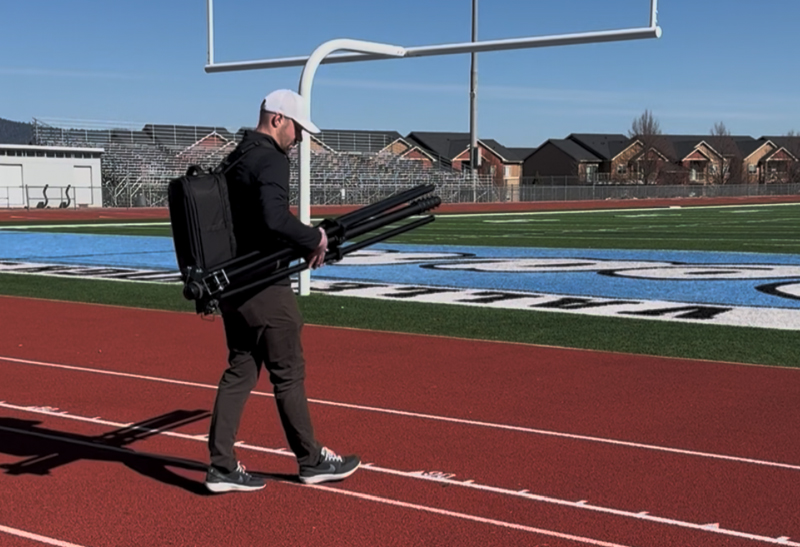
Friday at 5:20 p.m. is a bad time to find out your camera system is harder to move, slower to build, or less stable than you thought. A portable football camera setup has to do more than fit in a vehicle. It has to get from storage to filming position fast, stay steady through four quarters, and work with the video workflow your staff already uses.
For most football programs, portability is not about shaving a few pounds off a case. It is about reducing friction on game day and practice. If a manager, assistant coach, or volunteer can unload it, raise it, and start filming without troubleshooting, the setup is doing its job. If it needs constant adjustment, a power source you cannot count on, or specialized training to operate, it is portable in theory and a headache in real life.
The best systems balance mobility with field performance. That sounds obvious, but plenty of setups lean too far in one direction. Some are easy to carry but too light to stay stable in wind. Others produce good footage but take too long to assemble, transport poorly, or require too many parts to keep track of.
A football program usually needs two things from video. First, it needs a clean, elevated endzone angle for coaching, replay, and postgame review. Second, it needs a sideline or press box view that integrates with the tools the staff already depends on. A portable setup should support both jobs without creating extra work for the people responsible for getting it operational.
That is why stability matters as much as portability. High-angle football video exposes every weakness in a support system. At 25 feet, small vibrations turn into shaky footage. Cheap tripod engineering, weak clamps, and flexible poles may look fine in a product photo, but they show their flaws fast when the weather changes or the operator needs to pan and track consistently.
A lot of buyers start by looking for the lightest system possible. That is understandable, especially for schools moving equipment between fields or loading it into smaller vehicles. But the lightest option is not always the best portable football camera setup.
There is a difference between equipment that is engineered for transport and equipment that is simply built with less material. True portability comes from smart design - manageable sections, reliable locking points, practical carrying dimensions, and fast manual operation. Flimsy portability comes from sacrificing structural strength until the setup becomes difficult to use once it is actually on the field.
For football, you are usually better off with a system that is slightly heavier but noticeably more stable, especially if it still sets up in a few minutes. Coaches do not win anything by saving a few pounds if the video is shaky, the operator is fighting the hardware, or the system feels one gust away from failure.
Endzone video asks more from a support system than many buyers expect. Height creates perspective, but it also creates leverage, and leverage exposes weak design. The higher the camera goes, the more important the base becomes.
A strong endzone setup should give you elevated, centered footage without forcing the operator to rely on motorized controls, wireless connections, or power-dependent features that can fail at the worst time. Manual control systems still make a lot of sense for football because they are simple, predictable, and built to work every time. When a staff is trying to film varsity on Friday night and practice on Saturday morning, reliability usually beats novelty.
This is also where bundled thinking helps. If your endzone system, press box tripod, and practice pole all work together as one filming solution, your staff spends less time adapting to different gear. That consistency matters more than people think. It reduces mistakes, speeds up setup, and makes it easier to hand responsibilities to different staff members throughout the season.
Start with deployment time. If a system cannot be set up quickly by regular football staff, it will eventually become a burden. Fast setup is not just convenient. It protects your routine when schedules get tight, weather changes, or you are arriving later than planned.
Next, look closely at how the system handles transport. Ask whether it breaks down into practical sections, whether the tripod or pole components are durable enough for repeated loading, and whether the parts are simple to organize. Portable gear that turns into a pile of loose components is not helping anyone.
Then evaluate compatibility. Most programs do not need a camera system that lives on an island. They need footage that works with platforms such as Hudl Sideline, EDGE Replay, Game Strat, or SkyCoach. The camera support equipment should make that process easier, not force a new workflow around it.
Finally, think about who will use it. The right system for a college program with dedicated video staff may not be the right system for a high school relying on coaches, student managers, and game-day helpers. Simplicity is not a downgrade. In many football environments, it is a major advantage.
Game day gets most of the attention, but practice is where portability often matters more. A heavy, awkward system that only comes out on Fridays leaves value on the table. Coaches need video during install, individual periods, team sessions, and scrimmage work. If the setup is easy to move and quick to position, it gets used more often, which means more teaching value from the same investment.
That is one reason shorter practice poles can make sense as part of a complete system. They give programs a practical filming option when full game-day height is not necessary. The key is using equipment designed for football operations, not forcing a generic camera stand to do a football-specific job.
There is always pressure in sports tech to add more automation. Sometimes that helps. Sometimes it adds failure points. For football programs, especially at the high school and academy level, a manually controlled setup often remains the smarter choice.
Manual systems are easier to trust because they are easier to understand. There are fewer batteries to manage, fewer wireless issues to troubleshoot, and fewer electronic components exposed to weather and field conditions. That matters when you need a setup that can be operated by different people over the course of a season.
This is not an argument against technology. It is an argument for dependable technology. A camera system should support coaching operations, not demand constant attention from them.
One common mistake is buying around the camera and ignoring the support system. Good optics matter, but they cannot fix unstable footage. Another is choosing gear based only on price. Cheap systems often become expensive after replacements, missed footage, and the staff time spent fighting unreliable equipment.
Programs also get in trouble when they overestimate how much complexity their workflow can absorb. A setup that looks impressive in a demo may be the wrong fit if it requires too many steps or too much technical knowledge to run smoothly every week.
The smarter approach is to buy for repeatability. Can your staff set it up the same way every time? Can different people operate it without guesswork? Can it travel, deploy, and produce useful footage under normal football conditions? Those are the questions that usually lead to a better long-term decision.
If you are comparing options, use a simple standard. Your portable football camera setup should be easy to transport, quick to assemble, stable at working height, and compatible with your existing video process. It should also hold up over a season, not just look good on delivery day.
This is where football-specific engineering separates itself from generic video hardware. A system designed around endzone filming, press box use, and practice portability will usually outperform a pieced-together setup built from mixed components. That does not mean every program needs the same package. It does mean football programs benefit from equipment built for football jobs.
Game Day Endzone has built its systems around that reality: reliable support structures, practical portability, strong optics, and straightforward operation for teams that need video to work without drama.
The right setup is the one your staff will trust on a rushed pregame schedule, in changing weather, and across a full season of practices and games. If it gets used consistently because it is simple, stable, and dependable, that is when portable really means something.