
September 1, 2026
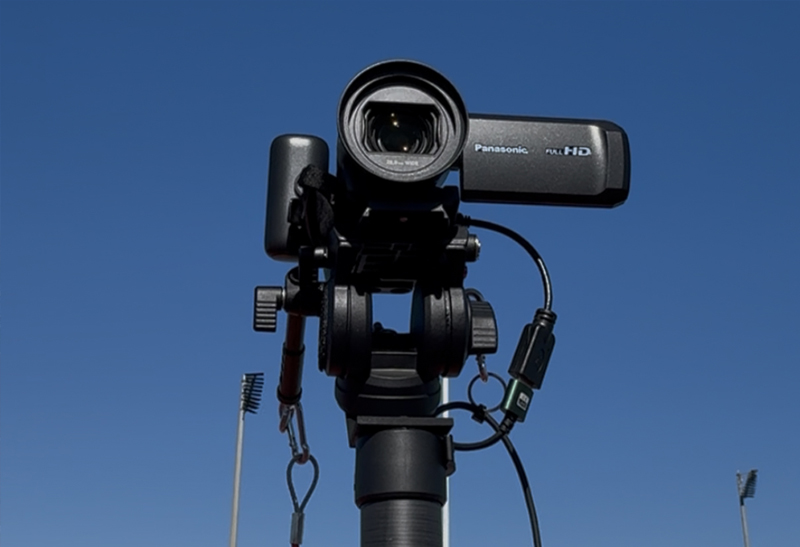
A dropped wireless signal in the second quarter is not a minor technical issue. It can mean no endzone angle for halftime corrections, delayed replay review, and a video staff scrambling while the game keeps moving. When comparing wired versus wireless football cameras, the right choice comes down to one question: what does your program need the system to do when the pressure is highest?
For many football staffs, that answer is dependable, clear video from a stable elevated position. Wireless equipment can be useful in the right environment, but a wired connection or a self-contained recording workflow often gives teams more control over the variables that cause game-day problems.
The terms wired and wireless can describe more than one part of a football video setup. A camera may record internally to an SD card, send live video through a cable, or transmit video wirelessly to a tablet, monitor, or replay system. It may also need power from a battery or an external source. Before comparing systems, make sure vendors are talking about the same workflow.
A wired live-video system sends the camera feed through a physical cable to the destination device. That might be a monitor in the press box, a sideline replay station, or a capture device. The cable creates a direct path for the signal, so it is not competing with Wi-Fi networks, radio traffic, or obstructions around the stadium.
A wireless system uses a transmitter at the camera and a receiver at the destination. It removes the need to run a video cable across or around the field, which can make certain installations more convenient. In exchange, it introduces a radio link that must remain stable at distance, through people, structures, weather, and nearby electronic equipment.
Neither approach is automatically right for every program. The difference is how much uncertainty your staff is willing to accept in exchange for cable-free operation.
Football video is most valuable when it arrives on time. A coach reviewing a red-zone sequence, a coordinator checking coverage, or a player watching a correction at halftime cannot benefit from footage that is delayed, frozen, or missing.
Wired video has a clear advantage when live reliability is the priority. A properly secured cable does not depend on radio range or signal conditions. It also avoids the interference that can occur when a stadium is packed with phones, school Wi-Fi networks, scoreboard equipment, walkie-talkies, and other wireless devices. That matters even more at road games, where your staff has no control over the facility's layout or network traffic.
Wireless systems have improved, and a quality unit can perform well in a clean, open environment. The risk is that football does not always provide a clean, open environment. Metal press boxes, concrete stadium structures, crowded sidelines, elevated camera positions, rain, and long transmission distances can all affect results. A wireless link that works during a Tuesday walkthrough may behave differently on Friday night.
For programs that record film for postgame review rather than depend on a live feed, internal camera recording is another reliable option. The camera captures the video locally, eliminating transmission risk during the game. The trade-off is that staff will not have that angle immediately available for live replay unless the camera is also connected to a replay workflow.
Wireless is often marketed as the faster setup choice because there is no video cable to run. That can be true for a simple camera-to-monitor setup. But wireless systems also require charged transmitter and receiver batteries, proper pairing, channel selection, signal testing, and secure mounting for both components.
A wired setup requires cable management, but it can be very straightforward when the system is purpose-built. Staff members need a stable tripod or pole, a camera mounted at the correct height, a protected cable route, and a quick signal check. Once connected, the process is familiar and repeatable.
The best setup is not necessarily the one with the fewest parts. It is the one your staff can deploy correctly in less than five minutes without relying on a single video specialist. That is especially relevant for high school programs, where assistant coaches, managers, parents, or student video staff may share filming responsibilities.
A practical setup should also account for teardown. At the end of a wet road game, a system with labeled connections, manageable cable lengths, and a protective carrying case is easier to pack and less likely to lose a critical accessory.
Transmission method affects how video reaches your staff, but it does not solve poor framing, unstable footage, or weak optics. For football film, camera height and stability are often more important than whether the video signal travels by cable or radio.
An elevated endzone position gives coaches a useful view of formations, spacing, routes, blocking structure, pursuit angles, and the full development of each play. A 25-foot endzone camera system can provide that perspective while keeping the operator on the ground. From the press box, a properly engineered tripod setup can deliver the high sideline angle needed for game film and scouting.
A shaky support system can make even a high-resolution camera difficult to use. Wind, uneven ground, and a poorly balanced tripod all show up in the footage. Look for equipment designed to remain stable at working height, with secure locking points and an operator-friendly manual control system.
Manual controls deserve attention here. Motorized camera heads and wireless controls may sound convenient, but they add batteries, electronics, pairing procedures, and potential failure points. A manual pan and tilt system gives the operator direct control and lets the camera keep working when conditions are less than ideal.
Wireless can be a reasonable choice when cable routing is impractical or when the camera must move frequently. For example, a program filming short practice periods from changing locations may benefit from a wireless monitor feed. It can also help when a facility makes it difficult to run a protected cable route between the camera and viewing station.
The key is to set realistic expectations. Wireless should be tested at the actual distances and locations where it will be used. Test it with the press box occupied, the scoreboard active, and the sideline operating as it would on game night. If the system is intended for live replay, test for delay as well as picture quality. A clean image that arrives too late still limits its value during a fast decision window.
Teams using wireless should have a backup plan. That may mean recording internally at the camera, keeping a spare battery set ready, or having a cable available for locations where the wireless path proves unreliable. Redundancy is not overkill when the footage supports coaching decisions.
A wired camera workflow is usually the stronger fit for programs that prioritize live replay, consistent game-day operation, and a predictable setup process. It is particularly useful when your system needs to integrate with established platforms such as Hudl Sideline, EDGE Replay, Game Strat, or SkyCoach.
Compatibility is not just about connecting a cable. Your staff needs to know whether the camera output, capture method, device connection, and power plan work with the replay platform already used by the program. Confirm the complete workflow before purchasing equipment, especially if your goal is to get endzone or press box video to the sideline during the game.
Cost also deserves a direct comparison. A lower-priced wireless kit can become expensive if it requires additional batteries, replacement transmitters, specialized mounts, or troubleshooting time. A well-built wired system may have a higher initial equipment footprint, yet offer better long-term value because it is easier to operate, maintain, and trust.
Start with the footage your coaches actually use. If endzone film is primarily for Saturday grading and scouting, dependable internal recording on a stable elevated system may be all you need. If your coordinators use video between series, prioritize a proven live-feed workflow with minimal delay and clear compatibility with your replay platform.
Then consider the people running the equipment. Can they set it up quickly? Can they operate the camera without managing an app, a remote, and multiple battery-powered accessories? Can they troubleshoot a connection in the rain with five minutes before kickoff? The answers often point toward a simpler system.
Finally, evaluate the complete field setup, not just the camera. The right package includes the height needed for useful film, a stable support system, quality optics, reliable power, and a transport plan that fits your game-day routine. Game Day Endzone builds its camera systems around that complete operational need rather than adding technology that creates more work for coaches.
Choose the setup your staff will trust enough to use every week. The best football camera system is the one that captures the angle your coaches need, stays steady through the final whistle, and is ready again before the next practice starts.