
August 25, 2026
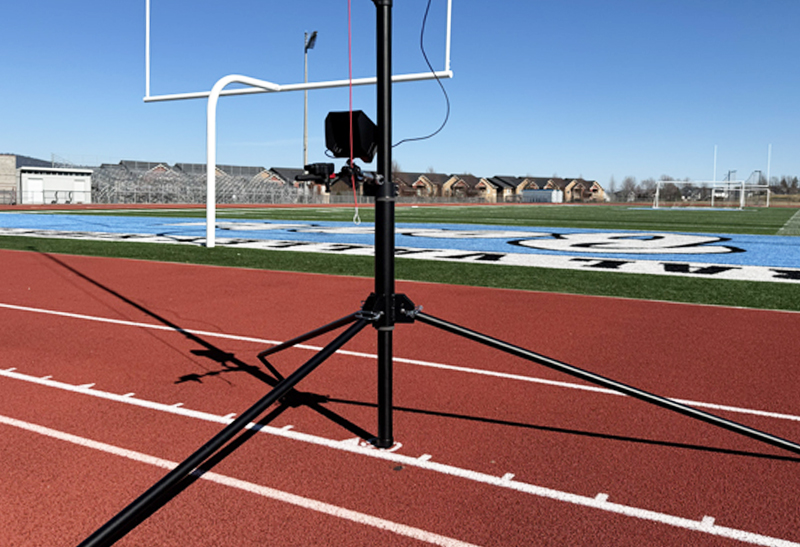
A missed angle can cost more than a missed play. When a camera shakes during a key third-down stop, loses the ball on a deep pass, or takes too long to deploy before kickoff, the video staff is left with footage that cannot serve replay, scouting, or player development. The right football game film equipment gives your staff a repeatable way to capture every snap clearly from the positions coaches actually need.
For most programs, game film equipment has to solve three jobs at once: capture a usable coaching angle, stay stable in real field conditions, and fit the workflow your staff already uses. High-quality video is only useful if it is framed correctly, available when coaches need it, and simple enough for staff members to operate under game-day pressure.
The endzone angle remains essential because it shows spacing, blocking surfaces, run fits, coverage structure, and quarterback decision-making in one view. A press box or sideline angle adds depth to the evaluation by showing route concepts, pre-snap alignment, and the full development of a play. Programs that film both angles give coaches a more complete teaching and scouting tool.
Height matters. A camera positioned too low can lose the ball behind linemen, players, and coaches. A 25-foot endzone system creates the elevated view needed to see formations and play development without forcing a staff member to operate from an unsafe or awkward position. For practice, a 10-foot pole can provide a practical elevated angle for team periods, inside run, seven-on-seven, and special teams work.
The best setup is not always the most complicated one. It is the one your program can deploy consistently, protect during travel, and operate correctly every week.
A typical game-day package includes an endzone camera system, a press box tripod setup, a camera with quality optics, and the mounting hardware needed to secure everything. The key is making sure those pieces work together instead of creating a collection of adapters, clamps, and workarounds that slow down setup.
For teams using platforms such as Hudl Sideline, EDGE Replay, Game Strat, or SkyCoach, camera equipment should support a clean handoff from capture to replay or upload. That means the camera position needs to be stable, the footage needs to be clear enough for fast coaching decisions, and the setup must not require a technology specialist to troubleshoot every time conditions change.
Before buying, evaluate where your team films home and away games. Some stadiums have accessible press boxes. Others have limited space, elevated walkways, or crowded endzones. A portable system with a stable tripod base gives staff flexibility without sacrificing the angle needed for quality film.
A tall camera system is only as good as its base. Wind, uneven turf, busy sidelines, and frequent repositioning can expose weak tripod engineering quickly. A system that wobbles or shifts during a drive creates film that is difficult to review and frustrating to use in a meeting room.
Look for a tripod designed to support the height and weight of the full system, not just a camera on a short stand. The base should be stable, the connections should lock securely, and the system should be engineered for repeated setup and breakdown. Durability is especially important for programs that travel weekly, film multiple levels, or use the same equipment across games and practices.
Premium optics also matter more than many buyers expect. Coaches need a picture that holds enough detail to identify leverage, hand placement, route stems, and defensive movement. You do not need unnecessary features that add failure points, but you do need a camera capable of delivering a clear image in the varied lighting conditions of Friday nights, early kickoffs, and indoor facilities.
Motorized and wireless systems can sound appealing, particularly when comparing feature lists. But football operations are not a showroom test. Batteries drain, wireless signals face interference, and complicated controls can create problems at the exact moment the team needs video.
A manual control system gives the operator direct, predictable control of camera position and framing. It also reduces the number of components that can fail. For a high school program with a coach, manager, parent volunteer, or student assistant behind the camera, straightforward operation is a real advantage.
That does not mean every program needs the same system. A large college staff may have dedicated video personnel and specialized facility requirements. But for most high schools and academies, the better investment is equipment that sets up in less than five minutes, captures the necessary angle, and works every time without a complicated learning curve.
The lowest-priced option can become expensive if it produces unstable footage, requires replacement parts midseason, or sits unused because staff members do not trust it. A better value is equipment that covers game film, practice film, scouting needs, and replay workflows with a consistent operating process.
Bundled systems can make sense when a program needs both an endzone and press box solution. They reduce compatibility questions and give athletic departments a clearer path to standardizing equipment across varsity, junior varsity, and practice use. Game Day Endzone systems are built around that practical goal: professional-quality football video without unnecessary complexity.
When evaluating football game film equipment, ask a simple question: Can our staff carry it, set it up, keep it stable, and get usable film every week? If the answer is yes, your coaches can spend less time managing equipment and more time coaching from the tape.