
April 9, 2026
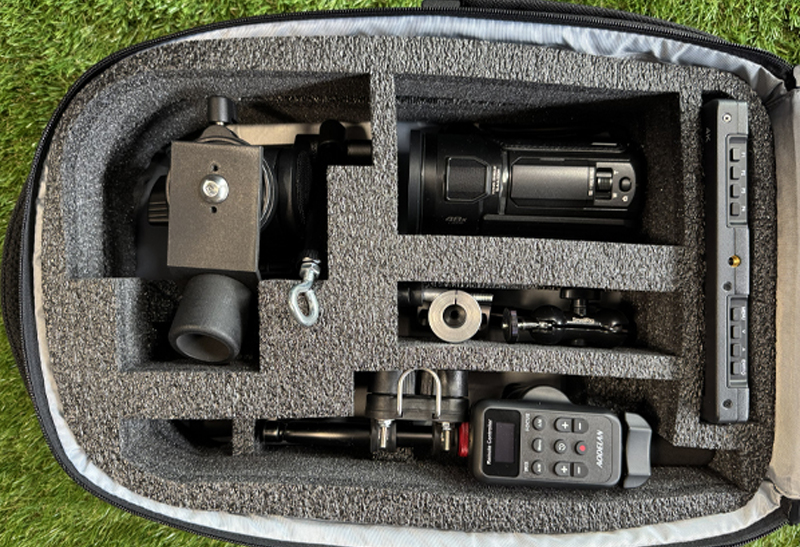
Friday night is not the time to find out your camera pole sways in the wind, your tripod slips on the press box deck, or your operator needs a manual to start filming. Durable football camera equipment matters because football video is not a nice-to-have anymore. It is part of how teams coach, adjust, teach, and share game footage across replay and analysis platforms.
For most programs, durability is not just about how long equipment lasts in storage. It is about whether the system stays stable during a full game, travels well from field to field, and works the same way every time a coach, manager, or volunteer sets it up. A system can look impressive online and still create problems on the field if it is too delicate, too complicated, or too dependent on parts that fail under pressure.
A lot of buyers hear the word durable and think only about material strength. That is part of it, but football programs need a broader definition. Durable football camera equipment should handle repeated transport, fast setup, uneven surfaces, changing weather, and long game-day use without becoming unreliable.
That means the pole matters, but so do the clamps, tripod legs, mounting points, control mechanisms, and carrying process. The system has to stay rigid enough to produce usable footage, especially from an endzone position where shake and movement can ruin the angle coaches rely on. If the image drifts or the structure flexes every time the wind picks up, it does not matter how strong the individual parts look on paper.
Durability also includes operational durability. In football, equipment gets handled by different people across the season. Sometimes it is a video coordinator. Sometimes it is an assistant coach. Sometimes it is a student manager who has ten other jobs before kickoff. The best systems are durable not only because they resist damage, but because they are simple enough to reduce user error.
The weak points are usually predictable. Tall camera systems can become unstable if the tripod engineering is an afterthought. Practice setups can wear out quickly if they are built for occasional use instead of regular movement and rep-to-rep filming. Press box camera support can also become a problem when a standard consumer tripod is asked to do a job it was never built for.
Motorized and wireless features are another area where trade-offs matter. On paper, they can sound convenient. In practice, more electronics often mean more possible failures. Batteries need charging. Motors can stall. Wireless connections can lag or disconnect. When your priority is getting clean football video every time, a manual control system is often the more dependable choice.
That does not mean advanced features are always bad. It means football staffs should judge them by field performance, not brochure appeal. If a feature adds complexity without improving reliability, it is usually not helping your operation.
Game-day filming asks more from equipment than many buyers expect. A true endzone setup has to elevate the camera high enough to capture formation structure, spacing, and player movement while staying steady through an entire game. Height without stability is a bad trade.
A 25-foot endzone system is a strong example of where engineering matters. At that height, small design flaws become big problems. The pole needs to remain controlled, the base needs to stay planted, and the operator needs straightforward manual control. If any one of those elements is weak, the footage suffers.
The same logic applies in the press box. Coaches need a stable wide view that does not drift, sag, or bounce with every adjustment. A dedicated press box tripod setup should feel secure from the first quarter to the final whistle. If your sideline replay or upload workflow depends on that angle, the support system is not a minor accessory. It is part of the production chain.
The most durable system in theory is not very useful if your staff dreads moving it. Football programs need equipment that survives transport and is practical to carry, load, unload, and store. Portability is part of durability because awkward systems get dropped, rushed, or left behind.
This is especially true for high school programs and multi-use facilities where staff sizes are limited. Equipment should break down cleanly, travel in manageable sections, and set up fast without extra tools or complicated calibration. A system that sets up in less than five minutes has a real operational advantage because it lowers stress and reduces the chances of mistakes before kickoff.
Practice gear needs this even more. A 10-foot practice pole, for example, should be easy to reposition between periods and durable enough to handle daily use. Practice video is not optional for player development, but if the setup is a hassle, teams often stop using it consistently. The best equipment gets used because it fits the rhythm of practice instead of slowing it down.
Start with stability. Ask how the system handles height, wind, and repeated use. A tall pole is only valuable if it stays controlled. A tripod is only useful if it is engineered for football filming rather than borrowed from general photography.
Then look at setup. If the system requires too many steps, too much fine adjustment, or too much operator experience, it can become unreliable in the real world. Football staffs need repeatable deployment, not a fragile process that works only when one expert is present.
Compatibility is another practical check. Many programs already work through platforms like Hudl Sideline, EDGE Replay, Game Strat, or SkyCoach. Your camera equipment should support that workflow instead of forcing workarounds. Durable equipment is partly about physical build, but it is also about fitting into the way your staff actually captures and moves video.
After that, pay attention to support and long-term value. Warranties, replacement parts, and access to knowledgeable help matter because football equipment gets used hard. A lower upfront price can become expensive if the system needs constant fixes or cannot be serviced quickly during the season.
This is where many programs get stuck. Consumer camera supports and generic tall poles can seem like a budget win, especially when athletic departments are managing multiple needs. But football is a specialized use case. The angle requirements, field conditions, and operational pace are different from casual video work.
When gear is not purpose-built, the costs show up in other ways. Footage quality drops. Setup takes longer. Staff confidence goes down. Replacement cycles get shorter. Over time, a cheaper system can cost more than a well-built package that works consistently.
The better approach is to buy for the season you actually run. If your team films every game, uses practice footage regularly, and relies on replay or upload tools for coaching, then your equipment should be built around those demands. That is where purpose-built football systems stand apart.
If you are comparing options, ask a simple question: will this system still be easy to trust in the middle of the season? That standard usually cuts through the sales language.
A dependable football filming setup should give you stable footage, quick deployment, straightforward controls, and physical durability that holds up through transport and repeated use. It should be manageable for different staff members to operate. It should support both game-day and practice demands without requiring constant troubleshooting.
That is the reason many programs look for specialized systems from companies focused on football workflows, including providers like Game Day Endzone. The real value is not just the hardware itself. It is getting equipment designed around what coaches and video staff need on actual fields, in actual weather, with actual time pressure.
The right choice is not always the one with the most features. Often, it is the one that gives your staff the fewest problems and the most usable video when the game starts. Buy for reliability first. The rest tends to take care of itself.